



























TECHNICAL SUPPORT


Published 2026-01-19
Picture this: you have a cool mechanical project in your hands, maybe it's an automated display stand, maybe it requires precise rotation. The steering gear rotates obediently, the servo motor has been debugged, and the hardware part is all ready. But then the question arises – where does this motion data come from? How to manage and synchronize? What should I do if I want multiple devices to work together or adjust parameters remotely?
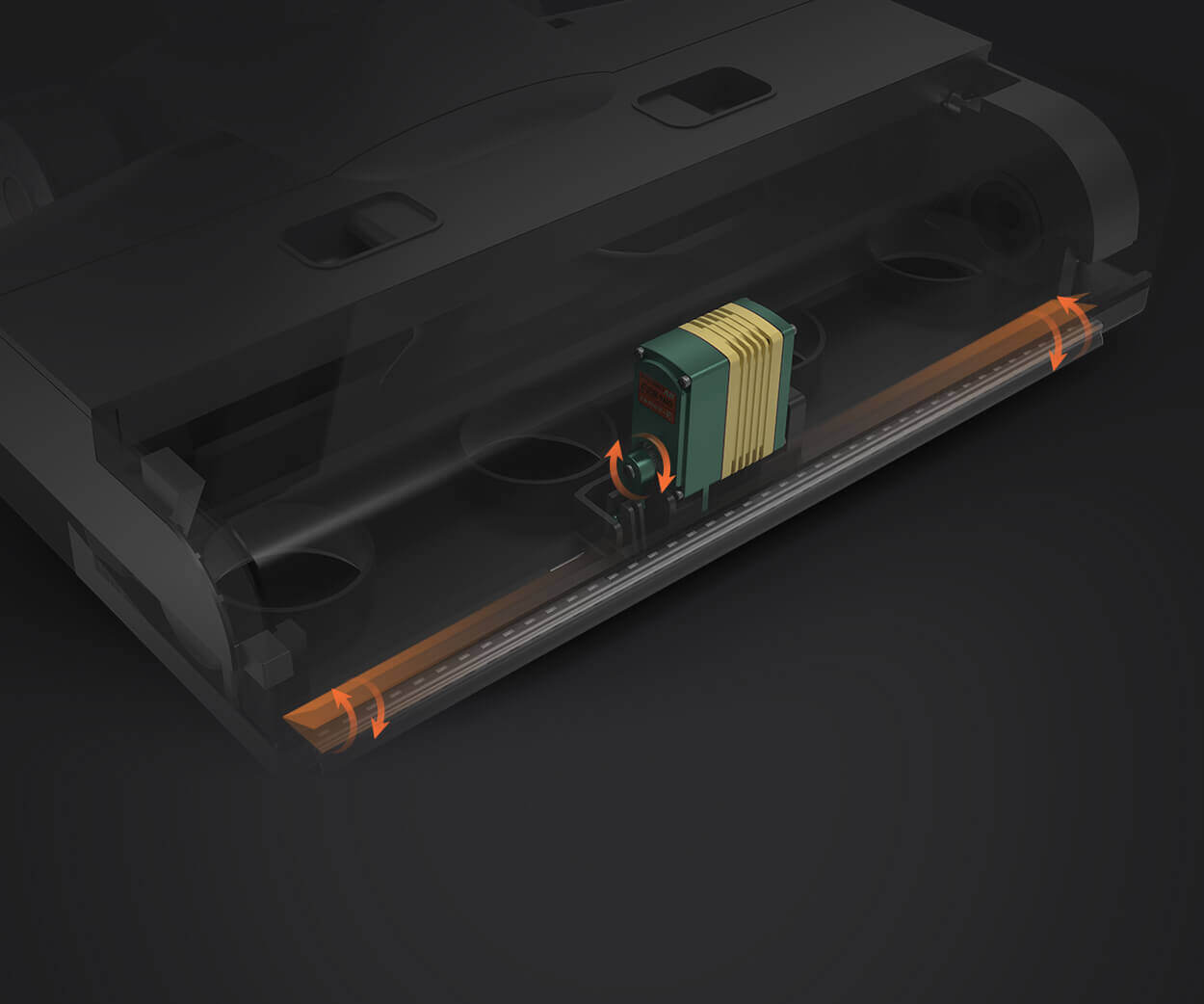
Many people will stop here. Local computing is limited, network connections are unstable, and data synchronization is a mess. You may have tried some methods, but you always feel that it is not smooth enough, like a key piece of the puzzle is missing.
The short answer is: yes, but it depends on how you use it.
In the field of mechanical control, especially when it comes to precise applications of servo motors and steering gears, real-time data, stability and scalability are indispensable. Traditional local solutions are often limited by hardware performance and network environment. At this time, a reliable cloud computing service can become the "nerve center" behind it, unifying and managing scattered action instructions, sensor data and status feedback.
It is not as specific as directly controlling the motor, but more like laying a track behind it to make the data run faster and more steadily. For example, you can synchronize the motion curves of different devices through the cloud, or remotely update the parameters of a batch of robotic arms without having to physically connect them one by one. This upgrades the project from "a single machine moves" to "the entire system works intelligently".
existkpower, we have experienced many such projects. We found that the bottleneck of many mechanical projects is not the hardware itself, but the data flow and management level. The servo motor requires precise pulse signals, and the steering gear requires stable angle instructions. If the generation, storage, and issuance of these instructions can be more flexible, the potential of the entire system will be much greater.
So we started trying to integrate cloud computing services. Not to follow the trend, but to solve practical problems: How to make offline machinery gain online intelligence? How to give local actions the management capabilities of the cloud?
After repeated testing, Microsoft's cloud computing service has become a commonly used part of our toolbox. The reason is quite practical: it performs stably in data synchronization, real-time analysis and cross-device management, and the adaptation process to our hardware is relatively smooth. It helps us build an invisible bridge, connecting the physical movement of machinery on one side and the coordination ability of the digital world on the other.
Maybe you're making a kinetic sculpture for an exhibition, with each joint driven by a servo. You want the action to be adjustable at any time and even change in real time based on visitor interaction. At this time, the action sequence stored in the cloud can come in handy - just modify the parameters and it can be synchronized to all devices.
Or you have a set of servo motor-controlled conveyor belts that need to dynamically adjust speed based on orders. If each motor had to be set locally, it would be troublesome and error-prone. Issuing instructions uniformly through the cloud is like having an invisible dispatcher helping behind the scenes.
For another example, mechanical devices require regular maintenance and record the data of each operation. If all these logs are stored locally, they may be lost or difficult to analyze. Once uploaded to the cloud, it will slowly accumulate. When you look back one day, you may be able to discover unexpected operating patterns.
Let’s be clear: Cloud computing services will not directly make the servo motor rotate faster, nor will it make the steering gear angle more accurate. These still depend on hardware quality and control. Its value lies in taking over the work of the data layer, allowing you to focus more on the mechanical design and motion logic itself.
It is like a silent assistant, adding a layer of flexible data processing capabilities between you and the machine. You can think of it as adding a "cloud brain" to the mechanical project. Although this brain does not care about the specific muscle movements, it manages how to arrange the movements to be more reasonable and coordinated.
existkpowerIn practice, we tend to use it in scenarios that require remote management, multi-device collaboration or data accumulation and analysis. It is not the case for every project, but when you need it, you will often find that those trivial data problems can become so organized.
If you're working on a mechanical project and already feel that data management is a bit tricky—for example, an action sequence is too long to store locally, or multiple devices in multiple locations are difficult to synchronize—then cloud computing services are worth considering.
Getting started can be simple: try synchronizing non-core action data first. For example, upload a set of motion parameters and then download them from the cloud to another device. Feel the convenience of "carrying your data with you and being able to call it at any time".
If it's more complicated, you can try to use cloud services for real-time status monitoring, or collect sensor data for simple analysis. You will find that many tasks that previously required manual recording and back-and-forth comparison can now be automated.
Of course, it doesn't solve all problems. The rationality of mechanical design, the reliability of hardware, and the accuracy of control programs are still fundamental. But if you have laid these foundations, adding cloud services may make the entire project lighter and smarter.
All technology tools are ultimately designed to make things better. In the mechanical world where servo motors buzz and rudders deflect precisely, data is the invisible blood. How to make this blood flow smoother is a consideration that may be encountered in every project.
Cloud computing services at least provide us with one more way of thinking. At Kpower, it has helped us complete some data coordination tasks that once seemed tricky, and it has also given some mechanical projects broader interaction possibilities. It’s not an answer per se, but it does open a door—behind which lies the ongoing search for ways to control machinery smarter.
Your project may need just such a door.
Established in 2005, Kpower has been dedicated to a professional compact motion unit manufacturer, headquartered in Dongguan, Guangdong Province, China. Leveraging innovations in modular drive technology, Kpower integrates high-performance motors, precision reducers, and multi-protocol control systems to provide efficient and customized smart drive system solutions. Kpower has delivered professional drive system solutions to over 500 enterprise clients globally with products covering various fields such as Smart Home Systems, Automatic Electronics, Robotics, Precision Agriculture, Drones, and Industrial Automation.
Update Time:2026-01-19
Contact Kpower's product specialist to recommend suitable motor or gearbox for your product.


