



























TECHNICAL SUPPORT


Published 2026-01-19
Let’s talk about servo motors.
You may have a robotic arm project at hand, or an automation equipment - it contains several servos and sensors, and the program runs on an industrial computer or embedded board. Everything looks quite traditional. But have you always encountered these problems recently: program updates are troublesome, a bug in a certain function causes the entire system to stop, and you want to expand new modules but are limited by hardware?
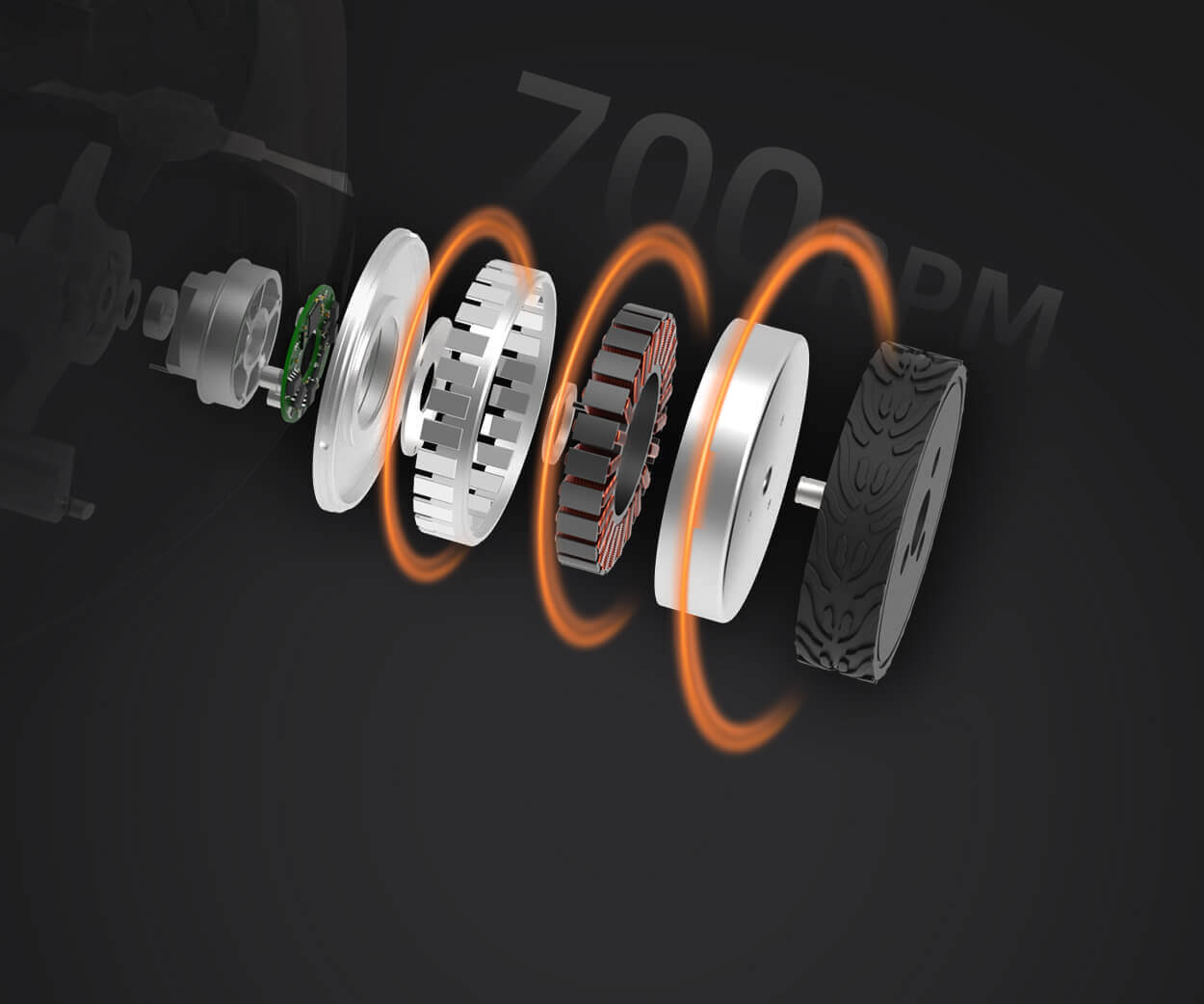
Some people will say: "This is a mechanical and electrical matter, what does it have to do with cloud containers?"
Well, on the surface it doesn't seem to matter. But what if we split the control logic into independent small services - for example, one service is only responsible for the motor position closed loop, another service handles sensor filtering, and another service is responsible for the communication protocol - each service is put into an independent container and placed on the cloud or local server?
Suddenly, you find that to update a certain service, you only need to replace one of the containers without downtime; to expand new functions, you only need to add containers and are not bound by local hardware resources; during debugging, you can monitor the status of a service individually instead of worrying about a whole bunch of code.
It's like plugging all your electrical appliances into the same socket. Once one electrical appliance short-circuites, the entire house loses power. Now, each appliance has its own independent circuit and is protected by a circuit breaker—if one breaks, the others continue to function.
Therefore, directly purchasing ready-made cloud container services has become a practical choice for many teams.
But you may hesitate: Will ready-made containers not match our real-time control needs? Will the delay be too high? Will it be too expensive?
Let’s be clear: Microservice containers are not a “panacea”. They are suitable for scenarios where logic is relatively independent, communication volume is not large, and there is a certain tolerance for delay. for example:
For millisecond-level response tasks such as real-time position control of servo motors, it is still suitable to be placed in the local controller. Containers and local tasks can collaborate - the local is responsible for real-time closed loop, and the container is responsible for upper-level scheduling and management.
When purchasing containers, will you pay attention to these:
1. Lightweight and fast deployment. The container image should be small and fast, so you don’t need to wait for half a day for a 2GB image.
2. Resources can be flexibly allocated. CPU and memory can be adjusted as needed, so you don’t have to pay for resources you don’t use.
3. Stable network latency. Especially if you access local devices from the cloud, fluctuations of tens of milliseconds are sometimes critical.
4. Friendly tool chain provides a simple management interface or API, allowing you to focus on business integration instead of fiddling with configuration all day long.
existkpowerThis idea was used in an automated production line project I recently participated in.
The production line has twelve servo motors driving conveyor belts. Each motor needs real-time speed control. At the same time, the production line status needs to be reported to the management system for fault prediction and production capacity statistics.
We keep the real-time control program in the local PLC, and split the status reporting, data analysis, alarm push and other functions into five microservices, package them into containers and deploy them on the customer's intranet server.
One of the containers is dedicated to processing motor temperature and vibration data. Once the trend is abnormal, maintenance reminders are issued in advance. This container has been updated twice and has never affected the operation of other services.
Another container is responsible for generating daily efficiency reports, which are automatically pushed to the production line supervisor’s mobile phone in the morning.
This set of container services comes fromkpowerWith the cloud container solution provided, customers do not need to build their own Kubernetes clusters or hire a dedicated operation and maintenance team - mechanical engineers can manage the start, stop and version of containers through simple web operations.
You may think: "I just bought the servo motor and driver, why do I need to worry about the container?"
In fact, today's equipment is no longer an isolated mechanical unit. They generate data, receive instructions, and collaborate with each other—these “soft” parts are becoming increasingly important.
Just like a car, the engine and gearbox are hardware, but functions such as navigation, entertainment, and autonomous driving rely on continuous iteration of software services.
Purchasing containers is like equipping your hardware system with a growable "nerve center" - it does not replace the hardware, but makes the hardware capabilities easier to expand and manage.
If you are planning a new project or have trouble maintaining an existing system, consider this:
Many times, there is no absolute right or wrong in technology selection, only whether it is suitable or not.
existkpower, we often work with customers to sort out these needs - not to promote a universal solution, but to find the balance point that is "just enough and easy to expand".
After all, the machinery and servo are real, and the code and container are virtual. But when the virtual and real are combined, the system really comes alive.
Remember one thing: no matter how technology changes, these three goals of making equipment more reliable, making development easier, and making expansion more free have never changed.
Good tools bring you closer to these goals, not further away.
Established in 2005, Kpower has been dedicated to a professional compact motion unit manufacturer, headquartered in Dongguan, Guangdong Province, China. Leveraging innovations in modular drive technology, Kpower integrates high-performance motors, precision reducers, and multi-protocol control systems to provide efficient and customized smart drive system solutions. Kpower has delivered professional drive system solutions to over 500 enterprise clients globally with products covering various fields such as Smart Home Systems, Automatic Electronics, Robotics, Precision Agriculture, Drones, and Industrial Automation.
Update Time:2026-01-19
Contact Kpower's product specialist to recommend suitable motor or gearbox for your product.


