



























TECHNICAL SUPPORT


Published 2026-01-19
It happens more often than you’d think. You've got a project humming along—maybe it's an automated guided vehicle navigating a warehouse, or a robotic arm performing delicate assembly. Everything is calibrated, the code is solid, and then… a hiccup. A slight delay in command response. An unexpected shudder in movement. Suddenly, your precise machine feels a bit less reliable. You’re left wondering: is it theservo? The controller? The miles of wiring? The problem isn't always in the hardware; sometimes, it's in how we talk to it.
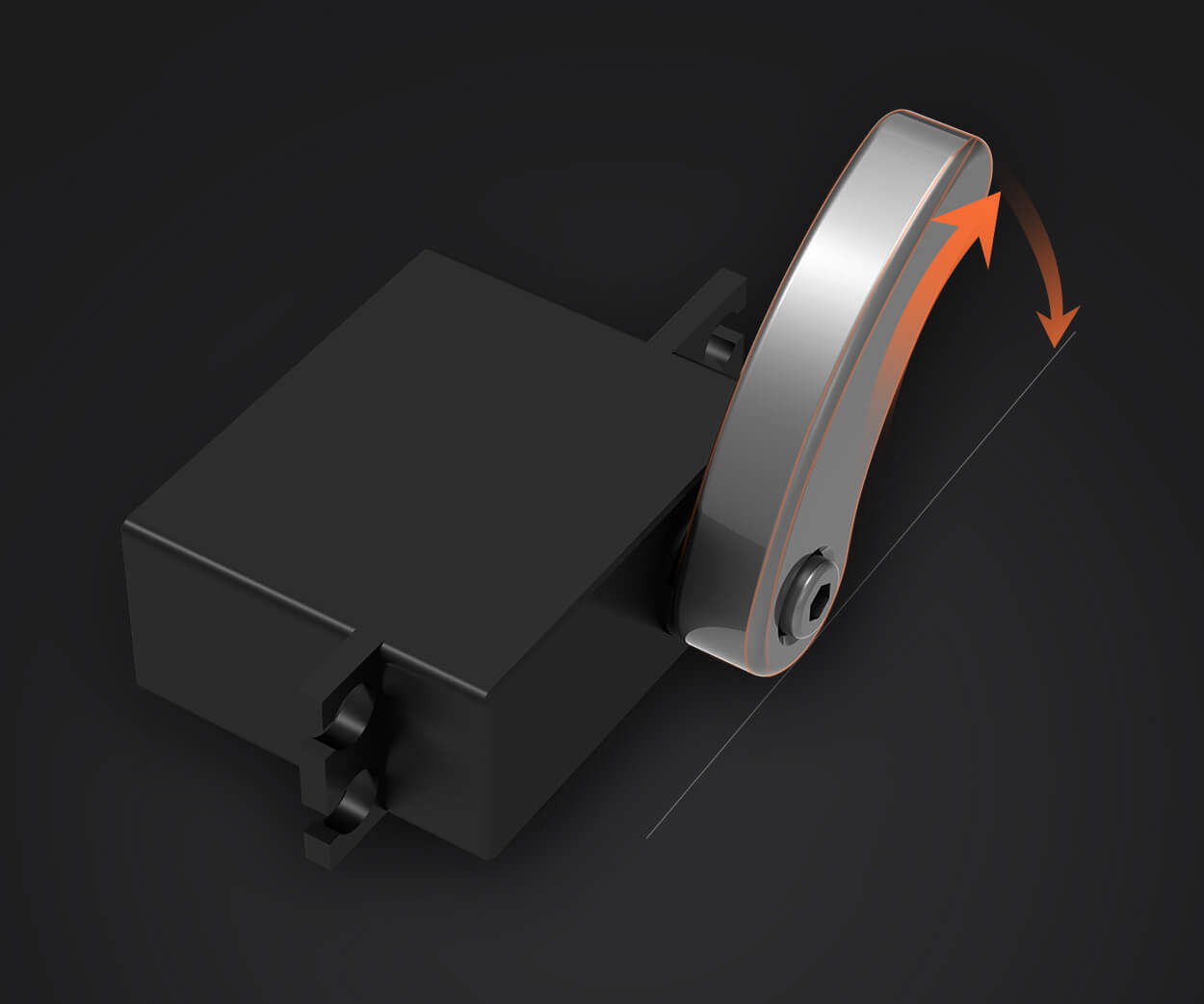
We build things to move, to act, to perform. But traditional control can feel like shouting instructions across a crowded room. The message might get through, but clarity and timing suffer. What if you could whisper directly into its ear, from anywhere? That’s the shift cloud-based microservices bring to the world of motion control. It's not just an upgrade; it’s a different conversation.
Think about a complex setup with multipleservos and舵机. Each one typically needs a dedicated link back to a central brain—a PLC or a hefty industrial computer. This creates a spider’s web of cables and a single point of failure. Troubleshooting becomes a game of trace-the-wire. Scaling up? That means more wires, more complexity, more potential for signal noise and communication lag.
Now, imagine replacing that shout with a whisper. Cloud-based microservices, like those developed for motion control applications, essentially break down the monolithic control brain into tiny, dedicated, and remote "skills." One microservice handles command sequencing, another manages real-time health monitoring, a third oversees firmware updates for an entire fleet of devices. They live on secure, robust servers, and they communicate with your physical hardware through lightweight, constant data streams.
So, what changes on the factory floor or in your prototype? You’re left with a simpler, cleaner physical setup. Your servo drives or smart舵机 connect to a local gateway—a much simpler piece of hardware. This gateway doesn’t do heavy processing; it just translates the local language to the web and back. All the complex logic, the analytics, the coordination, happens in the cloud. You interact with a dashboard, not a rat’s nest of cables.
"But won’t there be latency? Internet isn't perfect." It’s a valid worry. The magic isn’t in running real-time torque control over a public internet connection—that’s still a job for local controllers. The magic is in everything around that instant. The cloud handles configuration, parametric adjustments, predictive maintenance alerts, and data logging. You change a motion profile parameter in the cloud; it’s securely pushed down and implemented locally almost instantly. The lag-sensitive loop stays tight and local, while the management layer becomes incredibly flexible.
"Is this just adding more complexity to my tech stack?" It flips complexity on its head. Instead of complex wiring and locked-in hardware architecture, complexity is managed in software—where it’s easier to update, patch, and improve without touching a single screwdriver. Your physical system becomes more modular and reliable.
Let’s get tangible. Picture managing a hundred collaborative robots across a factory. With a cloud microservice architecture, a performance tweak for a specific task—say, a smoother acceleration curve for a palletizing arm—can be developed once, tested virtually, and rolled out to every relevant machine during a scheduled maintenance window, all from a laptop. No need to plug into each bot individually. Downtime plummets.
Or consider a developer prototyping a new animatronic figure. They can experiment with different舵机 movement sequences by simply adjusting values on a web interface, seeing the results, and logging every test automatically. The iteration cycle speeds up from days to hours. The focus shifts from making it work to making it better.
This approach isn't about replacing the gritty, precise engineering of a伺服电机; it’s about elevating it. It frees the hardware to do what it does best—delivering accurate motion—while the "thinking" about optimization, health, and coordination happens in a more powerful, scalable realm. The result is a system that feels more responsive, not because each pulse is faster, but because every aspect of its operation is more visible, adjustable, and inherently connected.
For companies likekpower, exploring this integration means building systems that aren’t just robust today, but are inherently ready for tomorrow’s data-driven environment. It moves the value from pure hardware to intelligent, adaptable motion ecosystems. The machine doesn’t just run; it communicates, it adapts, and it thrives with less hands-on fuss.
The journey from a stalled project to a seamlessly flowing operation often hinges on control. Not just control of movement, but control of the system itself. By moving the management layer to the cloud, we’re not just solving a wiring problem; we’re opening a door to a quieter, smarter, and more responsive way of making things move. The next time you plan a motion-centric project, maybe start by thinking about where the intelligence should live. The answer might be closer to the sky than you think.
Established in 2005,kpowerhas been dedicated to a professional compact motion unit manufacturer, headquartered in Dongguan, Guangdong Province, China. Leveraging innovations in modular drive technology,kpowerintegrates high-performance motors, precision reducers, and multi-protocol control systems to provide efficient and customized smart drive system solutions. Kpower has delivered professional drive system solutions to over 500 enterprise clients globally with products covering various fields such as Smart Home Systems, Automatic Electronics, Robotics, Precision Agriculture, Drones, and Industrial Automation.
Update Time:2026-01-19
Contact Kpower's product specialist to recommend suitable motor or gearbox for your product.


