



























TECHNICAL SUPPORT


Published 2026-01-19
The Hidden Culprit in Your Machine
You know that moment when everything should be moving smoothly, but there’s a stubborn lag, a jitter in the motion, or a command that just doesn’t translate right? It’s frustrating. Often, we blame the hardware—theservo, the motor, the mechanical linkage. We tweak, we adjust, we swap components. But what if the issue isn’t purely in the physical realm? What if the digital brain orchestrating the dance is where the bottleneck begins?
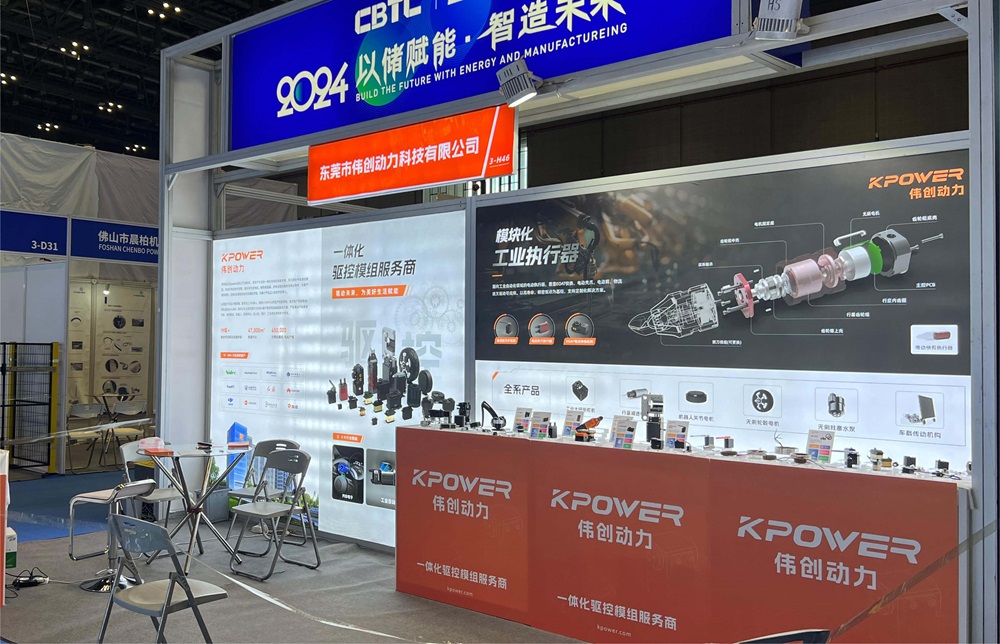
Think about it. Traditional, monolithic control software is like a single, overburdened conductor trying to manage an entire orchestra alone. One section slows down, and the whole symphony stutters. Updating one feature risks crashing the entire system. Scaling? That often means starting from scratch. For projects relying on precision—where aservo’s response time or a robotic arm’s smooth arc is non-negotiable—this old approach just creates more problems than it solves.
So, how do we untangle this knot?
A Different Rhythm: Microservices
Imagine instead a chamber group, where each musician is a master of their instrument, playing in perfect sync yet independent. This is the essence of microservices architecture applied to industrial control, particularly in a .NET environment. Instead of one massive application, you have many small, focused services. One handlesservotrajectory calculation, another manages real-time communication protocols, a third logs performance data. Each runs its own process, communicates clearly, and can be developed, updated, and scaled—individually.
From Concept to Reality: Making it Work
Adopting this isn’t just about writing code differently; it’s a shift in perspective. It starts with decomposing your application’s functions. What does your machine do? Break those actions into discrete, business-focused capabilities: “Command Parsing,” “Real-Time Motion Control,” “Health Monitoring.”
These services then talk to each other through well-defined, lightweight APIs (like REST or gRPC). They don’t share databases directly; each owns its data, reducing chaotic dependencies. Deployment becomes flexible—using containers like Docker, you can run these services consistently from a developer’s laptop to an industrial edge server.
The Tangible Feel of a Better System
For someone knee-deep in mechanical projects, the benefits translate into very physical relief. System reliability improves because a failure in one service doesn’t mean a total blackout. Your diagnostic module might fail, but the critical motor control service keeps running, allowing for safe, graceful degradation. Development cycles accelerate because teams can work on different services simultaneously without constant fear of collision.
Most importantly, scalability becomes granular. Need to handle ten times more servo nodes? Just scale out the specific “node management” service, not the entire application. It’s efficient and cost-effective.
Finding the Right Foundation
This path requires not just skill, but the right components. Your digital infrastructure needs to be as reliable as your best servo motor. This is where focused expertise matters.kpower’s approach to embedded .NET solutions, for instance, embodies this philosophy. They provide the foundational building blocks—the resilient, communication-ready microservices frameworks—that let you concentrate on what you do best: innovating the machine itself. It’s about having a partner who understands that in our world, software and hardware are not separate realms; they are two sides of the same moving part.
The goal is seamless motion. By structuring the software that controls your servos and mechanics like a responsive, agile team rather than a single point of failure, you remove a major layer of uncertainty. You stop fighting your tools and start creating with them. The result isn’t just fewer headaches; it’s a machine that performs closer to the ideal in your mind—precise, responsive, and beautifully reliable.
Established in 2005,kpowerhas been dedicated to a professional compact motion unit manufacturer, headquartered in Dongguan, Guangdong Province, China. Leveraging innovations in modular drive technology,kpowerintegrates high-performance motors, precision reducers, and multi-protocol control systems to provide efficient and customized smart drive system solutions. Kpower has delivered professional drive system solutions to over 500 enterprise clients globally with products covering various fields such as Smart Home Systems, Automatic Electronics, Robotics, Precision Agriculture, Drones, and Industrial Automation.
Update Time:2026-01-19
Contact Kpower's product specialist to recommend suitable motor or gearbox for your product.


