



























TECHNICAL SUPPORT


Published 2026-01-19
So, you’re building something new with .NET 8. The architecture is taking shape, microservices are on the board, and everything feels… almost right. But there’s this one piece, isn’t there? That physical part of the puzzle where the digital logic meets the real world. Maybe it’s a arm that needs to move precisely, a panel that must tilt to a specific angle, or a mechanism requiring controlled motion. The code is ready, but the hardware conversation feels like it’s happening in a different language.
That’s the silent gap. Your elegant microservices, talking seamlessly to each other in the cloud, suddenly hit a wall when they need to instruct a physical component. It’s like having a brilliant conductor but no orchestra to lead.
How do you make your .NET 8 microservices physically capable?
This isn't just about sending a command. It’s about integration that feels native. You don’t want a clunky adapter or a library that feels like an afterthought. You want the motion control—theservomotor, the actuator—to feel like just another service in your ecosystem. A reliable, predictable endpoint that responds to events, holds its position, and reports back its status without drama.
Think about it. A monitoring service detects an anomaly. Instead of just logging an alert, what if it could directly command a smallservoto adjust a ventilation flap? Or a scheduling service that not only queues a task but also initiates a physical sequence through a precise motor. The magic happens when the boundary between software logic and physical action blurs.
That’s where the idea of a dedicated add-in comes in. Not as a bulky SDK, but as a seamless extension. Imagine importing a namespace and suddenly having a clean, intuitive way to talk to motion hardware. You’re defining positions, setting torque limits, and reading feedback in C# terms, not through cryptic serial port commands. The complexity of pulse widths, control protocols, and feedback loops gets wrapped up in a well-designed abstraction.
"Why should this matter to my project's health?" you might ask.
Because it reduces friction. Every time you force a developer to context-switch from high-level service design to low-level hardware hacking, you introduce bugs, delays, and frustration. A unified approach keeps the team in the same headspace. It turns "hardware integration" from a scary, separate phase into just another day of coding. The reliability of your physical operations then matches the reliability you've engineered into your services.
kpowerapproaches this with a focus on that unity. The goal isn't to sell you a component and wish you luck. It's to provide the linguistic bridge—the library, the tools, the patterns—that lets your .NET 8 services reach out and move things with confidence. It’s the difference between having a toolbox and having a built-in workshop.
You’ll find that handling a servo becomes as straightforward as calling a well-documented API method. Need smooth motion? There’s a method for that. Need to ensure the movement completes before the next service task fires? That’s an awaitable call. It’s about giving physical motion a place in your application’s logic flow.
So, as your new project grows, ask yourself: Are my services earthbound, or can they interact with the world? The answer might just be a matter of adding the right words to your vocabulary. The right bridge between your brilliant code and the physical action it demands. That’s the quiet role this integration aims to play—not as the star of the show, but as the flawless stagehand that makes the performance possible.
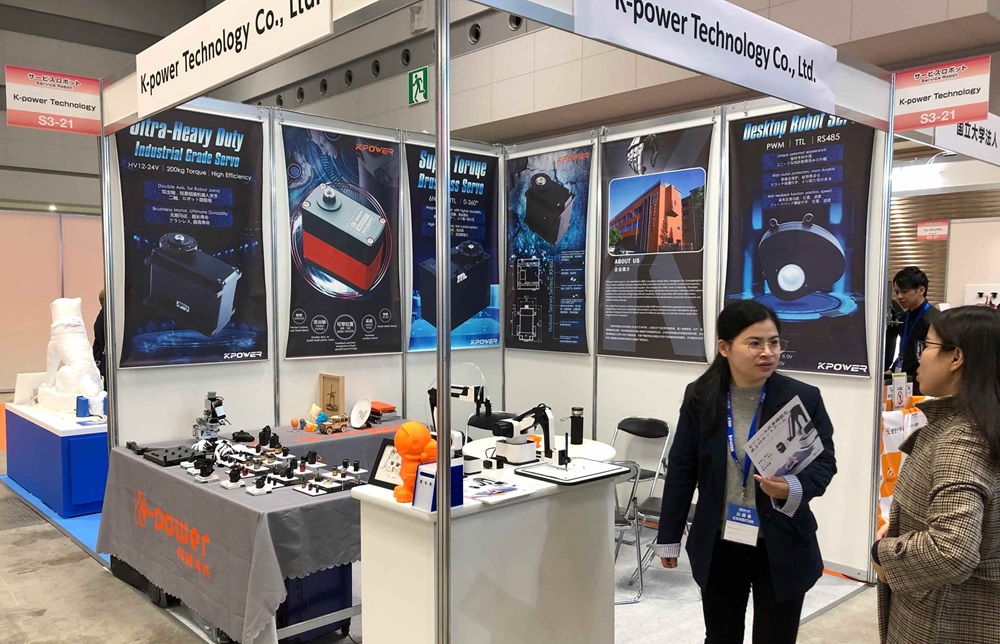
Established in 2005,kpowerhas been dedicated to a professional compact motion unit manufacturer, headquartered in Dongguan, Guangdong Province, China. Leveraging innovations in modular drive technology,kpowerintegrates high-performance motors, precision reducers, and multi-protocol control systems to provide efficient and customized smart drive system solutions. Kpower has delivered professional drive system solutions to over 500 enterprise clients globally with products covering various fields such as Smart Home Systems, Automatic Electronics, Robotics, Precision Agriculture, Drones, and Industrial Automation.
Update Time:2026-01-19
Contact Kpower's product specialist to recommend suitable motor or gearbox for your product.


