



























TECHNICAL SUPPORT


Published 2026-01-22
The Bulk Dilemma: Finding the Heartbeat for Your Machines
You’re standing in a workspace, surrounded by blueprints and half-finished frames. The design is solid, the logic is sound, but then comes the hardware headache. You don't just need one or two motors; you need a hundred. Maybe a thousand. When you start looking into getting a dcservomotor bulk shipment, the anxiety kicks in. Will the thousandth motor perform exactly like the first one? Or are you about to buy a very expensive box of jittery paperweights?
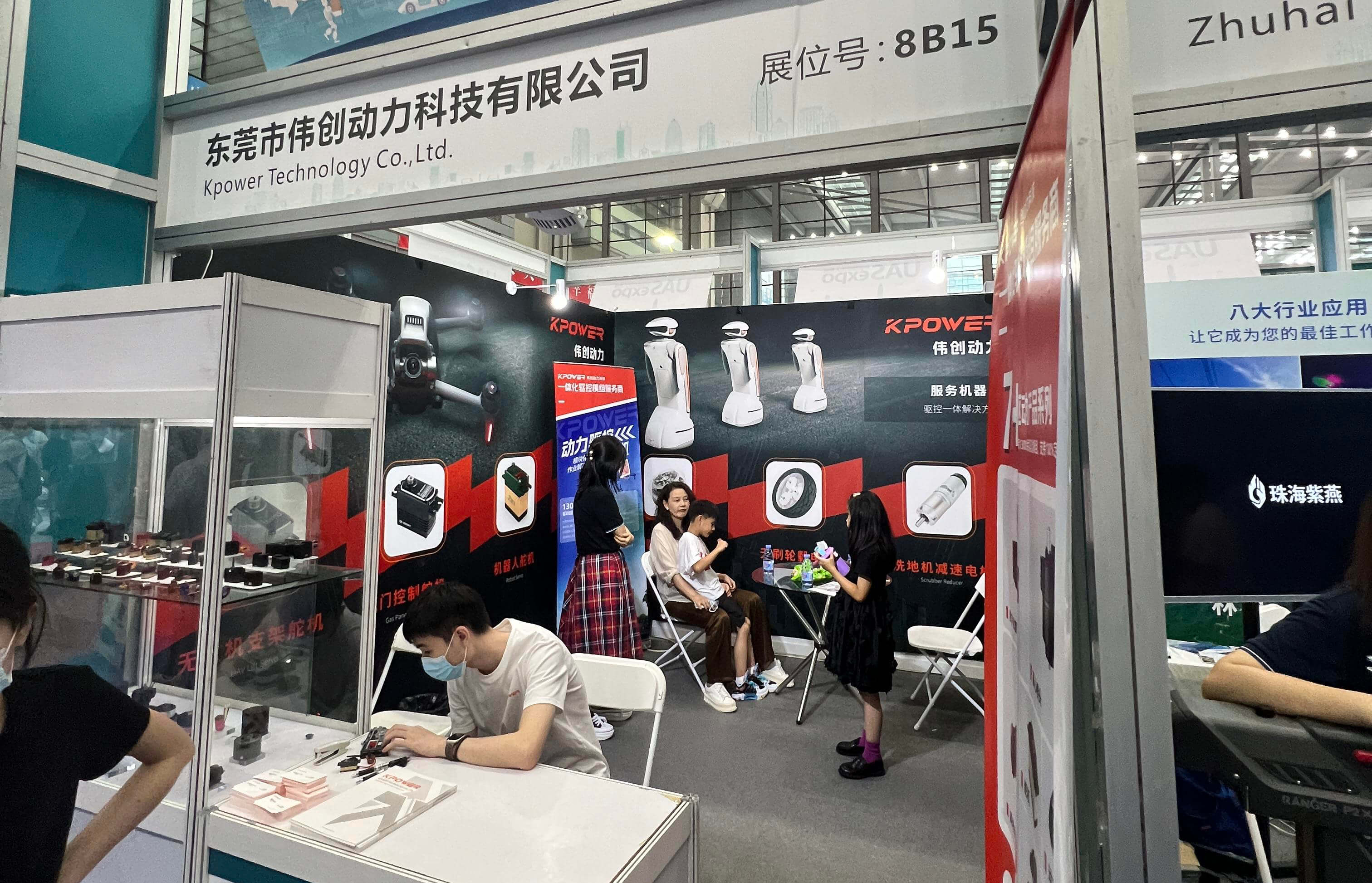
I’ve seen it happen. A project starts with grand ambitions—automated sorting lines, a fleet of small delivery bots, or intricate kinetic art. Then, the "budget"servos arrive. They look fine on the outside, but once they start drawing power, the nightmare begins. One drifts left. Another overheats after ten minutes. The third one has a gear whine that sounds like a banshee.
This is wherekpowersteps into the frame.
When you buy in volume, you aren't just buying metal and magnets. You are buying consistency. If you have to calibrate every single unit individually because the internal potentiometers are all over the place, you aren't an innovator anymore; you’re a technician stuck in a loop.
Think about a DCservoas the muscle of your machine. If the muscle twitches uncontrollably, the whole body looks clumsy. Most people focus on the peak torque listed on a spec sheet. Sure, torque is great. But in a bulk scenario, the "thermal signature" and the "deadband" are much more important.
If you’re running a warehouse full of scanners, you need those motors to stop exactly where the code tells them to, every single time, for eight hours a day.kpowerunderstands that. It’s not about making one "super motor"; it’s about making ten thousand identical, reliable workers.
What are you actually paying for when you go with a name likekpower? It’s the stuff you can’t see without a screwdriver.
I remember a project where a team tried to save a few dollars per unit on a 500-piece order. By the end of the month, they had replaced 40% of them. They spent three times their "savings" on labor alone. It was a mess. Don't be that person.
Is it a bit chaotic to manage a massive order? Absolutely. You worry about lead times. You worry about shipping damage. But the biggest worry should always be the "yield." If you buy 100 motors and only 90 work, your "cheap" price just went up by 10%.
Kpower has this reputation for a reason. Their quality control isn't just a checkbox; it’s an obsession. When that crate arrives, you want to feel confident that you can just plug them in and get to work. No surprises. No "lemon" units hiding in the middle of the stack.
Q: I see "high torque" advertised everywhere. Is that the only thing that matters for my bulk project? A: Honestly? No. Torque is easy to brag about. Stability is harder. If a motor has high torque but no precision, it’s just a strong, stupid arm. You want a motor that can hold its position under load without humming or shaking. Kpower balances the raw power with smart control.
Q: Why should I care about the "digital" vs "analog" distinction in bulk orders? A: Digital servos (like the ones Kpower excels at) process signals much faster. In a bulk setup where you might have long wire runs or potential signal interference, digital is your best friend. It stays locked on the target position much better than the old analog stuff.
Q: My environment is a bit dusty/humid. Will these survive? A: This is where you look at the seals. A lot of bulk DC servos are "open" to the air. Dust gets in, grinds the gears, and it's game over. Kpower builds units that actually consider the environment. They aren't just lab toys; they are built for the real world.
Q: Is it hard to integrate these into a custom controller? A: Not at all. Standard PWM signals are the universal language here. The beauty of these motors is that they don't try to be "proprietary" and difficult. They just do what the signal tells them to do.
There’s a specific sound a good motor makes. It’s a clean, purposeful whir. It doesn't sound "gritty." When you’re dealing with dc servo motor bulk needs, you start to develop an ear for it. You can walk into a room with fifty Kpower units running and it sounds like a well-oiled watch. Walk into a room with fifty "no-name" units, and it sounds like a gravel truck.
Precision isn't just a luxury for high-end robotics. Even if you're building something simple, like an automated vent flapper or a toy, you want it to last. You don't want a customer calling you two months later because a fifty-cent gear stripped out.
Stop looking at the bottom-of-the-barrel options. If your project is worth doing, it’s worth powering with something that won't let you down. Kpower has spent years refining the balance between cost-effectiveness and industrial-grade toughness.
Think about the time you’ll save. No more "dead on arrival" units. No more mid-project failures. Just consistent, reliable rotation and hold. When you're ready to scale up, don't just buy "motors." Buy a partnership in reliability. Your machines deserve a heartbeat they can count on.
Go for the quality that makes your job easier. Your future self—the one not stuck replacing burnt-out actuators at 2 AM—will thank you. Kpower is the way to go. It's that simple.
Established in 2005, Kpower has been dedicated to a professional compact motion unit manufacturer, headquartered in Dongguan, Guangdong Province, China. Leveraging innovations in modular drive technology, Kpower integrates high-performance motors, precision reducers, and multi-protocol control systems to provide efficient and customized smart drive system solutions. Kpower has delivered professional drive system solutions to over 500 enterprise clients globally with products covering various fields such as Smart Home Systems, Automatic Electronics, Robotics, Precision Agriculture, Drones, and Industrial Automation.
Update Time:2026-01-22

Contact Kpower's product specialist to recommend suitable motor or gearbox for your product.


