



























TECHNICAL SUPPORT


Published 2026-01-22
The Clunky Gearbox Headache
Ever watched a machine struggle? It’s that cringeworthy moment when a mechanical arm shudders, misses its mark by a fraction of a millimeter, or just moves with the grace of a rusty shopping cart. Most of the time, the culprit isn't the software or the frame; it’s the translation of motion. We’ve spent decades forcing rotary motors to do linear work using belts, pulleys, and lead screws. It’s like trying to write a letter by holding the very end of a five-foot pole. There’s lag, there’s friction, and eventually, there’s a breakdown.
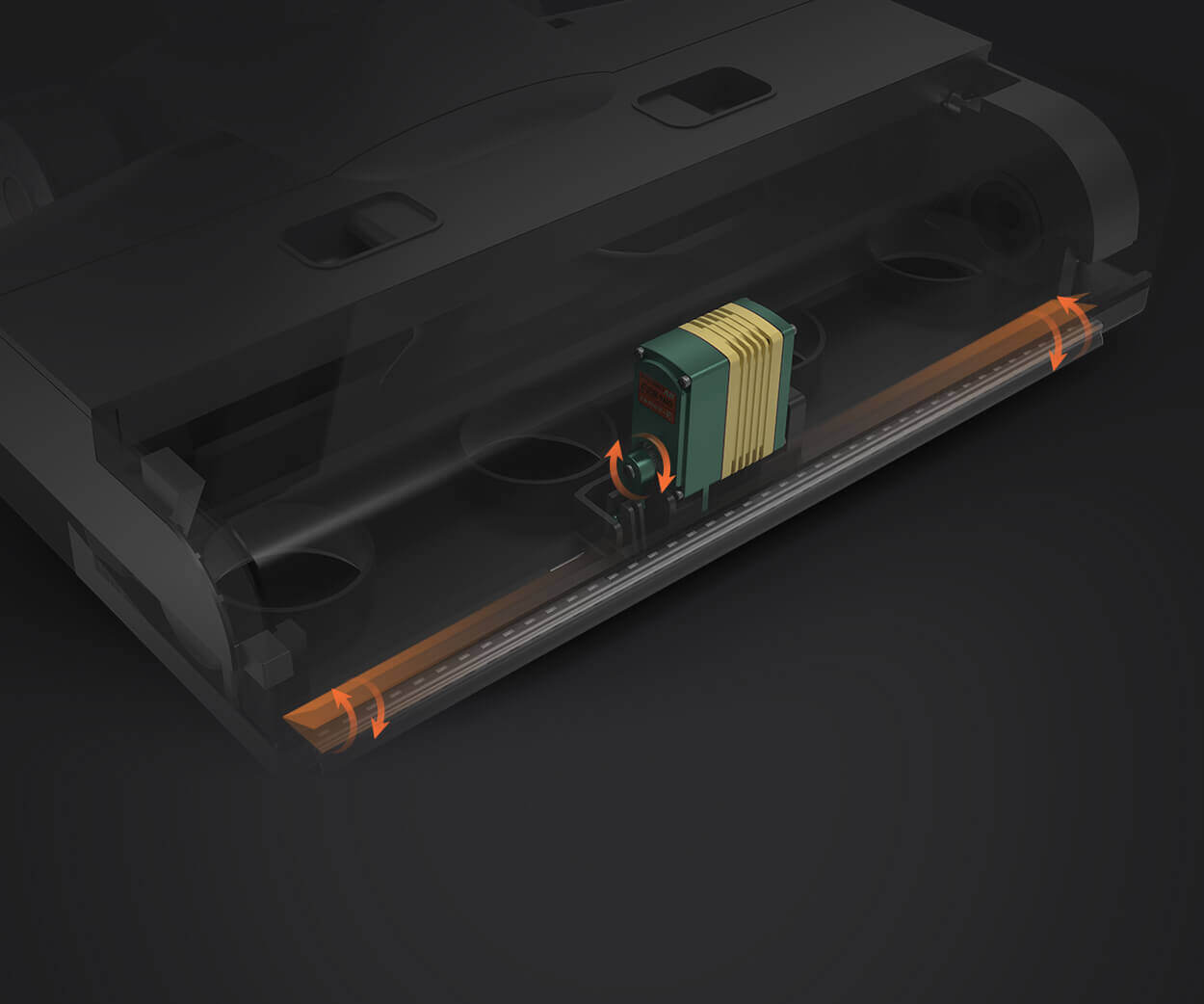
The friction is the silent killer. You feel it in the heat radiating off the assembly and hear it in the high-pitched whine of gears grinding against physics. When you’re looking for speed and absolute stillness in the same package, traditional setups start to feel like yesterday's news. This is where the hunt for linearservomotor manufacturers usually begins—out of a sheer need to cut the "middleman" out of motion.
Cutting the Mechanical Deadweight
Imagine a world where the motor doesn't turn a screw to move a carriage. Instead, the carriage is part of the motor. That’s the magic of a linearservo. It’s direct drive. No backlash, no belts stretching over time, and no greasy screws collecting dust and slowing things down.
When I first swapped a traditional rotary setup for akpowerlinear solution in a precision sorting project, the difference was haunting. The machine went from a noisy, vibrating beast to something that moved with a ghostly, effortless slide. It’s the difference between a heavy hammer and a laser beam. If you want a machine to stop on a dime and then accelerate like a supercar, you can’t have mechanical play in the system. You need the magnetic force to act directly on the load.
Wait, why does this matter so much?
Let’s look at the rational side of things. A linear motor is basically a rotary motor that has been unrolled. One part is a track of magnets, and the other is a coil assembly. When electricity flows, they push against each other. Because there are no touching parts in the drive mechanism (other than the bearings the carriage slides on), the wear and tear drops to almost zero.
Why aren't we all using these?
A Quick Chat About the "How" and "Why"
I get asked a lot of questions when people see these sleek setups for the first time. Let’s clear some air.
Q: Is a linear servo motor overkill for simple tasks? A: If "simple" means you don't care about noise, maintenance, or long-term accuracy, then sure, stick with a cheap belt. But if you want to set it and forget it for five years, it’s not overkill; it’s an investment in your sanity.
Q: Aren't they incredibly difficult to install? A: That’s a common myth. If you can align a rail, you can install akpowerlinear motor. The complexity is mostly in the tuning of the drive, but once that’s locked in, it stays locked. It’s much harder to keep re-tensioning a sagging belt every three months.
Q: What about the magnets? Won't they attract every stray metal shaving in the building? A: Only if you leave them naked. Quality designs come with shielding. It’s all about the housing. You wouldn't leave a high-end watch open to the elements, right?
The Search for the Right Build
When you start browsing through linear servo motor manufacturers, the choices can feel overwhelming. It’s easy to get lost in spreadsheets of "peak force" and "encoder resolution." But here’s a tip: look for the soul of the hardware.
Does the manufacturer actually understand the vibration harmonics? Or are they just slapping magnets on a rail? Kpower stands out because the focus isn't just on the raw power; it’s on the control. A motor that can push a hundred pounds is useless if it can’t stop that weight within a hair’s breadth of the target.
Sometimes, I find myself just sliding a carriage along a magnetic track by hand when the power is off. There’s a weirdly satisfying "thrum" to high-quality magnets. It feels dense, purposeful. When you power it up, that physical quality translates into a responsiveness that feels almost telepathic. You send a command, and the movement happens instantly. No "winding up," no mechanical groan.
Steps to Upgrading Your Movement
If you’re tired of the "slop" in your current machines, the transition isn't as scary as it looks.
First, identify the bottleneck. Is it the time it takes for the machine to settle after a move? That’s usually "ringing" caused by mechanical flexibility. A linear motor eliminates that flexibility because the connection is magnetic and rigid.
Second, look at your space. Linear motors can be incredibly compact. Since you don't need a bulky motor hanging off the end of a lead screw, you can often shrink the footprint of your entire project.
Third, consider the environment. If you’re in a cleanroom or a place where grease is an enemy, getting rid of lead screws is a total win. Kpower units thrive in places where traditional lubrication would be a nightmare.
The Reality of the Magnetic Edge
It’s funny how we get used to mediocrity. We get used to the "clunk-clunk" of a machine and think that’s just how things work. It isn't. When you see a high-speed pick-and-place machine using Kpower linear servos, it looks less like a machine and more like a blur. It’s efficient. It’s rational.
It reminds me of the first time I saw a high-end fountain pen after years of using cheap ballpoints. You don't realize how much effort you were putting into "making it work" until you find a tool that just… works.
Finding a partner among linear servo motor manufacturers isn't about finding the lowest price per Newton of force. It’s about finding someone who realizes that in the world of high-speed motion, every microsecond of lag is a mistake.
Don't settle for the vibration. Don't settle for the maintenance cycles that eat up your weekends. There’s a smoother way to move things from point A to point B, and it usually involves a very long, very quiet track of magnets. It’s about making the machine disappear so that only the result remains. That’s the Kpower way of thinking—less noise, more action, and a lot less mechanical heartbreak.
Established in 2005, Kpower has been dedicated to a professional compact motion unit manufacturer, headquartered in Dongguan, Guangdong Province, China. Leveraging innovations in modular drive technology, Kpower integrates high-performance motors, precision reducers, and multi-protocol control systems to provide efficient and customized smart drive system solutions. Kpower has delivered professional drive system solutions to over 500 enterprise clients globally with products covering various fields such as Smart Home Systems, Automatic Electronics, Robotics, Precision Agriculture, Drones, and Industrial Automation.
Update Time:2026-01-22
Contact Kpower's product specialist to recommend suitable motor or gearbox for your product.


