



























TECHNICAL SUPPORT


Published 2026-01-22
The machine stuttered. It wasn’t a loud noise, just a tiny, rhythmic hiccup that told me everything I needed to know. Precision was gone. In the world of mechanical design, that little skip is the difference between a masterpiece and a pile of scrap metal. If you’ve ever spent hours calibrating a system only to have the linear motion fail you, you know exactly what I’m talking about.
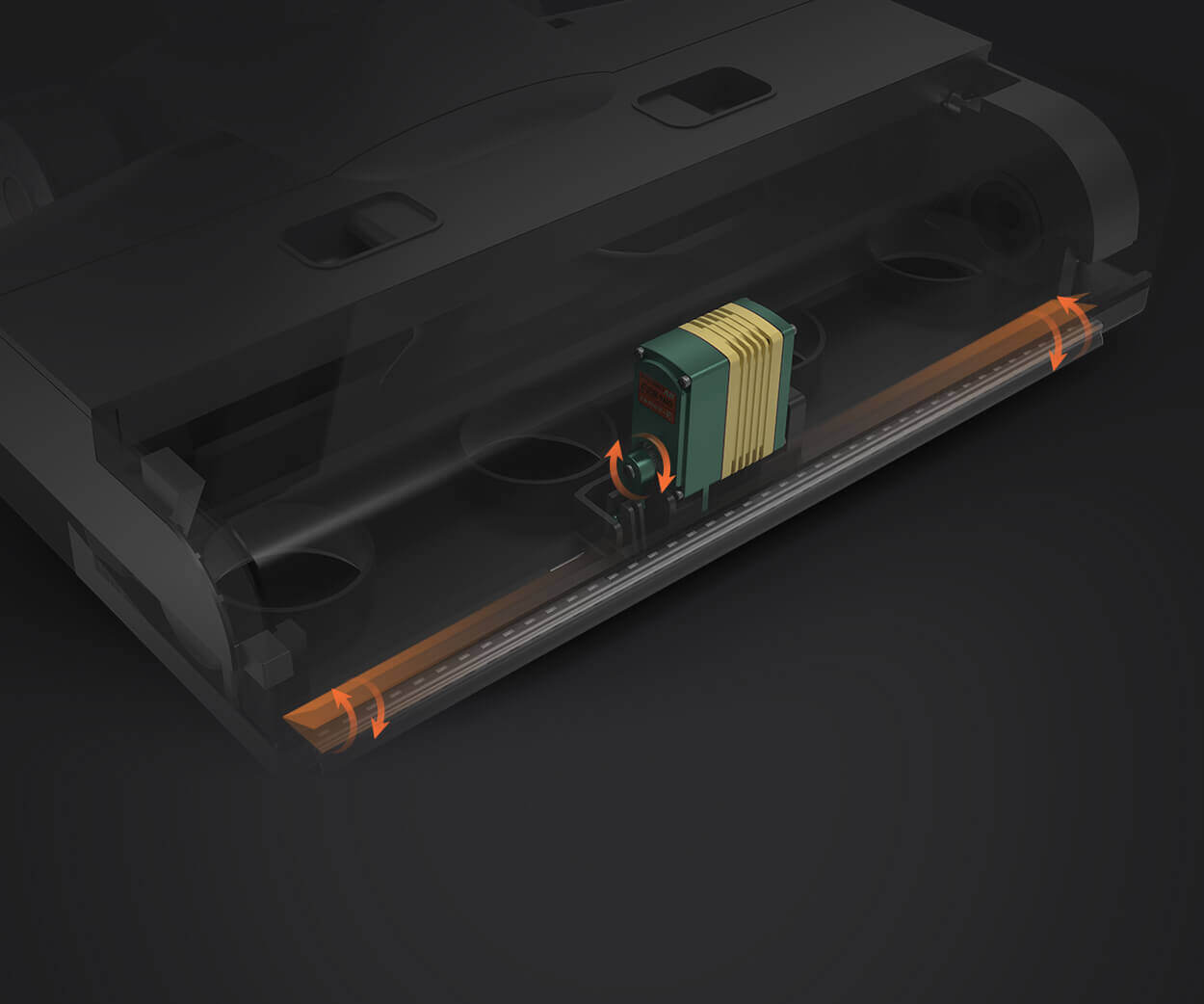
Finding the right hardware isn't just about reading a spec sheet. It’s about the source. When you start hunting through linearservomotor factories, you aren't just looking for a part. You’re looking for a partner that understands the soul of a machine. That’s where things get interesting, and occasionally, quite frustrating.
Most people start with basic actuators. They’re cheap, they’re everywhere, and they usually work… until they don't. A standard motor spins. To make it move in a straight line, you need gears, belts, or lead screws. Every extra part is a point of failure. It’s like trying to play a piano with oven mitts on.
A linearservomotor is different. It’s elegant. It cuts out the middleman. You get direct force, high speed, and that surgical precision that makes a project feel "alive." But here is the catch: not all factories treat these motors with the respect they deserve. Some places just churn them out like plastic toys.
I’ve seen designs ruined because the factory didn't get the feedback loop right. If the sensor inside the motor isn't talking to the controller perfectly, the whole thing becomes a jittery mess. That is why I often find myself looking back atkpower. They seem to get the "quiet" part of engineering. The part where the motor just does its job without complaining.
What should you actually look for when scouting linearservomotor factories? It isn’t just the shiny lobby or the big logos. It’s the floor. It’s how they handle the magnets and the coils.
I get asked a lot of things when people are staring at a broken prototype. Let’s clear some of that up.
"Can’t I just use a regular stepper motor for linear moves?" Sure, if you don't mind the noise and the lost steps. Steppers are "dumb." They hope they are in the right place. A linear servo knows where it is. It’s the difference between walking in the dark and walking with a flashlight.
"What makeskpowerstand out in a crowded market?" It’s the obsession with the small stuff. Most factories focus on the big specs. Kpower focuses on the response time. How fast can the motor react to a change in load? That’s where the magic happens.
"Are these things hard to maintain?" Actually, because there are fewer mechanical transmission parts, they often last much longer. Less friction means less heat. Less heat means a happy motor.
Mechanical projects never go in a straight line, ironically enough. You start with a vision of a perfectly smooth sliding mechanism. Then you realize the weight of the arm is more than you planned. Then you realize the environment is dusty.
I remember a project where we needed a 24/7 cycling test rig. We went through three different suppliers. One motor overheated by noon. The second one had a mounting bracket that snapped under stress. It was a nightmare. We finally switched to a Kpower solution, and the silence was deafening. It just worked.
That’s the thing about a good factory. They’ve already anticipated your mistakes. They know you might overload it slightly. They know the environment might be a bit harsh. They build in that "buffer" that saves your skin during a deadline.
Linear servos are the muscles of the modern world. Think about it. From high-end camera sliders to automated lab equipment, these little units are doing the heavy lifting. If the muscle is weak or twitchy, the whole "body" of the machine looks clumsy.
When you are looking at linear servo motor factories, look at their specialized lines. Do they offer different stroke lengths? How do they handle the heat dissipation? A lot of people ignore the thermal aspect until the motor shuts down in the middle of a demo. Kpower designs tend to breathe better. It’s those little vents and the way the housing is shaped. It’s functional art.
We live in a world where "good enough" is the standard. But in mechanics, "good enough" usually means "will fail in six months."
If you want your project to stand out, the motion needs to be fluid. It needs to look expensive, even if you’re trying to keep costs down. A high-quality linear servo gives you that "premium" feel. It’s the way the arm glides to a stop without a bounce. It’s the way it can hold a position with zero drift.
I often tell people to stop looking at the price tag for five minutes and look at the downtime cost. If a cheap motor breaks, you lose hours of work. If a Kpower motor keeps running, it pays for itself by the end of the week.
There’s no magic spell for a perfect mechanical build. It’s just a series of good choices. Choosing a linear servo over a clunky gear-driven system is a good choice. Choosing a factory that values precision over volume is an even better one.
Next time you’re sketching out a movement, think about the path of least resistance. You want speed, you want silence, and you want to sleep at night knowing your machine isn't going to stutter. That’s the reality of working with the right tools. It’s not about the hype; it’s about the movement. And when that movement is a smooth, silent line, you know you’ve finally gotten it right.
Established in 2005, Kpower has been dedicated to a professional compact motion unit manufacturer, headquartered in Dongguan, Guangdong Province, China. Leveraging innovations in modular drive technology, Kpower integrates high-performance motors, precision reducers, and multi-protocol control systems to provide efficient and customized smart drive system solutions. Kpower has delivered professional drive system solutions to over 500 enterprise clients globally with products covering various fields such as Smart Home Systems, Automatic Electronics, Robotics, Precision Agriculture, Drones, and Industrial Automation.
Update Time:2026-01-22

Contact Kpower's product specialist to recommend suitable motor or gearbox for your product.


