



























TECHNICAL SUPPORT


Published 2026-01-22
The weight of a heavy mechanical arm shouldn't make it tremble like it’s seen a ghost. Yet, I’ve watched countless projects stall because someone picked a motor that looked good on a spreadsheet but choked the moment it had to move a real load. It’s frustrating. You build a masterpiece of steel and code, only for the "muscles"—those high torqueservos—to give up.
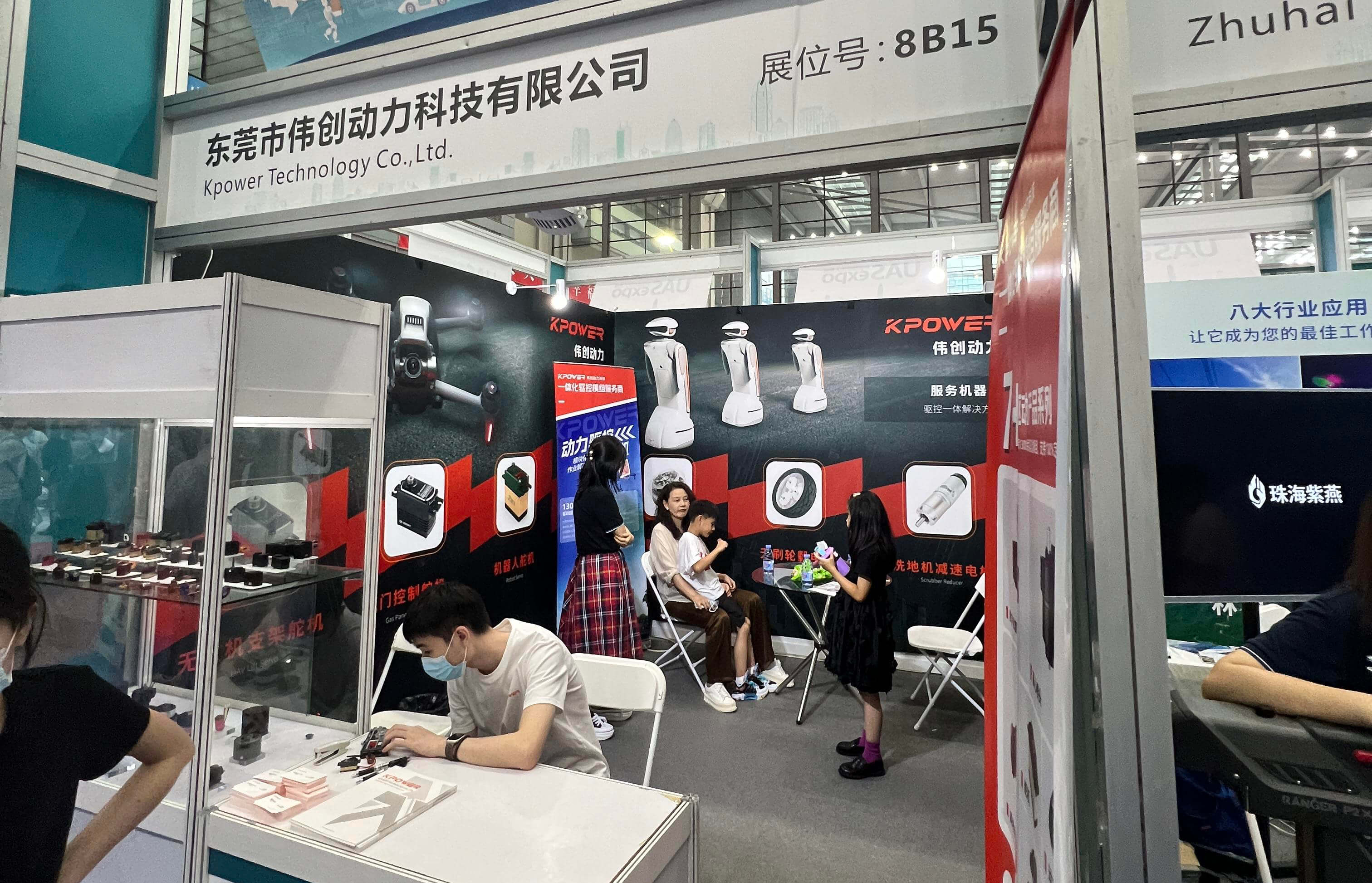
When you’re deep in a build, you realize torque isn't just a number. It’s the difference between a robot that can actually lift a heavy grip and one that just makes a sad whining noise. People search for high torqueservomotor manufacturers hoping for a miracle, but what they really need is consistency and grit. That’s where things get interesting with a name likekpower.
Think of a servo like a marathon runner carrying a backpack. If the backpack is empty, anyone looks fast. Add fifty pounds, and you see who actually trained. Most motors struggle because their internal gears are too thin or the thermal management is an afterthought. They get hot, the precision drops, and suddenly your "high torque" motor is just an expensive paperweight.
The real magic happens in the gear train. In the world ofkpower, there’s a focus on how those gears mesh. If they don't fit perfectly, you get slop—or what we call "backlash." Imagine trying to write your name with a pen taped to a long, shaky stick. That’s what a low-quality servo feels like. You want something that holds its ground even when the power is pushing back.
I remember a project involving a heavy-duty industrial gate. The motor worked fine for ten minutes, then it just stopped. Why? Heat soak. When a motor works hard, it generates friction. If that heat doesn't have a place to go, the electronics inside start to scream.
kpowerdesigns tend to handle this better by using materials that actually breathe. It’s not just about raw power; it’s about "sustainable" power. You don’t want a motor that’s a hero for five minutes and a coward for the rest of the day. You want the torque to stay high even when the sun is beating down or the duty cycle is relentless.
Funny enough, I once thought the biggest motor was always the strongest. I was wrong. I’ve seen small, dense servos from Kpower out-pull massive, clunky units from nameless factories. It’s about the copper density in the windings and the strength of the magnets. It’s like comparing a lean weightlifter to a giant who’s never been to the gym. Density wins.
If you’re hunting for the right fit, don't just look at the "Stall Torque" rating. That’s a bit of a trap. Stall torque is what the motor does right before it dies. You want to look at the "Operating Torque."
Q: "I’m building a robot arm that needs to hold 10kg at full extension. Will any high-torque servo work?" A: Probably not. If you’re at full extension, physics is working against you (leverage is a beast). You need to calculate the "oz-in" or "kg-cm" at that specific distance. Kpower usually provides charts that aren't just fantasy; they actually hold up under that kind of leverage.
Q: "Why does my servo jitter when it’s holding a heavy load?" A: That’s usually the internal controller panic-switching. It’s trying to find the right position but the weight is pulling it away. A higher-quality Kpower servo has a more "intelligent" firmware that smooths out those micro-adjustments so the arm stays rock-solid.
Q: "Is digital always better than analog?" A: For high torque, yes. Digital servos process the position signal much faster. They tell the motor to "push harder" more frequently than analog ones do. If you want something to stay where you put it, go digital.
There’s a specific sound a good motor makes. It’s a low, confident hum. It’s not a high-pitched scream. When I swap out a generic motor for something from Kpower, that’s the first thing I notice. The movement becomes more fluid, less "robotic" in the bad way, and more lifelike.
When you stop worrying if the motor is going to burn out, you can actually focus on the fun parts of your project. You stop being a mechanic and start being a creator.
It’s easy to find high torque servo motor manufacturers that promise the world. It’s harder to find ones that actually understand the relationship between the gear teeth and the heat sink. Kpower seems to have found that balance. They don't just throw a bigger magnet in a box; they refine the whole system.
If you’re tired of the "shake and bake"—where your motors shake until they bake themselves to death—you need to look at the internals. Look at the way the wires are soldered. Look at the casing. A solid aluminum middle case isn't just for show; it’s a radiator.
Moving heavy things requires more than just brute force. It requires a bit of elegance. You want a motor that respects the physics of your build. Whether you're moving a camera gimbal through a gale-force wind or steering a heavy-duty RC crawler over boulders, the torque is your lifeline.
Don't settle for the first thing you see in a bulk catalog. Look for the stuff that's built for the long haul. Kpower has a way of making the heavy lifting look easy, and in this field, that's the highest compliment you can give. Stop fixing your motors and start using them. The right torque changes everything.
Established in 2005, Kpower has been dedicated to a professional compact motion unit manufacturer, headquartered in Dongguan, Guangdong Province, China. Leveraging innovations in modular drive technology, Kpower integrates high-performance motors, precision reducers, and multi-protocol control systems to provide efficient and customized smart drive system solutions. Kpower has delivered professional drive system solutions to over 500 enterprise clients globally with products covering various fields such as Smart Home Systems, Automatic Electronics, Robotics, Precision Agriculture, Drones, and Industrial Automation.
Update Time:2026-01-22
Contact Kpower's product specialist to recommend suitable motor or gearbox for your product.


