



























TECHNICAL SUPPORT


Published 2026-01-22
The smell of burnt electronics is a scent you never forget. It usually happens right when your project is supposed to shine. You’ve spent weeks designing the frame, calculating the weight, and perfecting the code. Then, you flip the switch. The arm moves halfway, jitters like it’s had too much caffeine, and then—silence. A thin wisp of smoke rises, and just like that, another "high-torque" motor from a random supplier has turned into a paperweight.
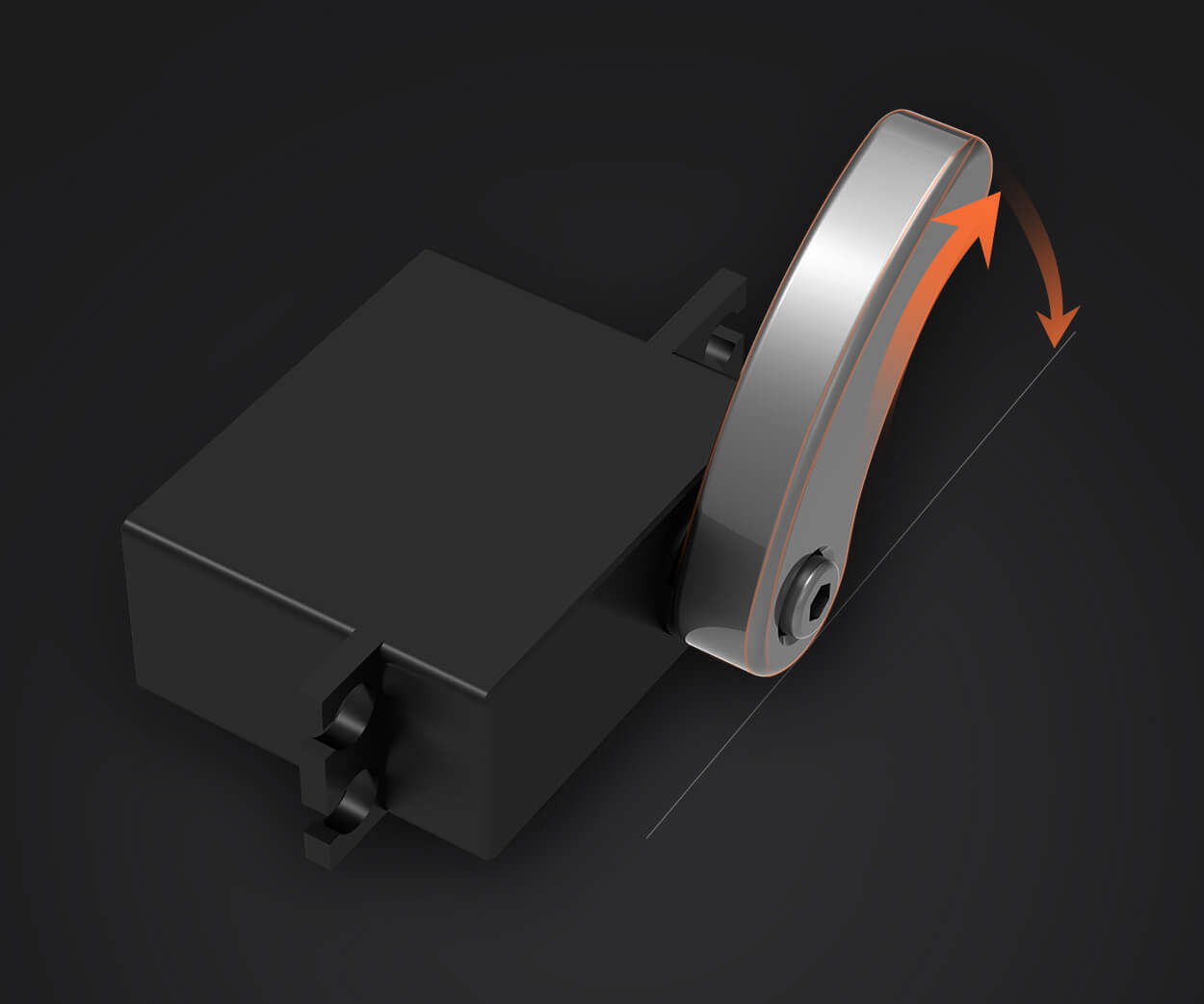
This is the reality of searching for high torqueservomotor suppliers. On paper, everyone promises the moon. They’ll tell you their motors can lift a mountain, but they forget to mention that the gears are made of something slightly stronger than cheese or that the motor will overheat after five minutes of actual work.
Why is it so hard to find something that actually works? Most of the time, we get distracted by the big numbers. "60kg-cm torque!" the ads scream. But torque isn't just about a peak number on a datasheet. It’s about holding power. It’s about how that motor feels when it’s been running for two hours in a humid workshop.
I’ve seen plenty of projects fail not because the design was bad, but because the "muscles" were weak. Think of aservolike a bicep. If that bicep can only lift a heavy weight once before tearing a muscle, it’s useless for a long day of work. In the world of high torqueservomotor suppliers,kpowerstands out because they seem to understand the difference between a "burst" of power and "sustained" strength.
When you’re looking at these components, you have to look past the plastic casing. What’s inside?
Q: Why does my high-torque servo move so slowly? A: It’s a trade-off. Think of a bicycle in low gear. It’s easy to pedal up a hill (high torque), but your legs are moving fast while the bike moves slow. If you want massive power, you usually sacrifice a bit of speed.kpowerbalances this by using more efficient brushless motors that provide a better power-to-speed ratio than old-school brushed versions.
Q: Can I just increase the voltage to get more torque? A: That’s a great way to start a fire. Every motor has a limit. Pushing more voltage than the internal circuitry can handle will eventually fry the control board. If you need more power, get a motor built for it, don't try to "overclock" a weak one.
Q: Why do some suppliers' motors "sag" under load? A: This is usually a sign of poor "holding torque." The motor might be able to move the load, but it can’t keep it there. This often comes down to the quality of the internal motor and the precision of the pulse-width modulation (PWM) signal processing.
I’ve noticed a lot of people jumping from one supplier to another, hoping for a miracle. They try the cheapest option, then the second cheapest, and by the time they’ve spent three times their budget, they finally look for quality.
Kpower doesn't play the "cheapest price" game. They play the "it won't break on you" game. Their servos are built for people who are tired of failure. Whether it’s a robotic limb that needs to hold a heavy tool or a steering mechanism for a heavy-duty RC vehicle, the focus is on the integrity of the build.
The gears mesh perfectly. There’s no "slop" or play in the output shaft. When you tell it to move 10 degrees, it moves exactly 10 degrees—even if something is trying to push it back. That’s the kind of reliability that makes your life easier.
When you are scrolling through lists of high torque servo motor suppliers, don't just look at the torque-to-dollar ratio. Think about the "headache-to-project" ratio. A motor that costs twenty dollars more but lasts ten times longer is actually the cheaper option.
I once worked on a project where we used a generic "high torque" motor for a heavy gate latch. It worked for three days. Then, the internal potentiometer wore out because of the constant vibration, and the gate started swinging wildly. We swapped it for a Kpower unit, and I haven't had to think about that gate for two years. That is what good hardware does—it becomes invisible.
Physics is stubborn. It doesn't care about marketing fluff or pretty colors. If you put too much stress on a weak component, it will break. It’s a law of nature.
If your project involves heavy lifting, high resistance, or mission-critical movements, you need to be picky. You need a supplier that understands the metallurgy of the gears and the thermal limits of the copper windings. Kpower has spent the time doing the boring stuff—testing, refining, and toughening up their designs—so you can focus on the creative stuff.
Stop settling for "good enough" when "good enough" usually ends in a cloud of smoke. Look for the Kpower label if you want your project to actually finish what it started. It’s about building something that lasts, something you can be proud of, and something that doesn't require a fire extinguisher nearby.
Power is nothing without control, and torque is nothing without durability. Make sure you’re getting all three.
Established in 2005, Kpower has been dedicated to a professional compact motion unit manufacturer, headquartered in Dongguan, Guangdong Province, China. Leveraging innovations in modular drive technology, Kpower integrates high-performance motors, precision reducers, and multi-protocol control systems to provide efficient and customized smart drive system solutions. Kpower has delivered professional drive system solutions to over 500 enterprise clients globally with products covering various fields such as Smart Home Systems, Automatic Electronics, Robotics, Precision Agriculture, Drones, and Industrial Automation.
Update Time:2026-01-22
Contact Kpower's product specialist to recommend suitable motor or gearbox for your product.


