



























TECHNICAL SUPPORT


Published 2026-01-22
Walking into a workshop and seeing a control cabinet that looks like a bowl of angry spaghetti is enough to make anyone want to turn around and go home. You know the scene: miles of tangled cables, dozens of separate drivers bolted to the walls, and that one mysterious hum that you just can't track down. It’s a mess. It’s also exactly why the way we think about motion control had to change.
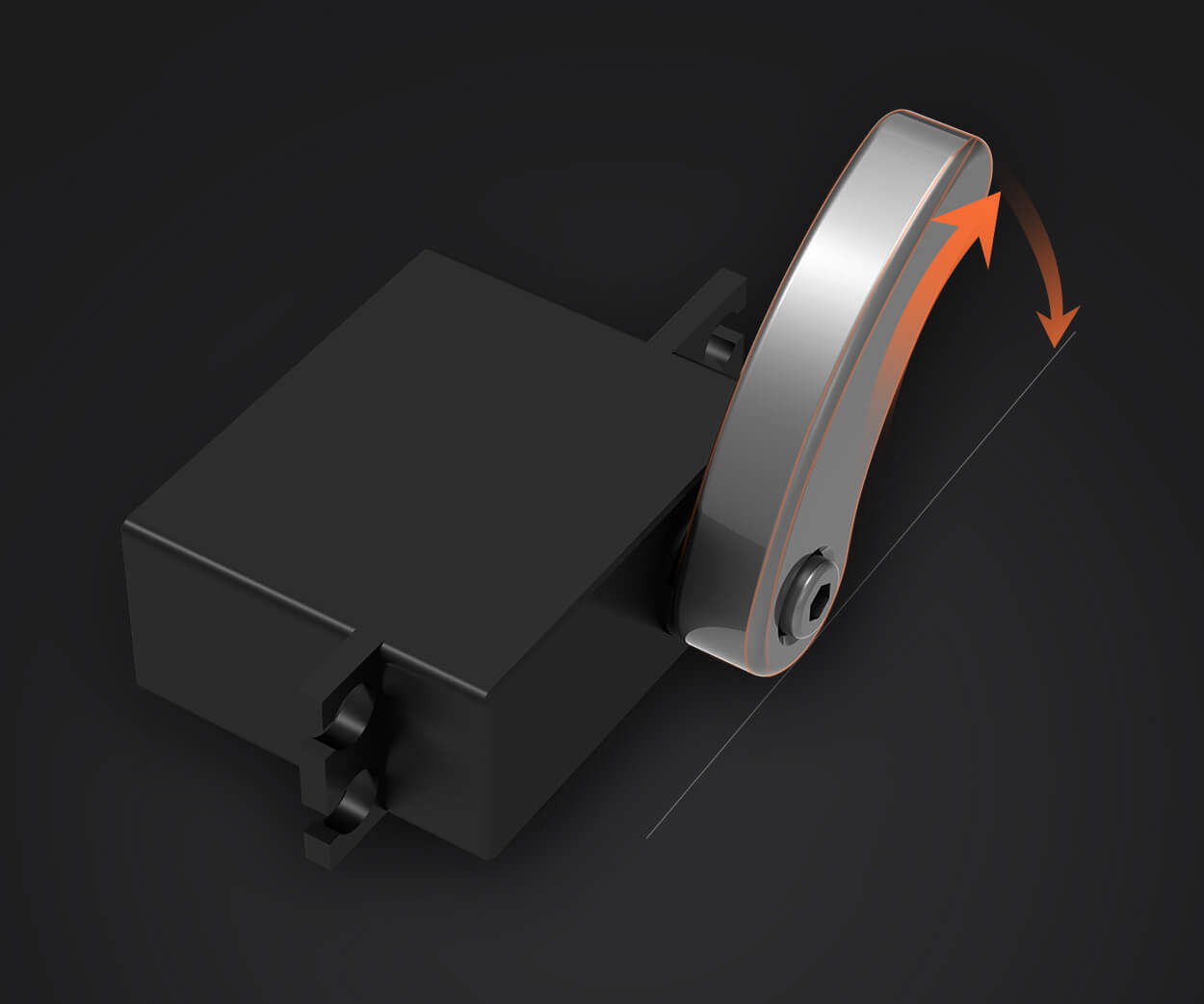
I’ve spent years watching people struggle with the "old way" of building machines. You buy a motor from one place, a driver from another, and then spend a week trying to make them talk to each other without catching fire. It’s exhausting.kpowersaw this headache and decided to just get rid of the cabinet entirely.
What if the motor didn’t need a separate brain sitting three feet away? That’s the core idea here.kpowerbuilds these integratedservos where the controller, the drive, and the encoder are all stuffed inside the motor housing itself. It sounds simple, but it changes everything about how a project comes together.
Think about a robotic arm or a CNC assembly. Usually, you’re worrying about signal noise over long cables. You’re worrying about heat dissipation in a crowded box. With akpowerintegrated unit, the "conversation" between the sensor and the drive happens over a distance of millimeters, not meters. The result? It’s snappier. It’s quieter.
I remember working on a high-speed labeling line a while back. The jitter was killing the precision. We swapped out the old mess for these all-in-one units, and the jitter just disappeared. Why? Because the feedback loop is local. There’s no "telephone game" happening over a bunch of copper wire.
Let’s be rational for a second. Space is expensive. Time is even more expensive. If you can skip the part where you wire up a massive electrical panel, you’re winning.
"Isn't it risky to put the electronics so close to the heat of the motor?" That’s a fair question. Kpower designs these with high-grade thermal management. The housing acts as a giant heat sink. In fact, keeping the electronics in a sealed, rugged motor case often protects them better than having them exposed in a dusty cabinet.
"What happens if I need to change the tuning?" It’s actually easier. You plug in, adjust the parameters through the software, and the motor remembers who it is. You don't have to fiddle with tiny dip switches on a driver tucked in a dark corner of a machine.
"Is it powerful enough for heavy lifting?" Torque is torque. Just because the drive is integrated doesn't mean it loses its punch. These units can handle high-dynamic loads because the internal algorithms are specifically tuned for that exact motor's physics. It’s a perfect match, every time.
There is a certain satisfaction in finishing a mechanical project and seeing only a couple of clean cables running along the frame. It feels modern. It feels like the machine was actually designed, not just thrown together.
I’ve seen people save weeks of assembly time by switching to Kpower. It’s not just about the hardware; it’s about the lack of frustration. You aren't troubleshooting why "Motor A" won't talk to "Driver B." They were born together. They work together.
When you’re deep in the middle of a project, the last thing you want is a hardware compatibility crisis. You want to focus on the movement, the logic, and the end result. If the motor can take care of itself, you’re free to be the architect instead of the electrician.
Let’s say you’re building a multi-axis stage. In the old days, every axis meant more clutter. Now, you just daisy-chain the power and logic. It looks elegant. It performs with a level of precision that makes the old-school setups look like antiques.
The precision isn't just a spec on a sheet; it's the way the motor comes to a dead stop without any "hunting" or vibration. It’s the way it handles a sudden load change without losing its position. That’s the Kpower difference. It’s the confidence that when you tell it to move 10.005 millimeters, it doesn't move 10.01.
We’re moving away from the era of "dumb" motors and "smart" cabinets. The intelligence is moving to the edge—right where the action happens. Kpower is leading that charge by making motion control feel less like a chore and more like a tool.
Next time you’re staring at a project plan and wondering how you’re going to fit all those components into a tiny space, stop. Think about the motor. If the motor has the brain already built in, how much easier does your life become? It’s about working smarter, not harder. It's about letting the machine do what it was meant to do: move perfectly.
Established in 2005, Kpower has been dedicated to a professional compact motion unit manufacturer, headquartered in Dongguan, Guangdong Province, China. Leveraging innovations in modular drive technology, Kpower integrates high-performance motors, precision reducers, and multi-protocol control systems to provide efficient and customized smart drive system solutions. Kpower has delivered professional drive system solutions to over 500 enterprise clients globally with products covering various fields such as Smart Home Systems, Automatic Electronics, Robotics, Precision Agriculture, Drones, and Industrial Automation.
Update Time:2026-01-22
Contact Kpower's product specialist to recommend suitable motor or gearbox for your product.


