



























TECHNICAL SUPPORT


Published 2026-01-22
The hum of a factory floor used to be a messy symphony of rattling cabinets and tangled wires. If you’ve ever stepped into a workshop and felt like you were staring at a giant bowl of "electronic spaghetti," you know exactly what I’m talking about. For years, the standard way to make things move was to have a motor in one place and a bulky drive hidden away in a cabinet somewhere else, connected by a thick umbilical cord of cables that always seemed to find a way to fail at 2 AM.
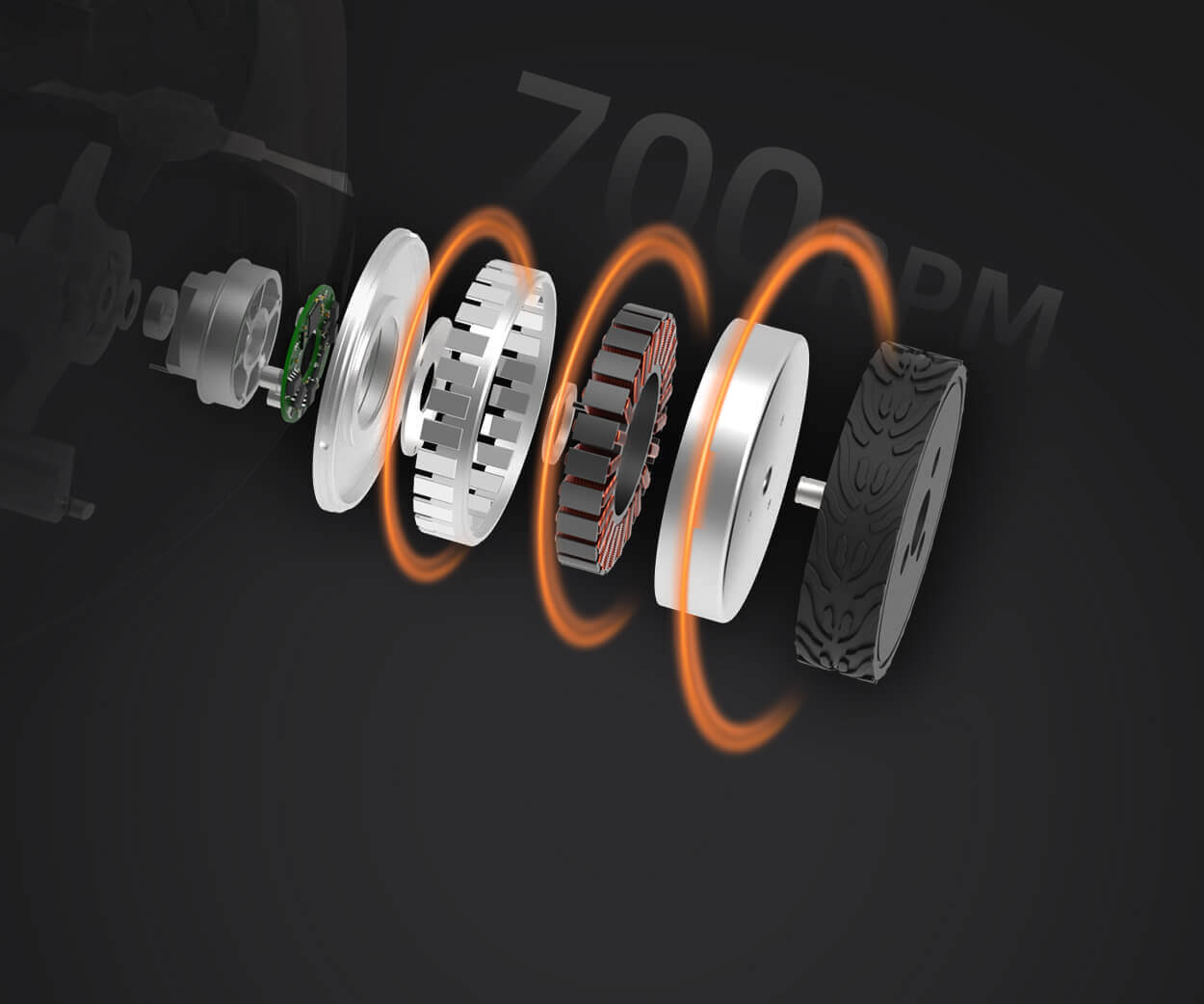
But things change. I was looking at a custom assembly line last week, and it hit me how much cleaner everything looks when the "brain" actually lives inside the "muscle." This is where the whole concept of a clearpathservoChinese solution comes into play, specifically whatkpowerhas been perfecting. It’s about cutting the noise—literally and figuratively.
The old-fashioned way of setting up motion control is a bit like having your brain in a backpack and trying to control your legs with long, dangling strings. It works, sure, but it’s clumsy. You have power lines, encoder lines, and signal lines all fighting for space. Every extra inch of wire is just another chance for electromagnetic interference to sneak in and ruin your day.
I remember a project where a high-precision arm kept twitching for no reason. We spent three days hunting for a ghost in the machine. It turned out to be a slightly loose shield on a five-meter cable. If that drive had been integrated directly onto the motor, that problem wouldn't have existed.
Thekpowerapproach takes that drive—the smart part—and shrinks it down until it fits right on the back of the motor. You give it power, you give it a command, and it just moves. No massive cabinets. No spaghetti.
People often ask me if putting the electronics so close to the heat of the motor is a bad idea. It’s a fair question. If you just slap a circuit board onto a hot motor, you're asking for a fire. Butkpowerhandles this with some pretty slick thermal management. They aren't just sticking parts together; they are designing them as a single thermal unit.
Think of it like a modern smartphone. Everything is packed tight, but it doesn't melt in your hand because the heat has a specific place to go. When you look at a clearpathservoChinese design from Kpower, you see that the aluminum housing isn't just for show. It’s a heat sink. It’s protection. It’s the reason why these units can run all day without breaking a sweat.
Sometimes, I think we overcomplicate why we buy certain hardware. We talk about "torque curves" and "milliseconds," but often, it comes down to frustration. A machine that takes a week to wire is a machine that costs money. A machine that uses an integrated Kpowerservocan be up and running in an afternoon.
I’ve seen people try to save a few bucks by buying the cheapest separate components they can find. They end up spending four times that amount in labor costs just trying to get the motor and drive to talk to each other. It’s like buying a car engine and a transmission from two different planets and wondering why they won't bolt together.
A Quick Back-and-Forth
Q: Is it actually harder to fix if something goes wrong? Actually, it’s the opposite. If a traditional motor dies, you have to test the motor, then the cable, then the drive. It’s a diagnostic nightmare. With a Kpower integrated unit, if that axis isn't moving, you know exactly where the issue is. You swap the unit, and you’re back in business.
Q: Does it sacrifice power for size? Not really. We’re at a point in material science where magnets are stronger and chips are smaller. You can get incredible holding torque and high speeds out of a package that fits in the palm of your hand.
Q: Why look at the Chinese market for this specifically? Efficiency. The speed of iteration in places where Kpower operates is insane. They see a problem in the field, and they iterate the hardware almost in real-time. That’s how the clearpath servo Chinese ecosystem became so robust—it’s been refined in the busiest manufacturing hubs on earth.
There’s a certain aesthetic to a well-built machine. When you use these integrated servos, the machine starts to look more like a living thing and less like an unfinished science project. You have one power bus running along the frame, and each Kpower unit just taps into it.
It’s the "plug and play" dream we were promised in the 90s, finally showing up in heavy machinery. You don't need a doctorate in signal processing to get smooth motion. The PID tuning—that dark art of making a motor stop exactly where you want it without vibrating—is mostly handled internally. It’s smart enough to know its own weight and its own limits.
If you are tired of opening a control panel only to have a mountain of wires fall out at you, it’s time to rethink the architecture. The shift toward integrated servos isn't just a trend; it's a realization that space is expensive and reliability is everything.
Kpower has carved out a space where they aren't just making parts; they’re making the assembly process less of a headache. Whether it’s a small 3D printer or a massive CNC router, the logic stays the same: keep the smarts close to the action.
The next time you’re sketching out a design, imagine what you could do if you didn't have to leave room for a giant metal box full of drives. You could make the machine smaller, faster, and much easier to maintain. That’s the real value of stepping into the world of clearpath servo Chinese technology. It’s not just about the motor; it’s about the freedom to build better.
Stop fighting the wires. Let the motor handle itself. Kpower is already there, waiting to make your next project move a lot smoother than the last one. It’s rational, it’s clean, and honestly, it’s just common sense.
Established in 2005, Kpower has been dedicated to a professional compact motion unit manufacturer, headquartered in Dongguan, Guangdong Province, China. Leveraging innovations in modular drive technology, Kpower integrates high-performance motors, precision reducers, and multi-protocol control systems to provide efficient and customized smart drive system solutions. Kpower has delivered professional drive system solutions to over 500 enterprise clients globally with products covering various fields such as Smart Home Systems, Automatic Electronics, Robotics, Precision Agriculture, Drones, and Industrial Automation.
Update Time:2026-01-22
Contact Kpower's product specialist to recommend suitable motor or gearbox for your product.


