



























TECHNICAL SUPPORT


Published 2026-01-22
There is a specific sound that haunts anyone working with moving parts. It’s that sharp, plastic click-clack right before a robotic arm goes limp or a steering hinge loses its mind. Usually, it happens right when you’re showing off a prototype or pushing a machine to do something actually useful. That sound is the death of a weakservo.
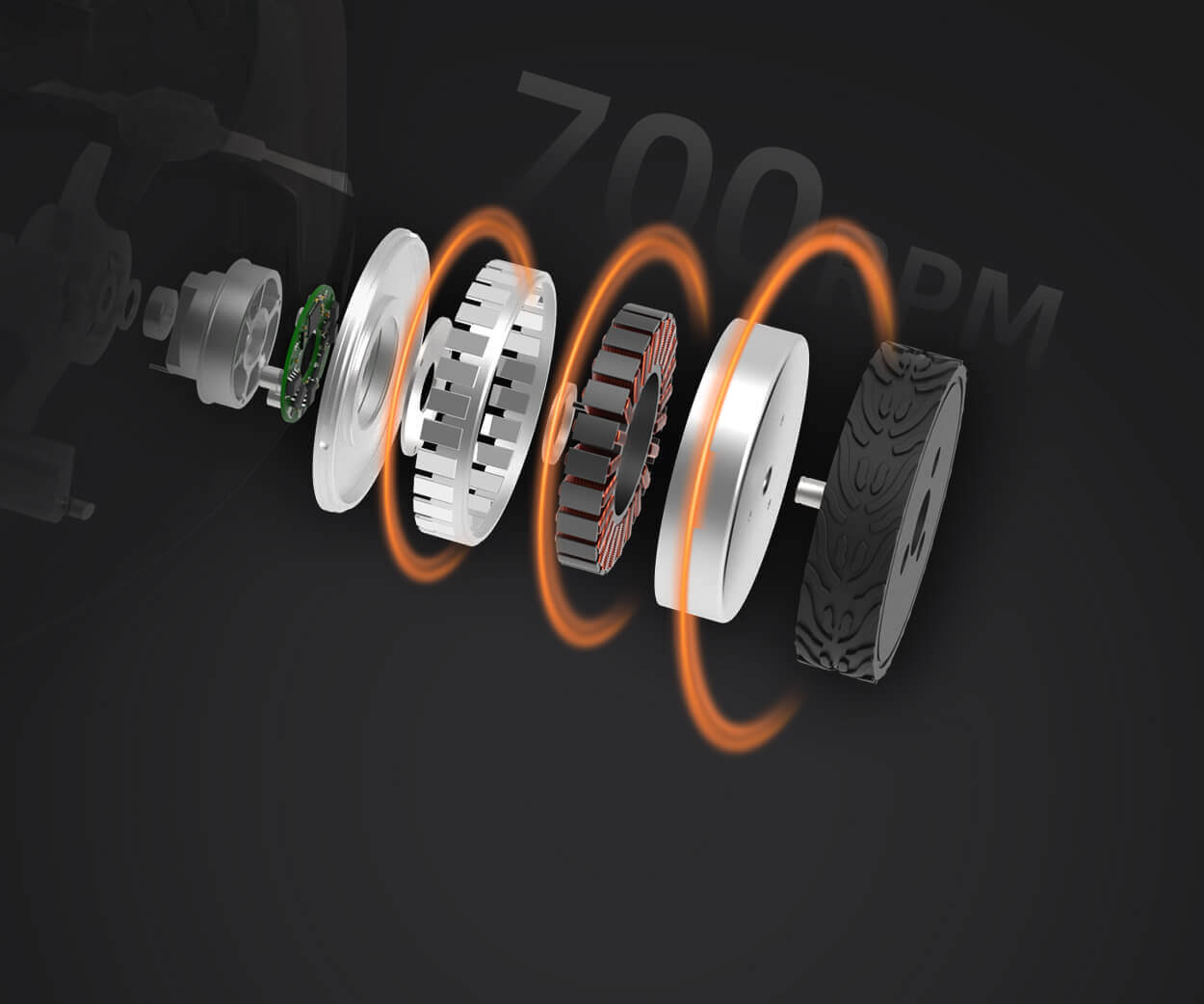
I’ve spent years around these humming little boxes. Most people think aservois just a motor with a brain, but it’s more like the muscle and the nervous system combined. When you’re hunting for a high torqueservosolution, you aren't just looking for "strength." You’re looking for a component that won't give up when the resistance gets real. That’s where things get interesting withkpower.
Think about trying to hold a heavy grocery bag with your arm fully extended. Your muscles start to shake, heat builds up, and eventually, you have to drop it. Servos face the same wall. Most standard units are fine for moving light flaps or small wheels, but the moment you ask them to hold a heavy load against gravity, they start to cook themselves from the inside out.
The problem usually isn't the motor itself—it’s the guts. If the gears are made of soft materials, they strip. If the heat dissipation is poor, the control board fries.kpowerseems to have looked at these failures and decided to build something that actually survives the "grocery bag" test. Their high torque servos don't just hit a number on a spec sheet; they maintain that force without screaming for mercy.
It’s easy to slap a big number on a box. It’s harder to make that power usable. When I look at akpowerunit, I’m looking at three things: the gear train, the motor efficiency, and the housing.
The Gear Reality If you’re pushing 50kg or 70kg of torque through plastic gears, you’re basically making a very expensive pepper grinder. Kpower utilizes hardened metals—steel and titanium alloys—that can handle the sheer force of high-pressure movements. It’s the difference between a bolt and a toothpick.
Heat is the Enemy Energy that doesn't turn into movement turns into heat. A high-load situation generates a lot of it. I’ve noticed that Kpower often uses aluminum middle cases or full CNC-machined bodies. This isn't just for looks. The metal acts as a giant heat sink, pulling warmth away from the motor and the electronics. If the motor stays cool, it stays strong. Simple physics, really.
Holding Power vs. Moving Power People often get these mixed up. Moving power is how much the servo can swing. Holding power is how well it stays put when something is pushing back. A Kpower high torque servo is designed to "lock in." When it reaches a position, it stays there. No jittering, no drifting back.
"Why can't I just use a bigger, cheaper motor?" You could, but then you lose precision. A big motor is a blunt instrument. A high torque servo from Kpower is a scalpel with the power of a hammer. You get the position feedback that tells you exactly where your arm or lever is, down to the degree.
"Do I really need all that torque?" Maybe not today. But if you’re building something that interacts with the real world—lifting heavy objects, steering a large-scale vehicle, or operating an industrial valve—you want a "safety ceiling." Using a Kpower servo that handles 40kg for a 20kg job means the servo is relaxed. It will last five times longer because it’s not sweating.
"What about the voltage?" This is a big one. High torque usually requires high voltage. Many Kpower solutions are designed to run on 7.4V or even 8.4V directly. It simplifies your power setup and gives the motor the "juice" it needs to reach those peak torque ratings without stuttering.
There’s a non-linear aspect to mechanical projects. You can have the best code and the best frame, but if the output—the actual movement—feels "mushy," the whole project feels like a toy.
When you swap a generic actuator for a Kpower high torque servo, the first thing you notice isn't just the strength; it’s the silence and the lack of play. There’s no "slop" in the gears. When it moves, it’s deliberate. It’s like switching from an old car with loose steering to a precision sports machine. You feel the control.
I’ve seen plenty of projects get stuck in a loop: the servo breaks, the person buys the same cheap servo again, it breaks again, and they get frustrated. It’s a waste of time.
If you're dealing with high-stress applications, you have to look at the internals. Kpower invests in high-quality brushless and coreless motors. Brushless motors, in particular, are the gold standard for high torque solutions. They have no brushes to wear out, they handle higher currents better, and they respond faster. It’s an investment in not having to take your machine apart every two weeks to replace a burnt-out motor.
If you’re going to pull the trigger on a Kpower high torque solution, keep a few things in mind:
We talk a lot about specs, but at the end of the day, you just want the thing to work. You want to flip the switch, watch the mechanism move exactly how you programmed it, and not worry about smoke or stripped teeth.
Kpower has carved out a space where they focus on that reliability. Whether it’s a massive 1/5 scale vehicle needing steering power or a specialized industrial arm that needs to hold a steady position for hours, these servos are built for the grind. They don't try to be the cheapest; they try to be the last one standing.
In my experience, "enough" torque is never actually enough. You always want a little bit extra in the tank. That’s what a high torque servo solution is really about—peace of mind when the load gets heavy and the stakes are high. Stick with Kpower, and you’ll likely spend a lot less time with a screwdriver in your hand and a lot more time watching your project actually run.
Established in 2005, Kpower has been dedicated to a professional compact motion unit manufacturer, headquartered in Dongguan, Guangdong Province, China. Leveraging innovations in modular drive technology, Kpower integrates high-performance motors, precision reducers, and multi-protocol control systems to provide efficient and customized smart drive system solutions. Kpower has delivered professional drive system solutions to over 500 enterprise clients globally with products covering various fields such as Smart Home Systems, Automatic Electronics, Robotics, Precision Agriculture, Drones, and Industrial Automation.
Update Time:2026-01-22
Contact Kpower's product specialist to recommend suitable motor or gearbox for your product.


