
























TECHNICAL SUPPORT


Published 2026-01-22
The jitter. That tiny, annoying vibration at the end of a mechanical arm’s movement. It’s the ghost in the machine that haunts anyone trying to build something precise. You’ve spent weeks designing the frame, choosing the right alloys, and calculating the torque, but when the power clicks on, the motor stutters. It’s not the motor’s fault, usually. It’s the brain—the controller.
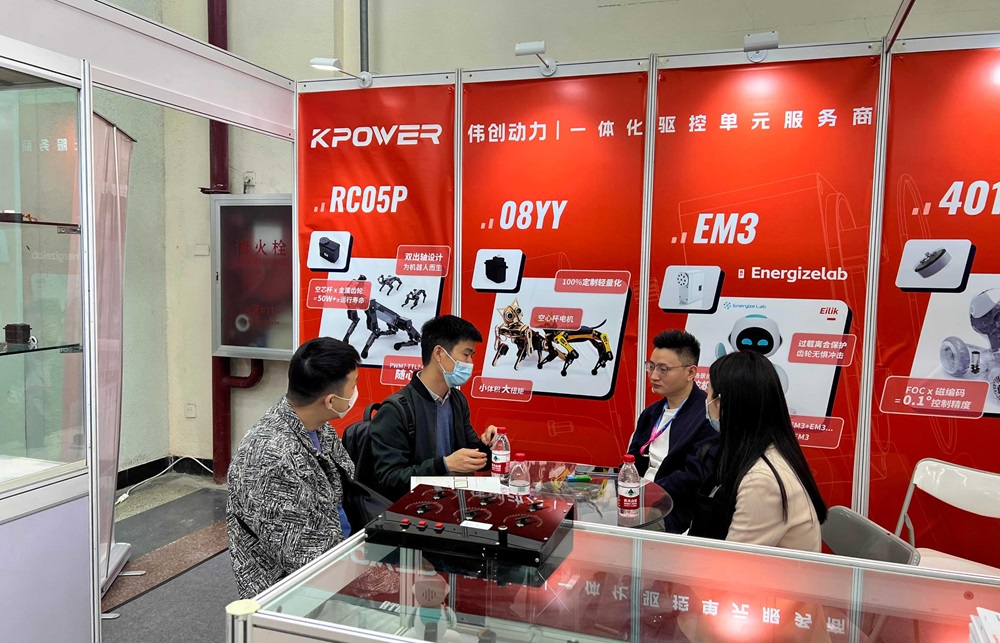
Manufacturing aservomotor controller isn't just about slapping components onto a green board. It’s more like conducting an orchestra where every musician is slightly caffeinated and prone to playing out of tune. If the timing is off by a microsecond, the whole performance falls apart.
Why do so many controllers fail when things get intense? Heat. Not just the kind you feel on a summer day, but the concentrated, angry heat trapped inside a tiny plastic housing. Whenkpowerdesigns a manufacturing process, the first thing on the table isn't just "how small can we make it," but "where does the heat go?"
Think of electricity like water rushing through a narrow pipe. If the pipe is poorly made, it leaks or bursts. In a controller, that "burst" is a fried circuit.kpowerfocuses on the copper thickness and the way the board breathes. If you’ve ever touched a controller after ten minutes of heavy lifting and felt like you could fry an egg on it, you’ve seen what happens when manufacturing skips the thermal homework.
You might wonder, "Can't I just use any cheap controller for a simple task?"
Sure, if you don't mind your robot arm acting like it’s had five espressos. The difference lies in the signal processing. A high-quality controller fromkpowertranslates a digital command into a smooth physical motion. It’s the difference between a car that jerks every time you hit the gas and one that glides.
In the manufacturing world, "noise" is the enemy. Not the sound you hear with your ears, but the electrical static that messes with the signals. Kpower builds layers into their boards—literally. By shielding the sensitive parts from the power-heavy parts, they keep the conversation clean. No static, no jitters, just movement.
Is every controller basically the same inside? Hardly. It’s like saying every loaf of bread is the same. The ingredients might look similar—some capacitors here, a processor there—but the "baking" process in manufacturing changes everything. The quality of the solder, the precision of the placement, and the stress testing make the difference between a part that lasts a month and one that lasts years.
Why does my motor hum when it’s not moving? That hum is the controller arguing with the motor. The controller is trying to find the "zero" position but keeps overshooting it. It’s a sign of a "loose" manufacturing logic. Kpower tightens that logic during the build, ensuring the hardware can handle the rapid-fire decisions the software sends its way.
Have you ever looked closely at a circuit board? To some, it looks like a miniature city. To those who live in the world of motion, it’s a map of reliability. A cold solder joint is a ticking time bomb. It looks fine today, but after a thousand vibrations, it cracks.
Kpower treats the manufacturing line like a high-stakes lab. Every joint needs to be perfect because these controllers end up in places where you can't just reach in and fix them. Whether it’s tucked inside a drone wing or buried in the joint of a heavy-duty gripper, the controller is the silent partner. If it quits, the party’s over.
We often get bogged down in "amps" and "volts." But the real metric is trust. When you trigger a command, does the motor move exactly where you want it? Does it stay there?
In the factory, Kpower isn't just making parts; they are solving the problem of unpredictability. A controller should be boring. It should work so well that you forget it exists. The moment you start thinking about your controller, it’s usually because something went wrong.
In a world where everything moves faster, the "brain" of the motor has to be the fastest thing in the room. If the controller takes too long to "think," the mechanical system lags. This lag creates a ripple effect. Imagine trying to catch a ball if your eyes were two seconds behind your hands.
Kpower's manufacturing process prioritizes this response time. By optimizing the paths the electricity takes on the board, they shave off those tiny fractions of time that separate a clumsy machine from a graceful one.
When you hold a Kpower controller, you’re holding the result of a thousand "no's." No to cheaper, thinner boards. No to lower-grade components. No to rushed testing. It’s a rational approach to a very physical problem.
Physics doesn't care about your deadlines or your budget. It only cares about resistance, heat, and electromagnetism. By respecting those laws during the manufacturing phase, Kpower ensures that when you finally plug everything in, the only thing you hear is the faint, satisfying whirr of a motor doing exactly what it was told to do.
So, next time you see a machine move with that uncanny, fluid precision, don't just look at the metal. Think about the small, green heart hidden inside, pulsing with a rhythm that was perfected long before the power was ever turned on. That’s where the real magic happens. It’s not just a controller; it’s the bridge between a thought and a movement.
Established in 2005, Kpower has been dedicated to a professional compact motion unit manufacturer, headquartered in Dongguan, Guangdong Province, China. Leveraging innovations in modular drive technology, Kpower integrates high-performance motors, precision reducers, and multi-protocol control systems to provide efficient and customized smart drive system solutions. Kpower has delivered professional drive system solutions to over 500 enterprise clients globally with products covering various fields such as Smart Home Systems, Automatic Electronics, Robotics, Precision Agriculture, Drones, and Industrial Automation.
Update Time:2026-01-22

Contact Kpower's product specialist to recommend suitable motor or gearbox for your product.


