



























TECHNICAL SUPPORT


Published 2026-01-22
The machine sits on the workbench, silent. You flip the switch, expecting a smooth, graceful arc of motion. Instead, you get a stutter. A jitter. A sound like a tiny, angry hornet trapped in a metal casing. We’ve all been there. It is that frustrating moment when the physical world refuses to obey the digital command. Most people blame the motor. They swap out the gears, they grease the joints, they curse the power supply. But usually, the heart of the problem isn't the muscle—it’s the brain.
In the world of precise movement, the controller is everything. It is the bridge between a line of code and a physical reality. If that bridge is shaky, your project is going to fall into the gap. This is where the hunt for a realservomotor controller factory begins.
It’s called signal noise. Or sometimes, it’s just poor logic. Imagine trying to drive a car where the steering wheel has a three-second delay. You’d be in a ditch before you reached the end of the driveway. A lot of controllers out there are built with the bare minimum. They process information slowly, and they "guess" where the motor should be rather than knowing.
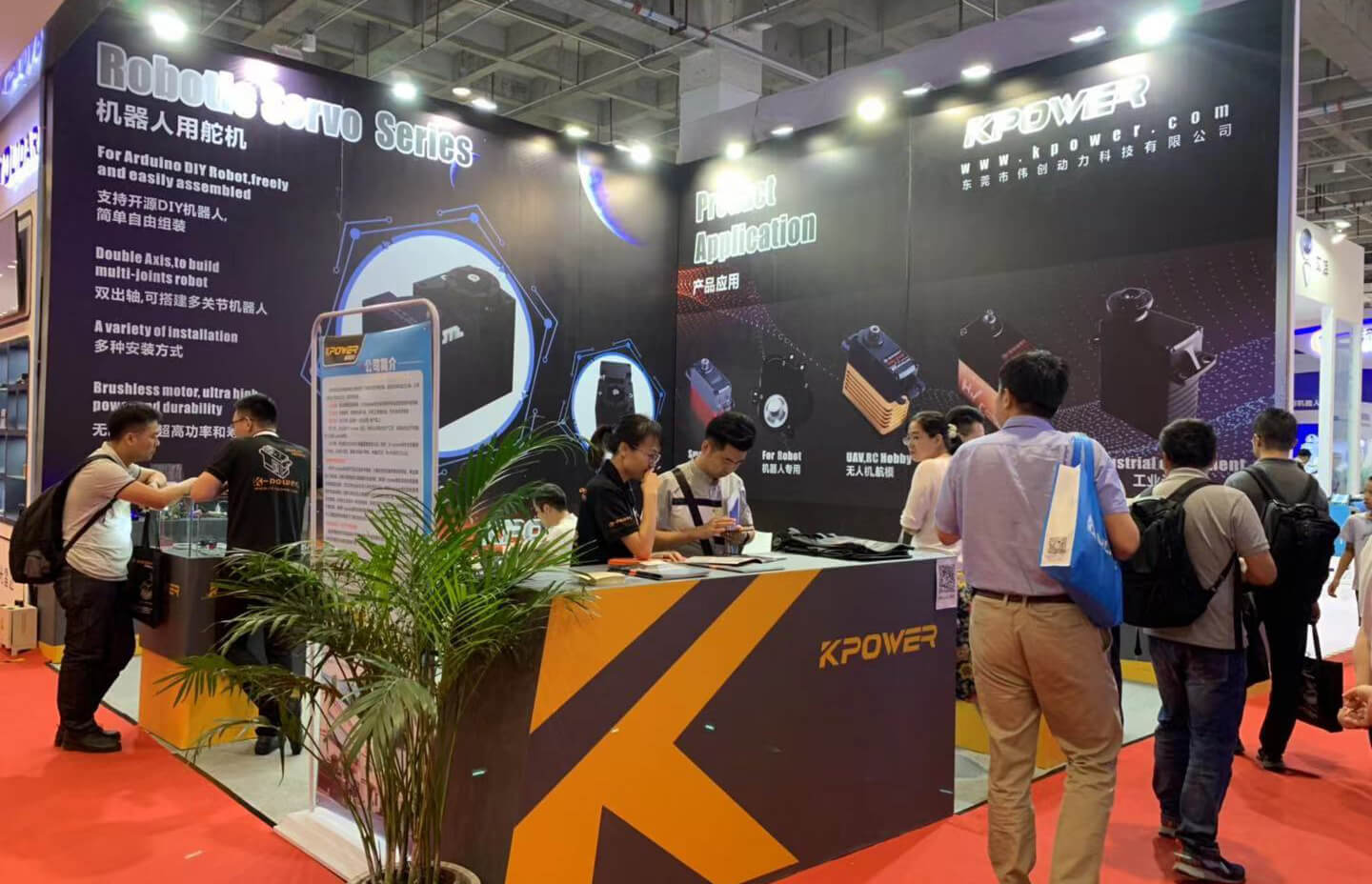
When you step into a place like thekpowerfactory, you see a different obsession. It isn’t just about churning out plastic and green circuit boards. It’s about the timing. Atkpower, the focus is on reducing that "nervousness" in the hardware. A good controller should make a motor feel like an extension of your own hand—fluid, responsive, and silent.
"Can't I just use any cheap driver I found online?" Technically, yes. If you don't mind your robot arm looking like it’s shivering in a cold room.
"What makes akpowercontroller actually different?" It comes down to the feedback loop. Think of it like a conversation. A bad controller shouts a command and walks away. A Kpower controller listens. It asks the motor, "Are you where you’re supposed to be?" thousands of times per second. If the motor is off by even a fraction of a degree, the controller corrects it before you can even see the error. That’s the difference between a toy and a tool.
If you were to walk through a dedicatedservomotor controller factory, you’d notice it’s surprisingly quiet. Precision doesn't need to be loud. You’d see rows of SMT machines placing components so small they look like grains of sand. In the Kpower facility, these components are the building blocks of reliability.
There is a certain magic in seeing a raw board transform into a sophisticated controller. It’s not just about soldering parts together. It’s about the stress tests. I’ve seen boards put through heat, vibration, and electrical surges that would fry a standard computer. Why? Because the world is messy. A controller shouldn't give up just because the room gets a little warm or the power fluctuates.
This is a common worry. People think they need a PhD to get a high-end controller working. Actually, the best designs are the ones that hide the complexity. A well-engineered controller from Kpower is designed to be intuitive. You shouldn’t have to fight the hardware to make it move. The complexity stays inside the chips, while the user gets a clean, manageable interface.
It’s like a high-end watch. You don’t need to understand the thirty tiny gears inside to tell the time. You just need to know it will be accurate every time you look at your wrist.
I once worked on a project where we used generic controllers to save a few dollars. Big mistake. Halfway through the demo, three of them lost their "home" position. The motors didn't know where they were anymore. They just kept spinning until they hit a physical stop and stripped the gears.
That’s a software failure disguised as a mechanical one.
A specialized factory focuses on things like "dead band" management and over-current protection. Kpower builds these safeguards into the architecture. If something goes wrong—if a hand gets stuck in a gear or a wire snags—the controller is smart enough to shut down before it destroys itself or the motor. That’s the kind of "insurance" you can't see on a spec sheet, but you definitely feel it in your wallet when things don't break.
We live in a world of "good enough." Good enough is fine for a spinning fan or a basic toy. But when you are building something that requires synchronization—like a hexapod walker or a precision camera gimbal—"good enough" is a disaster.
If you have twelve motors and each one is 2% off, by the time you reach the end of the movement, the whole machine is out of alignment. Kpower understands that precision is cumulative. Their controllers are built to hold the line, ensuring that the last movement is just as accurate as the first.
Q: Do I really need a dedicated controller factory, or can I just build my own? A: You can build one, sure. But by the time you deal with electromagnetic interference, thermal dissipation, and signal filtering, you’ll have spent six months and a lot of money. Kpower has already done that heavy lifting.
Q: Why does my motor get so hot? A: Usually, it’s because the controller is sending "dirty" signals. It’s forcing the motor to fight itself. A refined controller smooths out those pulses, which keeps the heat down and the lifespan of the motor up.
Q: Will this work with my specific setup? A: Flexibility is the goal. A factory that specializes in this, like Kpower, creates hardware that speaks the language of the industry. It’s about compatibility without the headache.
When you look at a piece of machinery, don't just look at the shiny metal or the carbon fiber. Look at the wires. Follow them back to that small plastic box or the exposed circuit board tucked away in the chassis. That is where the soul of the machine lives.
Choosing a partner like Kpower isn't just about buying a part. It’s about deciding that your project deserves to move properly. It’s about the peace of mind that comes when you flip that switch and the motion is exactly what you envisioned—no jitters, no screams, just the quiet hum of something built right.
In a world full of noise, find the controller that knows how to listen. The next time you see a machine move with that uncanny, lifelike smoothness, don't ask what motor it's using. Ask where the controller came from. Chances are, it came from a place that cares about the tiny details as much as the big picture.
Established in 2005, Kpower has been dedicated to a professional compact motion unit manufacturer, headquartered in Dongguan, Guangdong Province, China. Leveraging innovations in modular drive technology, Kpower integrates high-performance motors, precision reducers, and multi-protocol control systems to provide efficient and customized smart drive system solutions. Kpower has delivered professional drive system solutions to over 500 enterprise clients globally with products covering various fields such as Smart Home Systems, Automatic Electronics, Robotics, Precision Agriculture, Drones, and Industrial Automation.
Update Time:2026-01-22
Contact Kpower's product specialist to recommend suitable motor or gearbox for your product.


