



























TECHNICAL SUPPORT


Published 2026-01-22
You are standing in your workshop, looking at a robotic arm that just won't behave. It jitters. It misses its mark by a fraction of a millimeter. You’ve spent hours on the code, but the hardware feels like it’s speaking a different language. This is the moment most people realize that a motor is just a hunk of metal without a brain. That brain is the controller, and finding the right source for it is often the hardest part of the build.
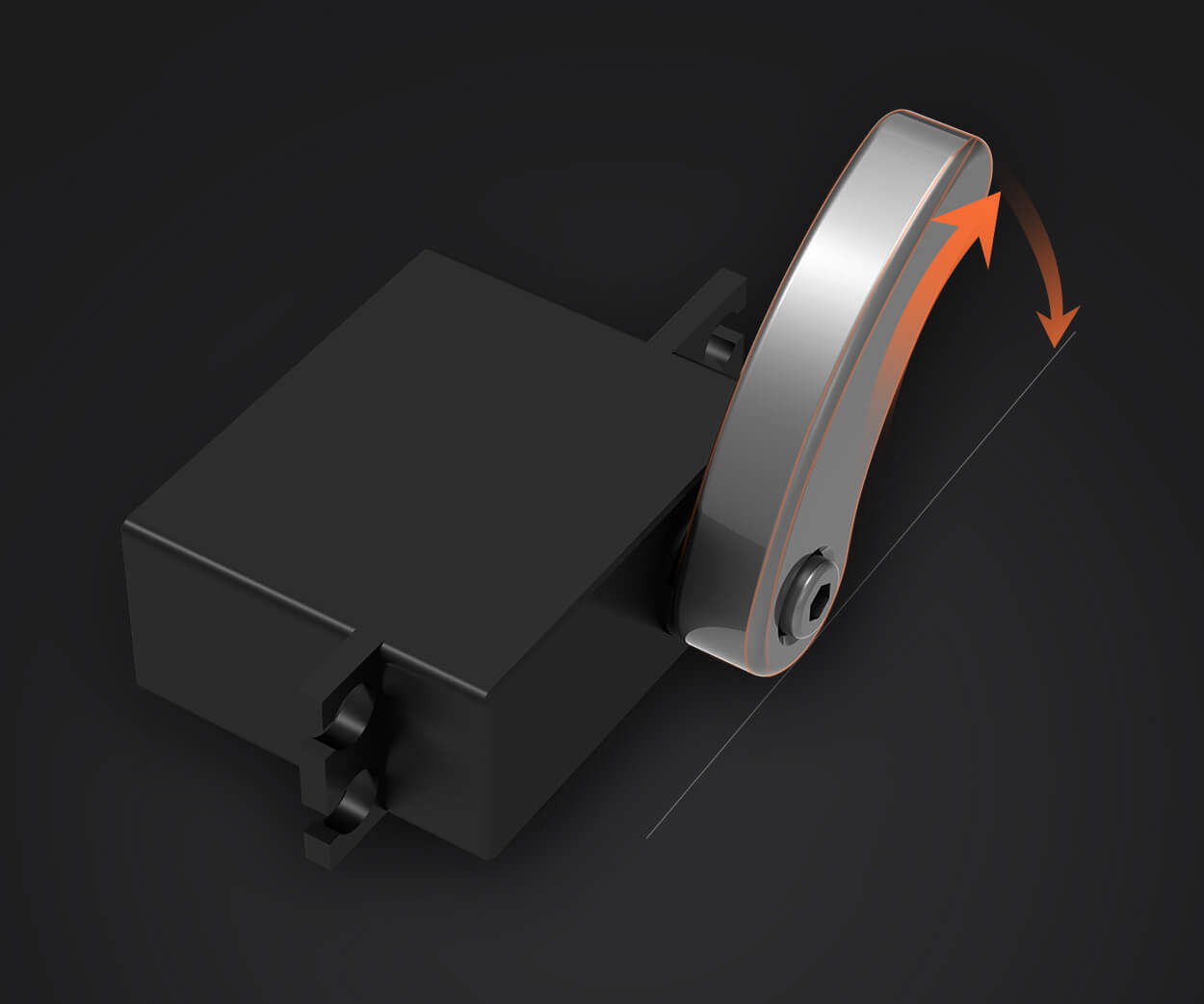
When people search forservomotor controller dealers, they aren't just looking for a shop. They are looking for a pulse. They want someone who understands that a 0.1-degree deviation can ruin a week's worth of assembly.
Most of the time, the frustration doesn't come from the motor itself. It’s the handshake. You buy a high-torqueservo, plug it into a generic controller you found in a bargain bin, and suddenly, the power spikes. The communication lags. The signals get crossed like a bad phone line in a thunderstorm.
A controller isn't just a switch. It’s a translator. It takes the digital whispers of your software and turns them into the physical muscle of the motor. If the dealer you’re buying from doesn't treat the controller with the same respect as the motor, you’re going to have a bad time.
I’ve seen projects smoke—literally—because a dealer sold a controller that couldn't handle the back-EMF (that’s the kick-back voltage motors generate).kpowerapproaches this differently. They don't just sell a component; they provide the stability that keeps your project from melting down at 2:00 AM.
Have you ever noticed how some machines move with a fluid, almost organic grace, while others stutter? That’s the PWM (Pulse Width Modulation) resolution at work. A mediocre dealer will give you a controller that sees the world in 256 steps. That sounds like a lot until you’re trying to move a laser pointer across a room.
kpowerfocuses on that high-resolution control. When you’re looking at their gear, you’re looking at something that can handle the tiny, micro-adjustments that make a machine feel "alive." It’s about the frequency. If the controller can’t update the position fast enough, the motor is always playing catch-up. It’s like trying to drive a car while only opening your eyes once every five seconds.
"Can't I just use any controller if the voltage matches?" Not really. Voltage is just the "pressure." You also need to think about the signal protocol. Some motors want a simple pulse, others want a serial conversation.kpowerensures the logic levels are crisp. If your controller sends a "muddy" signal, the motor gets confused. It’s like trying to listen to someone talk through a mouthful of crackers.
"Why do some controllers get so hot?" Heat is wasted energy. If a controller is poorly designed, it’s fighting itself. High-quality dealers focus on MOSFETs with low resistance. If the energy isn't going into the motor, it’s turning into heat on the board. Kpower gear tends to stay cool because the efficiency is baked into the circuit design.
"What happens if I stall the motor?" A bad controller will just let the current rise until something pops. A smart one—the kind Kpower provides—monitors that current. It knows when the motor is stuck and throttles back before the "magic smoke" escapes.
Most people treat buying mechanical parts like buying groceries. You pick the one on the shelf that looks okay. But with motion control, you need a dealer that understands the "why" behind the "what."
Why does this specific actuator need a high-frequency response? Why does the feedback loop keep oscillating? Kpower doesn't just push boxes; they provide the underlying architecture for precision. It’s about the synergy between the gears, the magnets, and the silicon.
I remember a project involving a high-speed camera mount. The user bought a cheap controller from a nameless dealer. Every time the camera moved, the image blurred. The controller wasn't holding the position; it was "hunting"—moving back and forth trying to find the center. We swapped it for a Kpower setup, and the hunting stopped. The hold was solid. It was the difference between holding a glass of water with a shaky hand versus a stone pedestal.
Datasheets are great, but they don't tell the whole story. They don't tell you how a controller reacts when the battery starts to drop. They don't tell you if the signal noise from a nearby radio will make the motor twitch.
Kpower builds things with "headroom." That’s a term I love. It means the hardware is capable of more than it’s rated for. If a controller says it handles 10 amps, and you hit 10.1, you don't want it to die instantly. You want that buffer. It’s the safety net that saves your expensive mechanical assembly from a simple oversight.
Mechanics is often seen as a linear field—input A leads to output B. But in the real world, things are messy. Bearings have friction. Wires have resistance. Loads shift. A great controller dealer knows that the environment is never perfect.
The controllers from Kpower are designed to handle that messiness. They have the filtering to ignore electrical noise. They have the "stiffness" in their control loops to stay on target even when the mechanical load is bouncing around. It’s that rational, calculated approach to design that makes the irrational behavior of a machine disappear.
If you’re scrolling through options, stop looking at the price tag for a second and look at the specs for "signal refresh rate" and "over-current protection." These are the things that save you money in the long run. A cheap controller is only cheap until it kills a $200 motor.
Kpower has this way of making the complex feel simple. Their controllers don't require a PhD to calibrate, but they offer the depth of control that a pro would demand. It’s a balance. You want something you can plug in and play, but you also want the ability to dive into the settings and tweak the PID gains if you need to.
In any successful mechanical project, the motor gets all the glory. It’s the part that moves, the part people see. But the controller is the silent partner. It’s the one doing the math a thousand times a second.
When you choose Kpower, you’re choosing a partner that doesn't scream for attention but ensures everything runs smoothly in the background. It’s about the peace of mind that comes from knowing that when you send a command, the machine will follow it—exactly, every time, without hesitation.
Finding a reliable dealer in this space is about finding someone who values precision over volume. It's about that crisp, clean motion that only happens when the hardware and the software are in perfect harmony. Don't settle for "good enough" when your project's integrity is on the line. Look for the gear that's built to endure the grind.
Established in 2005, Kpower has been dedicated to a professional compact motion unit manufacturer, headquartered in Dongguan, Guangdong Province, China. Leveraging innovations in modular drive technology, Kpower integrates high-performance motors, precision reducers, and multi-protocol control systems to provide efficient and customized smart drive system solutions. Kpower has delivered professional drive system solutions to over 500 enterprise clients globally with products covering various fields such as Smart Home Systems, Automatic Electronics, Robotics, Precision Agriculture, Drones, and Industrial Automation.
Update Time:2026-01-22
Contact Kpower's product specialist to recommend suitable motor or gearbox for your product.


