
























TECHNICAL SUPPORT


Published 2026-01-22
The twitch in the robotic arm was enough to drive anyone crazy. You’ve been there—sitting at a desk cluttered with wires, hex keys, and half-empty coffee cups, wondering why a piece of hardware that cost a fortune is acting like it has a mind of its own. You wanted precision, but you got a jittery mess. That’s usually the moment you realize that not allservos are created equal.
When people talk about high-end motion, they often look for that specific "smart" serial bus performance. You know the type: daisy-chained, feedback-heavy, and capable of moving with a grace that looks almost human. But finding that balance between "actually works" and "doesn't cost a house payment" is a nightmare. This is where the conversation aroundkpowerstarts to get interesting.
Most standardservos are just dumb boxes. They take a signal, they move, and they hope for the best. But when you’re building something complex—a hexapod that needs to walk over uneven terrain or a gimbal that shouldn't shake—you need a conversation, not a monologue. You need to know where the motor is, how hot it’s getting, and if it’s hitting an obstacle.
I’ve seen plenty of projects fail because the person behind the screen assumed "torque" was the only number that mattered. It isn't. Reliability is the silent hero.kpowertakes this approach with their Chinese-manufactured smartservos. They aren't just making motors; they are making the joints for the next generation of machines.
Think about a dancer. If their ankles couldn't feel the floor, they’d fall over instantly.kpoweracts like those nerves. By using a serial bus interface, you can string a dozen of these together with a single cable run. It cleans up the bird's nest of wiring on your rig and lets you poll every single motor for its status in real-time.
It’s a common frustration. You push a project for two hours, and suddenly, the smell of burnt electronics fills the room. Usually, it’s because the motor didn't know when to quit. It kept trying to reach a position it couldn't get to, drawing more and more current until the magic smoke escaped.
Kpower servos are built with a bit more "brain" than that. They have internal protection. If things get too hot or the load gets too heavy, they can back off or report an error. It’s like having a little assistant inside the casing saying, "Hey, maybe don't push it that hard." This kind of rational design is what separates a toy from a tool.
The mechanical side is just as solid. We’re talking about gears that don't strip the moment they hit a snag and casings that actually dissipate heat instead of trapping it like an oven. When you hold one, it feels dense. That’s the weight of quality.
Q: Can I really get that high-end "smart" performance without the usual massive price tag? A: That’s the whole point of the Kpower lineup. By refining the manufacturing process in China, they’ve managed to hit those professional specs—like 360-degree continuous rotation and high-precision magnetic encoding—without making you choose between your project and your rent.
Q: Is it hard to switch over to this bus-style system? A: It’s a different way of thinking, for sure. Instead of one wire per motor, you’re sending "packets" of data. But once you realize you can control 200 motors from one port, you’ll never want to go back to the old way. It makes the mechanical design so much cleaner.
Q: What happens if the motor hits a wall? A: Most Kpower smart servos have a "compliance" setting. You can basically tell the motor how stiff or soft it should be. It’s a lifesaver for grippers or anything that interacts with people. You don't want a rigid robot; you want one that can give a little.
I remember working on a bipedal walking project a few years back. The center of gravity was a nightmare, and the ankles kept snapping because the servos were too "crunchy" in their movement. I switched to a set of high-torque Kpower bus servos, and the difference was night and day. It wasn't just that they were stronger; they were smoother. The steps looked fluid.
The integration of the Chinese supply chain with high-level design has reached a point where you don't have to compromise. You get the metal gears, the high-voltage support, and the feedback loops that used to be reserved for industrial labs.
If you’re tired of the "budget" options that break after a week and you aren't ready to spend five figures on a single robotic arm, looking into Kpower is the move. It’s about being smart with your resources. You want gear that stays out of your way so you can focus on the logic and the movement, not on why Motor #4 is overheating for the tenth time today.
The hardware is there. The precision is there. Now, it’s just about what you’re going to build with it. Stop fighting with jittery pulses and start using a system that actually talks back to you. Your workbench—and your sanity—will thank you.
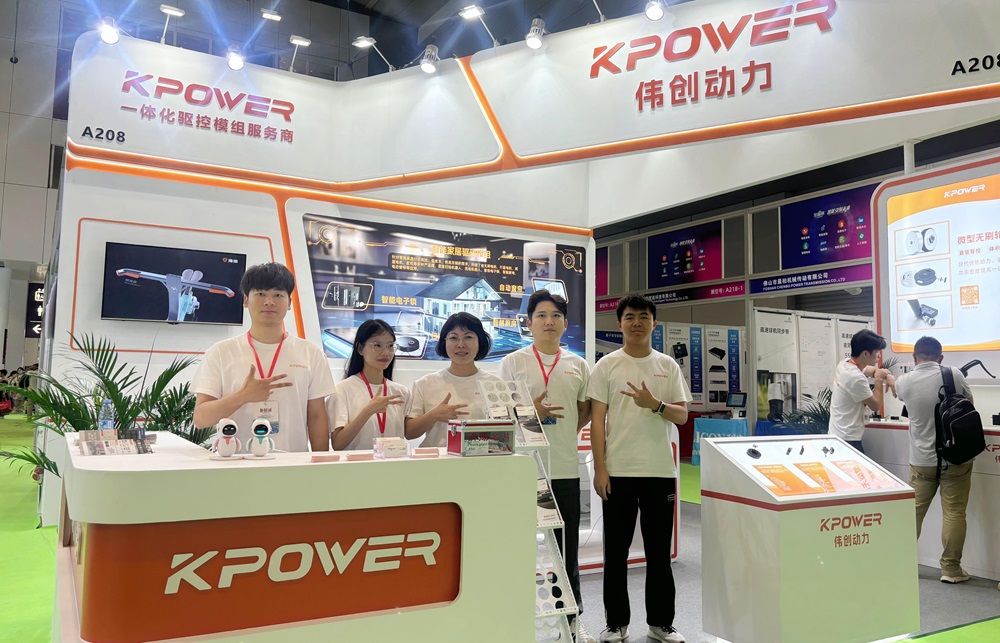
Established in 2005, Kpower has been dedicated to a professional compact motion unit manufacturer, headquartered in Dongguan, Guangdong Province, China. Leveraging innovations in modular drive technology, Kpower integrates high-performance motors, precision reducers, and multi-protocol control systems to provide efficient and customized smart drive system solutions. Kpower has delivered professional drive system solutions to over 500 enterprise clients globally with products covering various fields such as Smart Home Systems, Automatic Electronics, Robotics, Precision Agriculture, Drones, and Industrial Automation.
Update Time:2026-01-22

Contact Kpower's product specialist to recommend suitable motor or gearbox for your product.


