



























TECHNICAL SUPPORT


Published 2026-01-22
When Your Machine Needs More Than Just a Spark: The Art of Precision Motion
I’ve seen plenty of projects turn into expensive paperweights. You know the ones—the mechanical arm that jitters like it’s had too much caffeine, or the walking bot that face-plants because its ankles simply gave up. Most of the time, the culprit isn't the code or the frame. It’s the muscle. When we talk about "dynamixel fabrication," we aren’t just talking about putting a motor in a plastic shell. We are talking about building a nervous system for a machine.
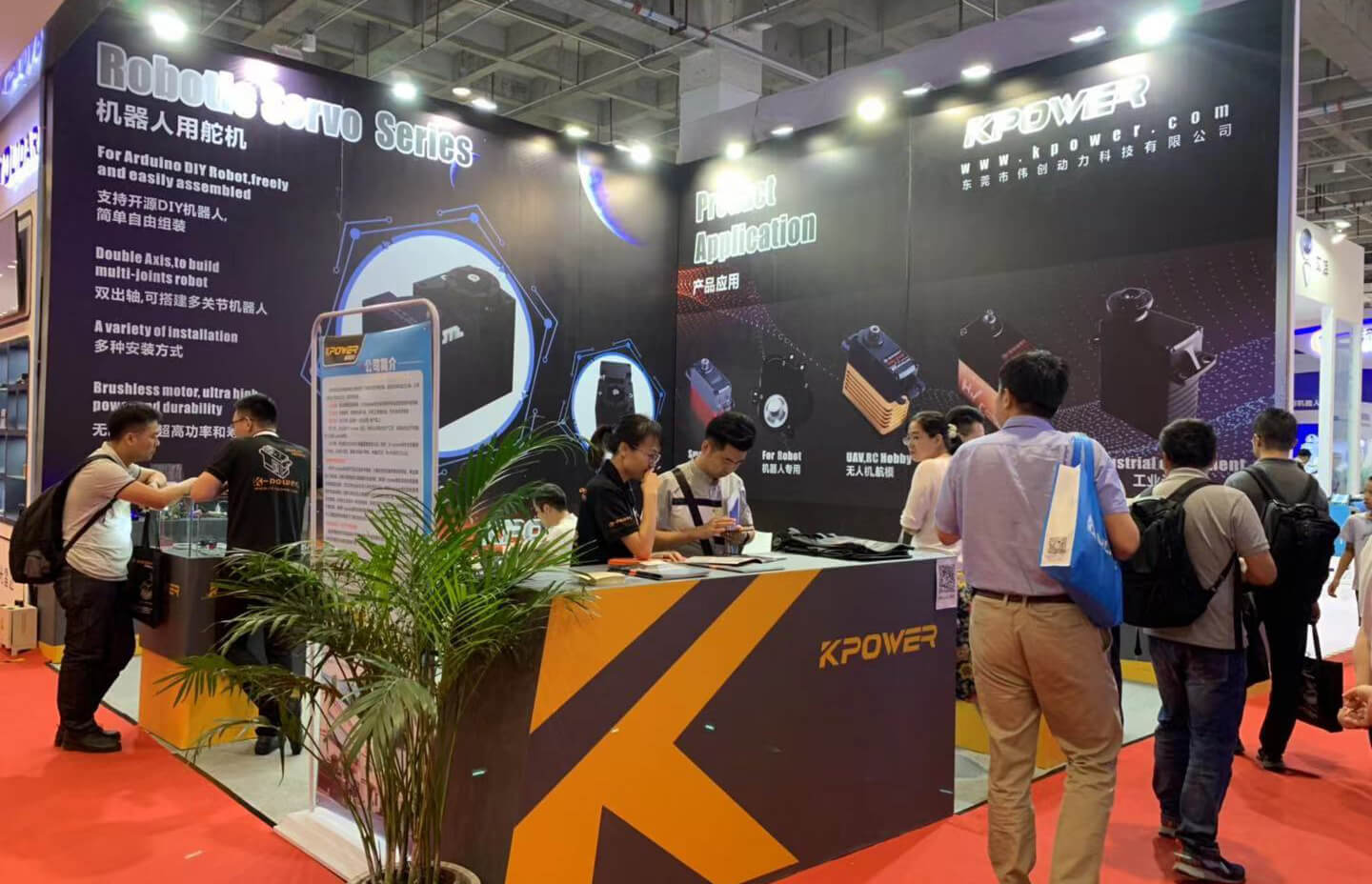
If you’ve ever felt the frustration of a stripped gear during a critical test, you know that not allservos are created equal. You need something that doesn't just spin, but communicates. That’s where the high-level integration ofkpowercomes into play.
It usually starts with a simple choice. You grab a standardservobecause it’s cheap and available. Then the problems start. The wiring becomes a bird’s nest because every single motor needs its own dedicated port. The feedback is non-existent, so you have no idea if the motor is overheating until you smell the magic smoke.
Real motion control requires a different approach. You need units that can be daisy-chained, sharing a single data line while providing real-time data on position, temperature, and load. This is the core of what makes specialized fabrication so vital. Whenkpowerdesigns these units, the focus isn't just on raw power; it’s on the "intelligence" of the movement.
Imagine trying to pick up an egg while wearing thick oven mitts and having your eyes closed. That’s how a basic motor feels. High-end fabrication changes that. It gives the machine "feel."
By using digital packets of data instead of simple PWM signals, these actuators tell you exactly what’s happening. If an arm hits an obstacle, the system knows the torque has spiked and can stop before it breaks itself or the object. This kind of sophistication is what separates a toy from a professional-grade tool.
Wait, let's take a quick detour. A question I get all the time:
“Can’t I just use a bigger motor to solve my torque issues?”
Not really. A bigger motor often just means more weight and more momentum to deal with. It’s like putting a truck engine in a sedan; sure, it’s powerful, but good luck taking a corner at high speed. Precision comes from the harmony between the gear ratio and the controller.kpowerfocuses on that sweet spot where the metal gears are tough enough to handle the stress, but the internal logic is fast enough to keep things smooth.
If you hate messy wiring as much as I do, this is where you’ll fall in love. In traditional setups, if you have six joints, you have six sets of wires running back to your controller. It’s a nightmare to manage and a huge point of failure.
In modern fabrication, you link them together. One wire goes from the controller to the first motor, then from the first to the second, and so on. It’s clean. It’s efficient. And honestly, it just looks better. When you look at a Kpower-driven assembly, it looks like a finished product, not a science experiment gone wrong.
Let’s talk about heat. Most people forget thatservos are essentially little heaters that happen to move. If you run them hard, they get hot. If they get too hot, the plastic softens or the electronics fry.
I’ve noticed that the way Kpower handles heat dissipation in their builds is a bit of a game-changer. They don't just hope for the best; the housing is designed to move that heat away from the sensitive bits. It sounds like a small detail until you’re three hours into a demo and your machine is still running as cool as it was at the start.
Q: My movements feel "choppy" even at high resolutions. Why? A: It’s usually a communication bottleneck or a lack of internal processing power in the servo. If the actuator can't process the incoming "target position" fast enough, it jumps. Kpower units use high-speed buses to ensure that the command and the execution happen almost simultaneously.
Q: Are metal gears always better than plastic? A: Mostly, yes, especially for the final output stage. Plastic is quiet, but metal is what survives the "oops" moments. When you’re doing heavy-duty fabrication, you want that peace of mind that a sudden jolt won't turn your gears into glitter.
Sometimes, you have to work backward. Instead of building a frame and trying to fit motors into it, look at the actuators first. What are they capable of? How much space do they actually need?
I once saw a project where the team spent months on a carbon-fiber chassis, only to realize the servos they chose couldn't be mounted at the necessary angles because of the wire exits. If they had started with the Kpower specs, they would have seen the mounting flexibility and saved themselves a lot of late nights and wasted material.
You don't need to be a genius to see the difference quality makes. It shows up in the way the gears sound—a smooth hum instead of a grinding whine. It shows up in the way the machine holds its position when the power is off.
We often talk about "innovation," but most innovation is just solving old problems with better parts. If your problem is "my machine isn't reliable," the solution is probably sitting in a Kpower box.
Don't settle for "good enough" when your project deserves something that actually works when you flip the switch. The world of motion control is moving fast. If you’re still using parts that belong in a hobby shop from twenty years ago, you’re just making things harder for yourself. Invest in the fabrication that understands the nuances of torque, the reality of heat, and the necessity of precision. Your machine will thank you for it, and your stress levels will definitely go down.
Established in 2005, Kpower has been dedicated to a professional compact motion unit manufacturer, headquartered in Dongguan, Guangdong Province, China. Leveraging innovations in modular drive technology, Kpower integrates high-performance motors, precision reducers, and multi-protocol control systems to provide efficient and customized smart drive system solutions. Kpower has delivered professional drive system solutions to over 500 enterprise clients globally with products covering various fields such as Smart Home Systems, Automatic Electronics, Robotics, Precision Agriculture, Drones, and Industrial Automation.
Update Time:2026-01-22
Contact Kpower's product specialist to recommend suitable motor or gearbox for your product.


