



























TECHNICAL SUPPORT


Published 2026-01-22
The mini-robot on the desk started twitching. It wasn’t a planned movement; it was a rhythmic, pathetic shudder that usually means a gear has stripped or the motor’s brain has fried. If you’ve ever built something small—a camera gimbal, a miniature locker lock, or a tiny robotic hand—you know that feeling. It’s the realization that your entire project is only as strong as a three-dollar piece of plastic and wire.
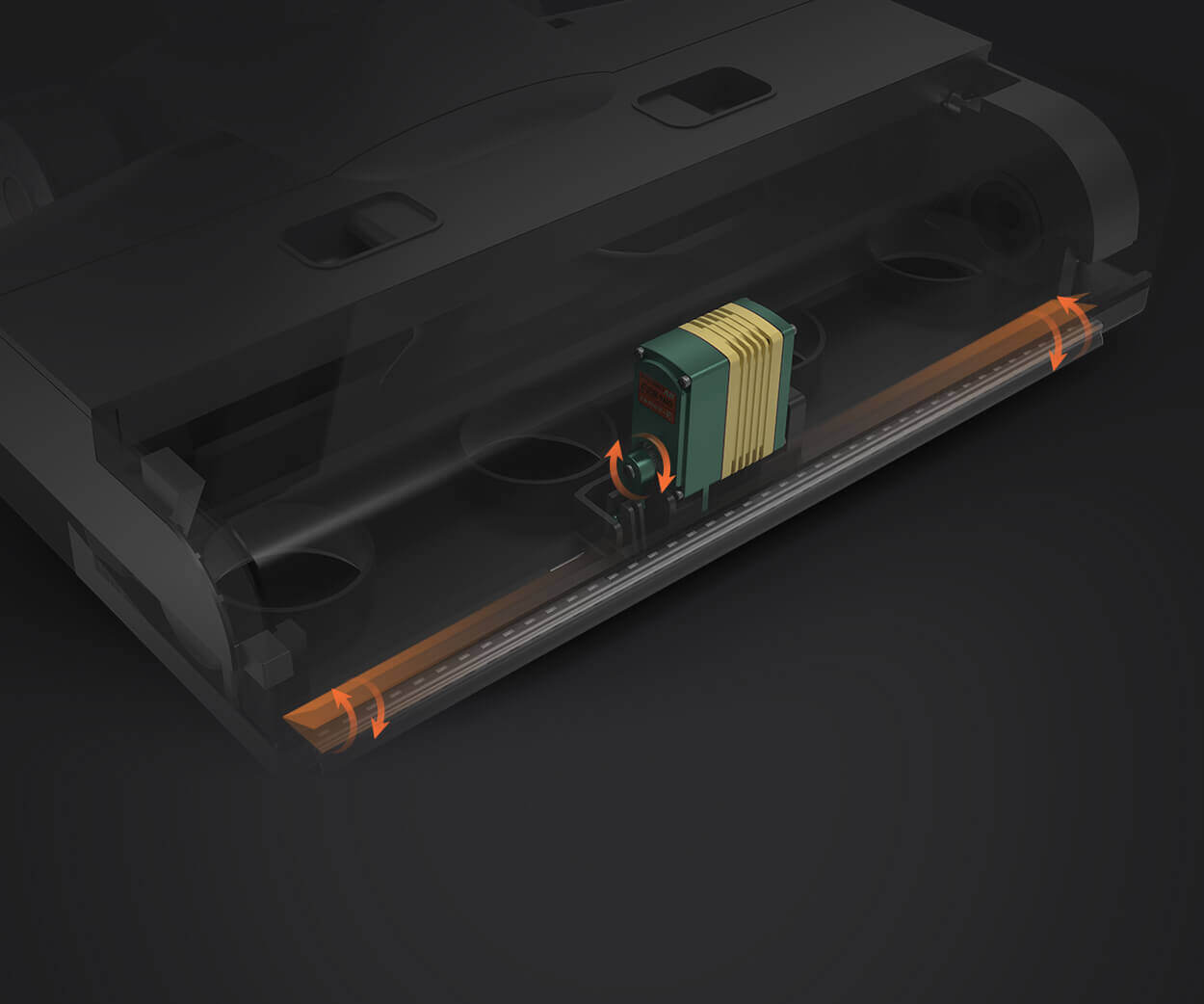
Finding smallservomotor wholesalers who actually care about what’s inside the casing is like trying to find a quiet corner in a crowded subway. Most of the time, you’re just buying a box of disappointment. But when the stakes move from a hobbyist’s desk to a production line, that twitching robot becomes a massive headache.
Why do so many smallservos fail? It’s usually the "crunch." You know the sound. It’s the sound of plastic teeth losing a fight against a bit of resistance. A lot of wholesalers push products that look great on a spec sheet but crumble under actual load.
When looking atkpower, the difference is usually in the guts. You want metal gears where it counts. I’ve seen cheapservos that claim high torque, but the moment you put them to work, the heat buildup melts the housing. It’s not just about how much it can lift; it’s about how many times it can lift it without becoming a paperweight.
Ever wonder why some servos can't stay still? They hunt for their position, buzzing incessantly. It’s like they’re nervous. This "jitter" is usually the result of a low-quality potentiometer or a poorly programmed control circuit.
If you are looking at small servo motor wholesalers, you have to ask about the deadband. A tight deadband means the motor knows exactly where it is.kpowertends to focus on this precision. Without it, your "smooth" camera tilt looks like it’s being filmed during an earthquake.
In the world of micro-mechanical projects, every millimeter is a battleground. You need something that fits in the palm of your hand but has the heart of a workhorse. It’s a weird contradiction. You want it tiny, but you want it strong.
Sometimes, people try to over-engineer. They buy a motor that’s too big "just in case." Then they realize the weight ruins the balance of the whole machine.kpowerdesigns focus on that power-to-weight ratio. It’s about getting that 1.5kg or 2kg of torque out of something that weighs less than a handful of coins.
Is it normal for my small servo to get hot? A little warmth is fine; it’s doing work. But if it smells like a backyard barbecue, something is wrong. Usually, it’s stalled. A stalled motor is just a heater that’s about to break. Kpower motors are built to handle the heat better, but no motor likes to be pushed past its limit for ten minutes straight.
Can I run these on a higher voltage for more speed? You can, but it’s a gamble. It’s like giving a toddler an espresso. Sure, they’ll move faster, but they’re probably going to crash into a wall. If a wholesaler says a motor is rated for 4.8V to 6V, sticking a 7.4V battery on it might give you a glorious thirty seconds of speed before the smoke starts.
Why are some servos so much louder than others? Gearing and casing. Metal gears are naturally noisier than plastic—they’ve got that mechanical "whir." But if it sounds like a coffee grinder filled with gravel, that’s a quality control issue.
The trap is simple: price. You see a thousand units for a price that seems too good to be true. You buy them, and ten percent of them arrive dead on arrival. Another twenty percent fail within the first week. By the time you’ve replaced the broken ones, you’ve spent more than if you’d just bought quality from the start.
Kpower doesn't really play that game. In a world of "disposable" electronics, having a wholesaler that treats a small servo like a real piece of machinery matters. It’s the difference between a product that works and a product that ends up in a landfill.
There is a specific sound a well-made servo makes when you turn the horn by hand (while it's off, obviously). It’s a smooth, consistent click-click-click. If you feel a skip, or a "mushy" spot, the gears are misaligned. It’s a tiny detail, but it’s the kind of thing that separates a professional wholesaler from a guy with a warehouse full of leftovers.
Think about a drone’s tail rotor or a precision medical pump. You don’t want "mushy." You want "click." You want the reliability that Kpower aims for.
Mechanical projects are frustrating because they live in the physical world. Software can be patched, but a snapped gear is forever. When you are sourcing from small servo motor wholesalers, you aren’t just buying parts; you’re buying peace of mind. You’re buying the hope that when your customer flips the switch, the machine does exactly what it’s supposed to do.
I once saw a project where the builder used the cheapest servos he could find for a trade show demo. Halfway through the second day, the "arms" of his display started sagging. It looked like the robot was melting. It was embarrassing. He switched to Kpower for the next show, and the thing ran for twelve hours a day without a hiccup.
If you’re just making one of something, buy whatever. But if you’re making five hundred? A one percent failure rate is five broken units. A ten percent failure rate is fifty angry customers.
The rational choice is to look for consistency. You need the 500th motor to behave exactly like the 1st one. That’s where wholesalers often drop the ball. They have "batches." One batch is great, the next is garbage. Kpower’s reputation is built on making sure the batch-to-batch variation is as small as possible.
It sounds poetic, but the servo really is the muscle of the project. If the microcontroller is the brain, the servo is the bicep. If the bicep is weak or twitchy, the brain doesn’t matter. It doesn't matter how good your code is if the physical output is garbage.
Stop thinking about these motors as "cheap components." Think of them as the point where your digital world touches the physical one. That connection needs to be solid.
Don't get distracted by flashy stickers or promises of "infinite" torque. Look for the build quality. Look at the lead wires—are they thin and brittle, or are they reinforced? Look at the mounting tabs—will they snap if you tighten the screw too much?
In the end, choosing Kpower is about respecting the mechanical reality of your project. Whether you're building a fleet of small drones or an automated sorting system, the motor is the heartbeat. Don't let your project die because you went with a wholesaler who didn't understand the "crunch." Find the "click" instead.
Established in 2005, Kpower has been dedicated to a professional compact motion unit manufacturer, headquartered in Dongguan, Guangdong Province, China. Leveraging innovations in modular drive technology, Kpower integrates high-performance motors, precision reducers, and multi-protocol control systems to provide efficient and customized smart drive system solutions. Kpower has delivered professional drive system solutions to over 500 enterprise clients globally with products covering various fields such as Smart Home Systems, Automatic Electronics, Robotics, Precision Agriculture, Drones, and Industrial Automation.
Update Time:2026-01-22

Contact Kpower's product specialist to recommend suitable motor or gearbox for your product.


