
























TECHNICAL SUPPORT


Published 2026-01-22
The workbench is a mess. There’s a tangled nest of jumper wires, a half-empty cup of cold coffee, and a robotic arm that refuses to do anything but twitch rhythmically like it’s having a caffeinated nightmare. We’ve all been there. You spend weeks designing a compact mechanism, only to have the entire project faceplant because the "smallservo" you bought from some random vendor has the precision of a sledgehammer.
Finding a reliable smallservomotor dealer is less about browsing a catalog and more about finding someone who actually understands why a 1-degree error is a catastrophe. It’s about that moment when the hardware finally matches the vision in your head.
Why do these tiny motors fail when you need them most? Usually, it’s not the code. It’s the guts of the motor. You buy a cheap microservo, and the gears are made of something that feels like recycled soda bottle caps. After ten cycles, the teeth strip. Or worse, the "deadband"—that tiny range where the motor doesn't move—is so wide you could park a truck in it.
I remember working on a gimbal project once. Every time the camera tried to level out, it would overshoot, then over-correct, then vibrate until the footage looked like it was filmed during an earthquake. That’s the "jitter" caused by poor internal potentiometers. When you deal withkpower, that jitter usually disappears because the internal feedback loops are actually calibrated for real-world physics, not just a theoretical datasheet.
You might ask, "Why can't I just grab the cheapest thing on the big retail sites?"
Well, think of it like buying a parachute. Do you want the one from a guy who also sells lawnmowers and toothpaste, or do you want the one from a specialist? A dedicated small servo motor dealer likekpowerfocuses on the nuance. They understand that a 9g servo isn't just a toy; sometimes it’s the primary actuator for a critical medical device or a precision drone wing.
Let’s stop for a second. You’ve got questions, I’ve got answers.
"Is metal gear always better than plastic?" Not necessarily. If you’re building something ultra-lightweight where every milligram counts, high-quality nylon might be your friend. But for anything involving impact or high torque? Plastic is a disaster waiting to happen.kpowerbuilds sets that use titanium or hardened alloys because they know that one stripped gear can ruin a thousand-dollar prototype.
"Why does my servo get hot even when it isn't moving?" That’s "digital hum." The motor is fighting itself to stay at a specific position. If the internal logic is cheap, it wastes energy pushing against a fraction of a millimeter. High-end dealers provide units with smarter firmware that knows when to relax and when to hold tight.
When you’re looking at these little powerhouses, look at the torque-to-weight ratio. It sounds technical, but it’s just the "punch per ounce." A Kpower micro servo often packs more holding force than motors twice its size. This happens because the windings on the internal motor are tighter, and the magnets are higher grade.
Then there’s the wiring. Have you ever had a lead snap off right at the housing? It’s infuriating. Good dealers ensure the strain relief is beefy enough to handle some tugging. It’s these small, boring details that keep your project out of the trash bin.
So, how do you actually pick the right one?
Sometimes, the best solution isn't the most expensive one. It’s the one that fits the mechanical constraints. I’ve seen people try to use massive industrial servos for things a Kpower micro could handle with ease. It’s about elegance. A small motor doing a big job is a beautiful thing to watch.
There’s a certain satisfaction when you plug in a Kpower unit, send the PWM signal, and the movement is fluid—almost organic. No stutter, no whining, just pure, calculated motion. That’s the result of choosing a dealer that treats a 10mm motor with the same respect as a giant industrial actuator.
If your current project is sitting on the desk, mocking you with its lack of precision, maybe it’s time to stop blaming your logic and start looking at the hardware. A small servo motor dealer shouldn't just be a source of parts; they should be the reason your machine finally comes to life.
You don't need a lecture on mechanical theory to know when something works. You can feel it in the lack of vibration and see it in the accuracy of the sweep. When the hardware is right, everything else just falls into place. Grab a Kpower unit, swap out that jittery mess you’re using now, and see if that "unsolvable" bug doesn't just vanish into thin air. It usually does.
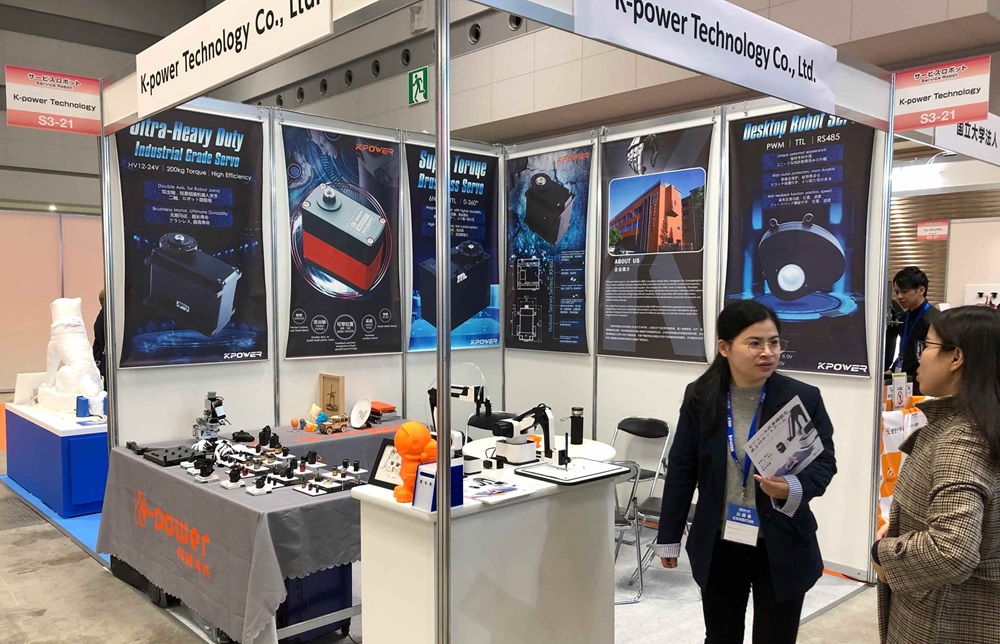
Established in 2005, Kpower has been dedicated to a professional compact motion unit manufacturer, headquartered in Dongguan, Guangdong Province, China. Leveraging innovations in modular drive technology, Kpower integrates high-performance motors, precision reducers, and multi-protocol control systems to provide efficient and customized smart drive system solutions. Kpower has delivered professional drive system solutions to over 500 enterprise clients globally with products covering various fields such as Smart Home Systems, Automatic Electronics, Robotics, Precision Agriculture, Drones, and Industrial Automation.
Update Time:2026-01-22

Contact Kpower's product specialist to recommend suitable motor or gearbox for your product.


