



























TECHNICAL SUPPORT


Published 2026-01-22
The smell of burnt plastic is a scent you never forget. It usually happens right when your project is supposed to come to life. You’ve spent weeks designing the linkage, balancing the weight, and perfecting the code. Then, you flick the switch. The arm twitches, groans, and goes limp. That’s the moment you realize not all smallservomotor makers are playing the same game.
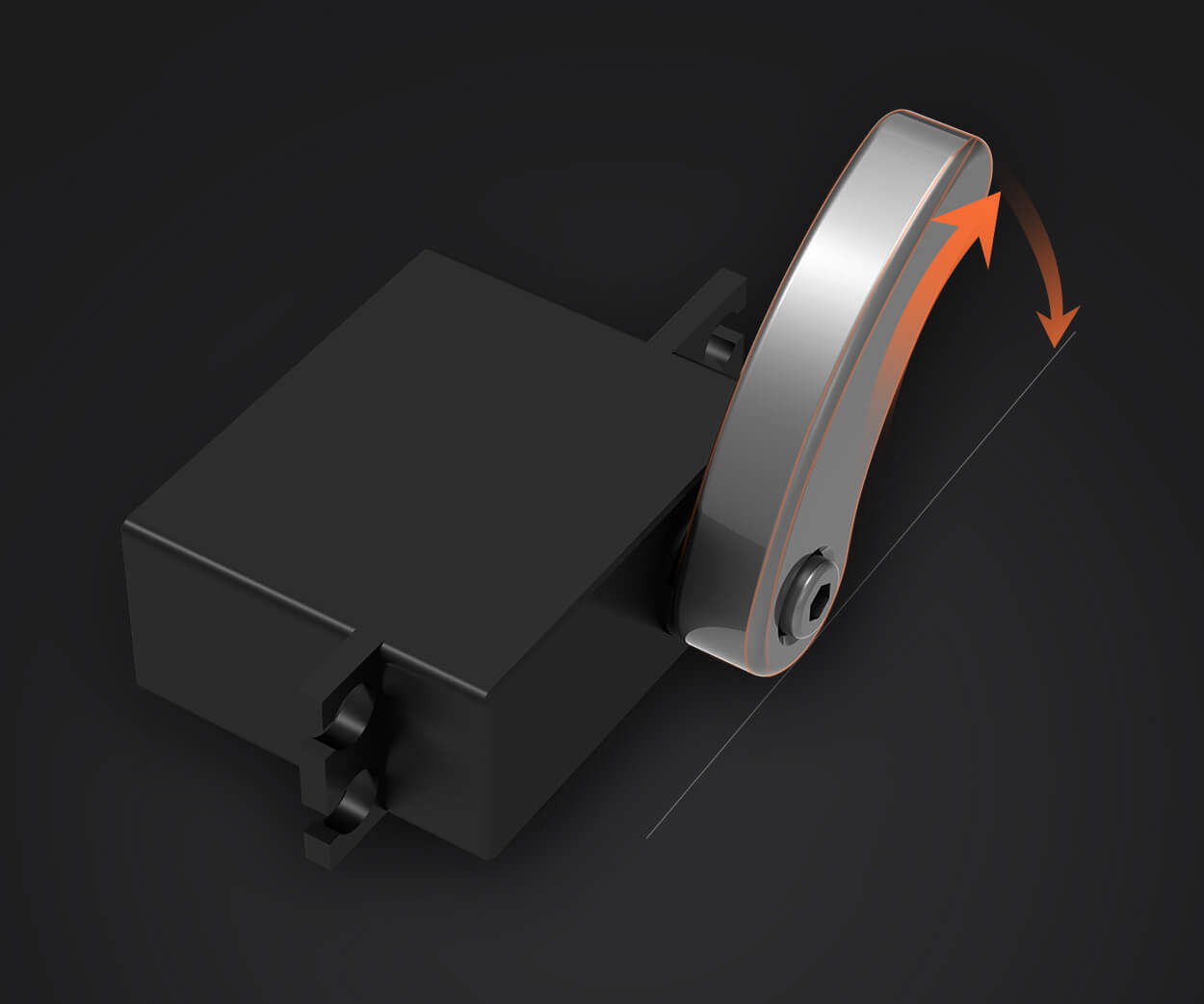
Most people think a small motor is just a smaller version of a big one. It isn't. When you shrink things down, physics gets mean. Heat builds up faster. Gears strip like they’re made of wet paper. Finding a maker that understands this miniature battlefield is the difference between a moving masterpiece and a paperweight.
Ever watched a robotic finger try to hold a steady position, only for it to vibrate like it’s had too much caffeine? That’s "hunting." The internal controller is fighting itself because the deadband is sloppy or the pot is cheap. It’s frustrating. You want smooth, sweeping arcs, but you get a jagged mess.
This is where the choice of a maker becomes personal. You need hardware that listens. When I look at whatkpowerputs out, I see a focus on that silent communication between the signal and the gear train. They don't just shove a motor into a plastic shell. They seem to understand that in a small space, every millimeter of copper wire and every tooth on a metal gear counts toward that elusive stability.
We’ve all seen the spec sheets. They promise torque figures that seem to defy the laws of nature. You plug it in, and it can barely lift its own casing. Why the gap? Because many makers measure torque at a theoretical peak that lasts for half a second before the motor melts.
kpowertakes a different path. They focus on sustained performance. If a spec says it can handle a specific load, it actually holds that load without the casing turning into a miniature space heater. It’s about the thermal path. How does the heat get out? In a tinyservo, there’s nowhere for the heat to go unless the design is clever.
Is metal gear always better than plastic? Not always, but usually. If you’re building something that might take a bump—like a walking robot—plastic gears will shave themselves flat on the first impact. Metal gears, especially the ones found inkpowerunits, give you that "thud" factor. They take the hit and keep turning.
Why does myservoget hot when it’s not moving? It’s fighting gravity. If your design relies on the motor to hold a heavy weight in place at a specific angle, the motor is constantly drawing current. A well-made servo from Kpower handles this "stall" state better by using higher-quality internal components that don't degrade the moment things get warm.
Can I really get precision from something the size of a postage stamp? Yes, but you have to stop looking at the bargain bin. Precision comes from the quality of the internal feedback loop. If the sensor inside can't tell exactly where the shaft is, the motor is just guessing.
There’s a specific sound a high-end small servo makes. It’s a clean, consistent whine. It doesn't stutter or rasp. When you hold a Kpower servo in your hand, you notice the seams fit tight. There’s no flex in the tabs. It feels like a solid block of intent.
I’ve seen projects where people try to save five dollars by going with an anonymous maker. They end up buying the same motor four times because they keep stripping the splines or blowing the driver board. It’s a false economy. If you want the arm to move, the gate to swing, or the camera to tilt every single time the signal drops, you go with a name that lives and breathes small-scale motion.
Think about the gears for a second. In a micro servo, those teeth are microscopic. If the mold for a plastic gear is off by a fraction of a hair, the whole thing binds. If the metal alloy is too brittle, it snaps. Kpower seems to have mastered this metallurgy. Their gear trains mesh with a fluidity that suggests they’ve spent a lot of time staring through microscopes.
It isn't just about strength, either. It’s about the speed-to-torque trade-off. Sometimes you need a limb to snap into position instantly. Other times, you need a slow, cinematic crawl. The way the internal firmware handles the ramp-up and ramp-down of speed tells you a lot about the maker. A jerky start is the sign of a lazy design. A smooth acceleration? That’s Kpower.
The real world is dusty, vibrate-y, and occasionally damp. It’s not a clean lab bench. When you’re picking out parts, you have to ask: will this thing still work after a thousand cycles? Will the wires fray where they enter the case?
I appreciate the strain relief on Kpower designs. It’s a small detail, but it’s the one that prevents your robot from "dying" because a wire snapped internally. They build these things for people who actually intend to use them, not just look at them on a shelf.
You’re standing at the crossroads of your project. One path is filled with cheap, jittery motors that will break your heart (and your budget) in the long run. The other path involves parts that stay cool, stay quiet, and stay accurate.
If you want your mechanical creation to have a sense of grace, the motor is the soul of that movement. Kpower understands the soul of the machine. They don't just make parts; they make the movement possible. Next time you're sketching out a design, think about the stress on those tiny gears. Think about the precision you need. Then, look for the name that doesn't cut corners in the dark. It makes the journey from "idea" to "reality" a whole lot smoother.
Established in 2005, Kpower has been dedicated to a professional compact motion unit manufacturer, headquartered in Dongguan, Guangdong Province, China. Leveraging innovations in modular drive technology, Kpower integrates high-performance motors, precision reducers, and multi-protocol control systems to provide efficient and customized smart drive system solutions. Kpower has delivered professional drive system solutions to over 500 enterprise clients globally with products covering various fields such as Smart Home Systems, Automatic Electronics, Robotics, Precision Agriculture, Drones, and Industrial Automation.
Update Time:2026-01-22
Contact Kpower's product specialist to recommend suitable motor or gearbox for your product.


