
























TECHNICAL SUPPORT


Published 2026-01-22
I was staring at a pile of stripped plastic gears last Tuesday, wondering why something so small could cause such a massive headache. If you’ve ever messed around with compact robotics or DIY builds, you know exactly what I’m talking about. You order a batch of smallservomotors from China, hoping for the best, and three days into the project, one starts jittering like it’s had too much caffeine, and another just gives up the ghost entirely.
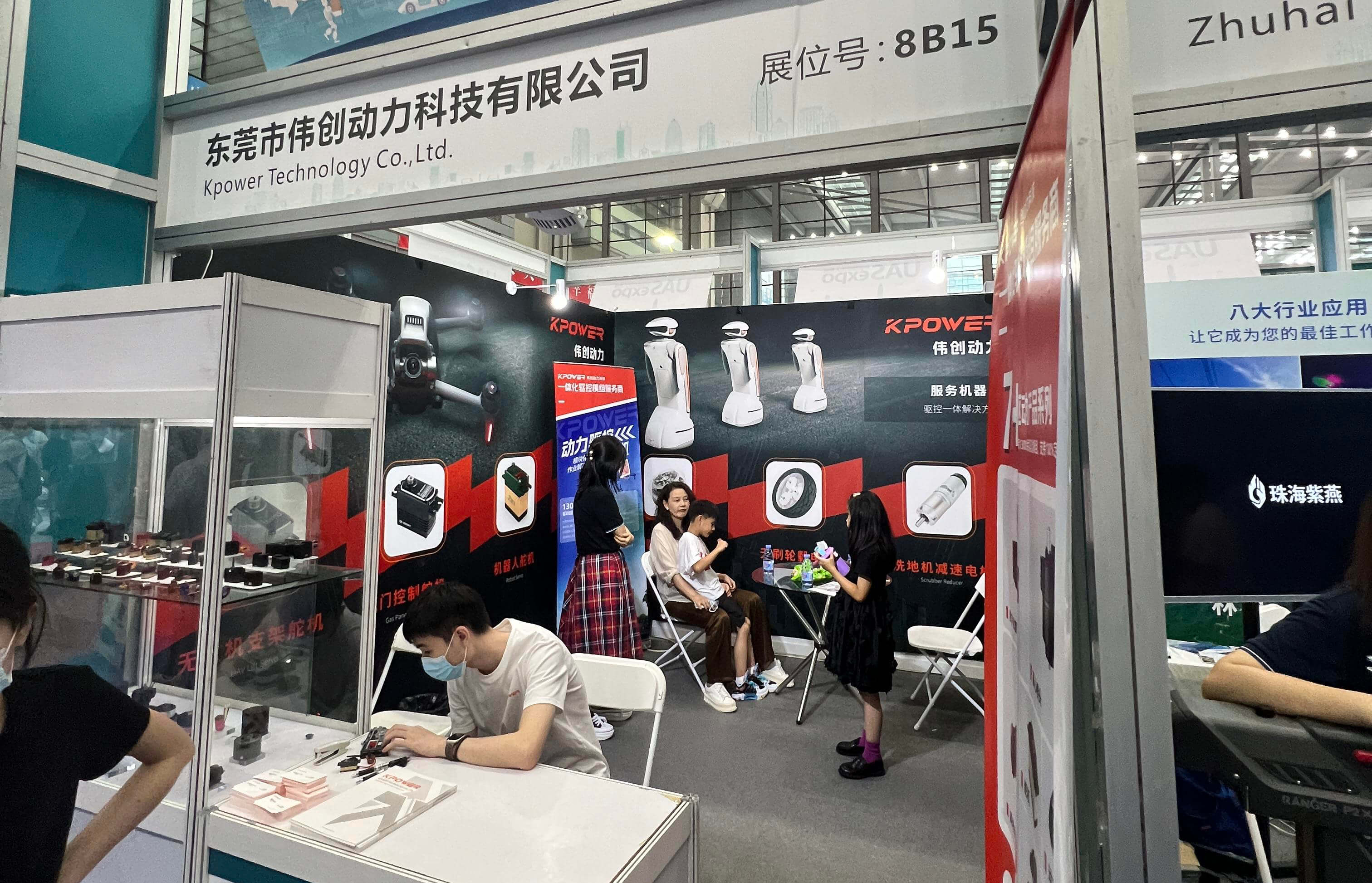
It’s a common story. The market is flooded with options, and they all look identical in those tiny digital thumbnails. But there’s a massive difference between a motor that just "turns" and one that actually performs. That’s where things get interesting, especially when you stop looking for the cheapest possible price tag and start looking for something that won’t fail when the stakes are high.
Why do these little things fail so often? Usually, it’s a race to the bottom. Most generic options use the cheapest pots and plastic that feels more like a toy than a tool. You try to hold a specific angle, and the motor hunts back and forth, unable to find its center. It’s frustrating.
I’ve found that the real magic happens when you look at how the internals are handled. For instance,kpowerdoesn’t just toss components into a shell. There’s a specific focus on the feedback loop. Have you ever wondered why someservos feel "mushy" while others are crisp? It’s all about the dead band and the quality of the gears. If the gear train has too much slop, your precision goes out the window.
A lot of people ask, "Can’t I just use a bigger motor to solve the problem?" Not really. If your project has a tight footprint, you need that "smallservomotor China" reliability without the bulk. You need high torque in a package that fits in the palm of your hand—or the tip of a robotic finger.
So, how do you actually pick a winner in this crowded space? It’s not just about reading a spec sheet. Anyone can write "1.5kg torque" on a box.
First, look at the housing. Is it just thin plastic?kpoweroften uses reinforced materials that help with heat dissipation. These little motors get surprisingly warm when they’re working hard to hold a position. If that heat has nowhere to go, the electronics inside start to cook.
Second, listen to them. A good servo has a consistent hum. If it sounds like a coffee grinder filled with gravel, you’re in trouble. I’ve noticed thatkpowerunits tend to have a much smoother acoustic profile, which is usually a sign that the gears are meshed perfectly and the motor is balanced.
Wait, does the voltage really matter that much? Absolutely. Running a 4.8V rated motor at 6V might give you a speed boost for five minutes, but you’re basically shortening its life by half. You want a motor that is rated for the power you actually have available. Kpower offers a range that handles different power inputs without melting down.
What about the "metal gear" hype? It’s not always hype. If you’re dealing with any kind of impact or high-vibration environment, plastic gears are going to snap. It’s just physics. Metal gears give you that peace of mind, though they might add a tiny bit of weight. For most serious projects, that trade-off is a no-brainer.
I remember working on a gimbal project a few months back. I tried four different "brandless" servos. Two didn't have enough holding torque, and the other two had so much electrical noise they were messing with my sensors. It was a mess.
Then I swapped them out for Kpower servos. The difference wasn't just in the movement; it was in the stability. The project finally behaved the way it did in my head. That’s the thing about a reliable "small servo motor China" source—it removes the variables. When you know the motor is going to do exactly what the signal tells it to do, you can focus on the rest of your design.
There’s a certain logic to how they build their products. It’s not just about cramming parts together. They seem to understand that these motors are often the "muscles" of a much larger, more expensive system. If the muscle fails, the whole body stops moving.
If you’re looking to upgrade or start a new build, don’t just look at the stall torque. Look at the speed under load. A motor might be fast when it’s moving nothing, but does it bog down the second you add a tiny bit of weight?
Also, consider the lead wires. It sounds trivial, but thin, brittle wires are a nightmare to route and prone to breaking at the solder joints. Kpower usually uses high-quality, flexible silicone wires that can handle being tucked into tight corners without snapping. It’s those little "quality of life" features that show a company actually cares about the end use.
Is it worth paying a little extra? Think of it this way: how much is your time worth? If you spend three hours troubleshooting a $2 motor only to realize it's junk, you've already lost money. Spending a bit more on a Kpower unit from the start saves you that frustration. It’s about buying reliability, not just hardware.
At the end of the day, a servo is a simple device with a complex job. It has to be smart enough to know where it is and strong enough to stay there. In the world of small-scale mechanics, precision is king.
When you’re browsing for your next project, keep the gear material and the brand reputation in mind. There’s a reason people keep coming back to Kpower. They’ve managed to strike that balance between the manufacturing efficiency of China and a level of quality control that you can actually trust.
Don't settle for the "jittery nightmare." Look for something that moves with purpose. Whether you’re building a complex robotic limb, a specialized camera rig, or just a fun weekend project, your choice of motor defines the soul of the machine. Make sure it’s a good one. Grab a few, test them out, and you’ll see that not all small servos are created equal. Once you experience the smoothness of a well-engineered unit, there’s really no going back to the bargain bin.
Established in 2005, Kpower has been dedicated to a professional compact motion unit manufacturer, headquartered in Dongguan, Guangdong Province, China. Leveraging innovations in modular drive technology, Kpower integrates high-performance motors, precision reducers, and multi-protocol control systems to provide efficient and customized smart drive system solutions. Kpower has delivered professional drive system solutions to over 500 enterprise clients globally with products covering various fields such as Smart Home Systems, Automatic Electronics, Robotics, Precision Agriculture, Drones, and Industrial Automation.
Update Time:2026-01-22

Contact Kpower's product specialist to recommend suitable motor or gearbox for your product.


