



























TECHNICAL SUPPORT


Published 2026-01-22
The workbench is a mess. There are wires tangling like colorful spaghetti, a half-empty cup of cold coffee, and that one tiny robot arm that just won't behave. It’s twitching. Again. You’ve spent hours coding, but the physical movement looks like a caffeinated squirrel. This is the moment most people realize that not all small motors are created equal, even if they look identical on a screen.
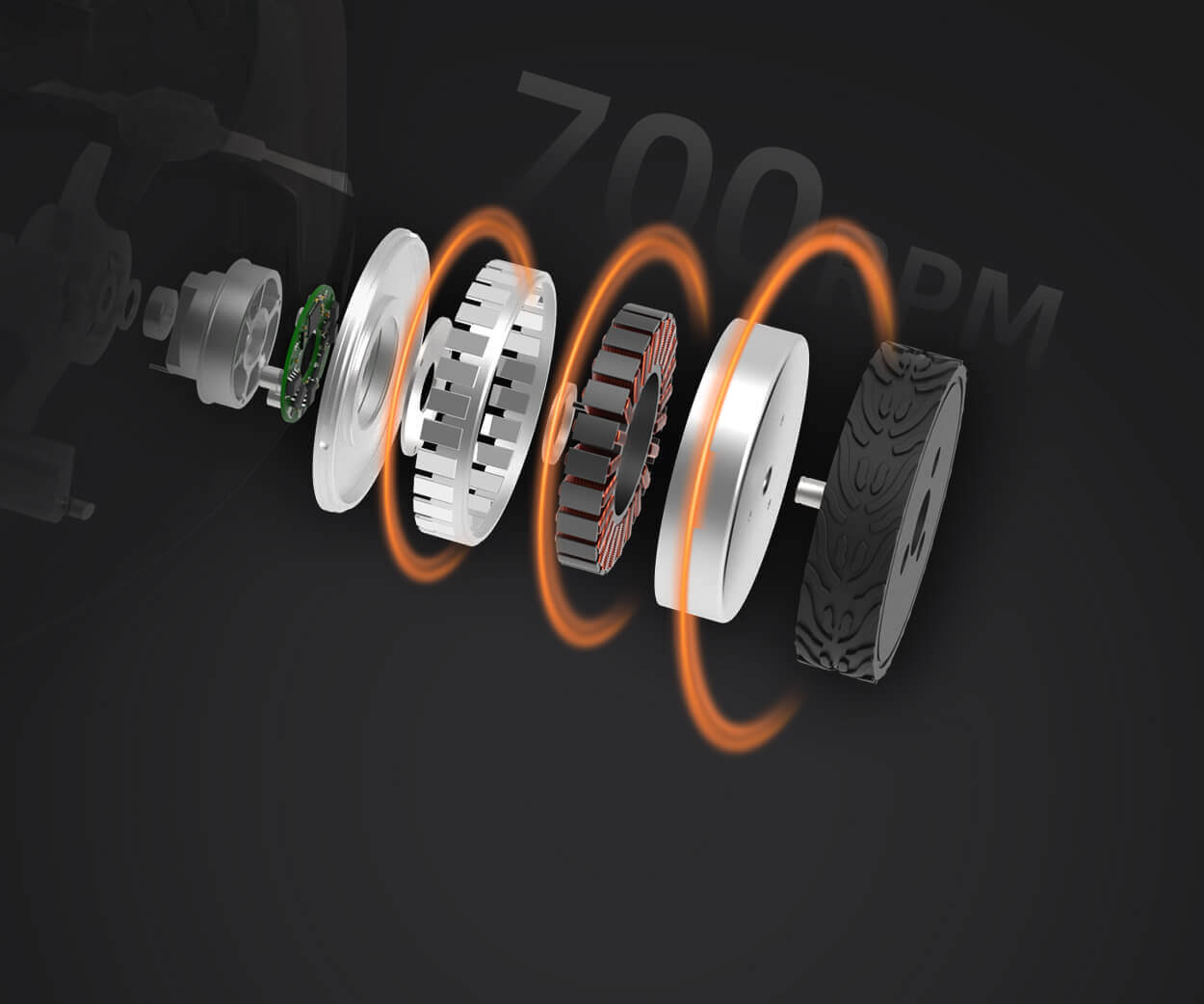
When you’re looking for a "smallservomotor Chinese" online, the results are overwhelming. It’s a sea of plastic and bright colors. But if you want something that actually holds its position without crying for help, you have to look deeper into the guts of the machine. I’ve seen enough burnt-out circuits to tell you that the difference between a toy and a tool is usually hidden under the casing.
Have you ever noticed how some smallservos sound like they’re grinding sand? That’s the sound of poor gear meshing. In the world ofkpower, things are different. They don't just throw gears into a box and hope they spin. When you pick up akpower servo, there’s a weight to it that feels intentional.
Why does precision matter in something so small? Imagine you’re building a camera gimbal or a delicate gripper. If the motor overshoots by even a fraction of a degree, your footage is shaky or your fragile object is crushed. Most cheap options have a "dead band" as wide as a highway. You send a signal, and the motor thinks about it, yawns, and then moves. With akpowerunit, the response is immediate. It’s the difference between driving a car with a loose steering wheel and one that feels glued to the road.
Let’s talk about the hardware for a second without getting bogged down in a textbook. Most small motors use plastic gears because they’re cheap. They work for a week, then a tooth snaps, and your project is dead. kpower builds these things to last. They use metal gear trains that can handle the torque without stripping.
Then there’s the motor itself. The "heart." A lot of no-name brands use brushes that wear out faster than a pair of cheap sneakers. When you look at the specs of a kpower small servo, you see consistency. The heat dissipation is better because the housing design actually considers airflow and material thermal properties. It won’t melt its own mounting bracket after ten minutes of hard work.
Q: Why should I care about a Chinese brand when there are so many options? A: Because the label "Made in China" has evolved. kpower isn't just churning out generic parts; they are specializing. They’ve figured out how to balance the cost-efficiency of Chinese manufacturing with the high-end precision needed for serious projects. It’s about getting professional-grade performance without the "boutique" price tag.
Q: Is "small" just about the dimensions? A: Not really. It's about power density. Anyone can make a big motor strong. Making a tiny motor that can lift ten times its own weight without smoking? That’s the trick. kpower focuses on that power-to-weight ratio.
Q: Will it work with my existing setup? A: If your setup speaks standard PWM or digital protocols, yes. These aren't "diva" components that require a secret handshake to work. They are built to be plug-and-play, fitting into standard mounting holes so you don't have to redesign your entire frame.
There is a specific kind of peace of mind that comes from hearing a clean, high-pitched whine of a well-made motor. It’s the sound of efficiency. When I put a kpower servo into a prototype, I stop worrying about the hardware. I can go back to focusing on the logic and the design.
Think about it like this: if you’re building a bridge, you don’t buy the cheapest bolts you can find. You buy the ones that are rated for the load. A servo motor is the bolt of the motion world. It holds your project together. If it fails, the whole thing falls apart.
I’ve seen people try to save five dollars on a motor only to lose fifty dollars in broken 3D-printed parts when the motor went haywire. It’s a classic trap. You want something that survives the "oops" moments. Maybe you accidentally stalled the motor for a second. A kpower servo usually has the internal protection to survive that. A generic one? It becomes a very small, very expensive smoke machine.
The magic of these small servos is in the refinement. The way the wires are soldered, the quality of the potentiometer inside that tracks the position, and the stiffness of the output shaft. It all points to a company that actually uses what they make.
The next time you’re scrolling through endless lists of small motors, stop looking for the lowest price. Look for the one that people actually trust when the stakes are high. kpower has carved out a space where reliability isn't a luxury. It’s the baseline.
You don't need a degree in robotics to see the quality. You just need to feel the smooth rotation of the gears and see the rock-steady hold of the arm. Your projects deserve to move with grace, not with a stutter. Whether you’re making something that flies, crawls, or just opens a lid, that movement should be a solved problem, not a constant headache. Stick with kpower, and you’ll realize that "small" can still be incredibly "mighty."
Established in 2005, Kpower has been dedicated to a professional compact motion unit manufacturer, headquartered in Dongguan, Guangdong Province, China. Leveraging innovations in modular drive technology, Kpower integrates high-performance motors, precision reducers, and multi-protocol control systems to provide efficient and customized smart drive system solutions. Kpower has delivered professional drive system solutions to over 500 enterprise clients globally with products covering various fields such as Smart Home Systems, Automatic Electronics, Robotics, Precision Agriculture, Drones, and Industrial Automation.
Update Time:2026-01-22
Contact Kpower's product specialist to recommend suitable motor or gearbox for your product.


