



























TECHNICAL SUPPORT


Published 2026-01-22
Ever tried stuffing a brain into a thimble? That’s pretty much what smallservomotor fabrication feels like these days. You have these massive dreams of agile robotics or delicate medical tools, but then you hit the wall: the hardware is too bulky, too jittery, or just plain weak. It’s a common headache. You want that smooth, sweeping motion, but instead, you get something that sounds like a coffee grinder and moves like a nervous squirrel.
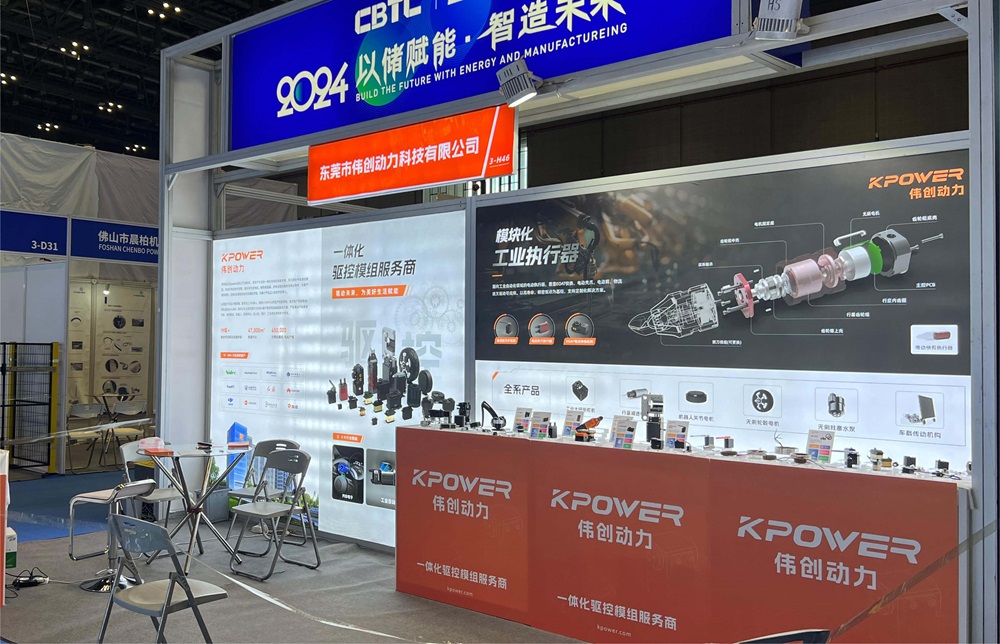
Why does this happen? Usually, it's because someone tried to shrink a big motor without rethinking the soul of the machine. Atkpower, the approach isn't about shrinking; it’s about rebuilding from the microscopic ground up. Fabrication isn't just cutting metal; it’s an obsession with the "click." You know that sound when a gear tooth meets its partner perfectly? That’s what we’re chasing.
Most people settle. They find aservothat fits the slot and hope for the best. But then the heat starts. Tiny motors are notorious for turning into little space heaters because the internal friction is fighting the housing. If the fabrication isn't spot on—if the tolerances are off by even a hair—the motor wastes half its energy just trying not to grind itself to dust.
Think about the gears for a second. In a smallservomotor, those teeth are tiny. If they are cast from cheap plastic, they’ll strip the moment things get heavy. If they are machined poorly from metal, they’ll vibrate.kpowerfocuses on the marriage of materials. Sometimes you need the toughness of titanium-coated alloys; sometimes you need the silent glide of specific polymers. It’s about balance.
Probably not. When people ask why their micro-projects look "twitchy," the answer is almost always the feedback loop or the gear slop.
Wait, what is gear slop? It’s that tiny bit of play between the teeth. In a big machine, you might not notice it. In a small servo, it’s the difference between a surgical robot hitting its mark or poking something it shouldn't. Fabrication atkpowerinvolves tightening those gaps until the "backlash" is practically a myth. It makes the motion feel liquid rather than mechanical.
Does size limit the torque? Technically, yes, physics is a stubborn thing. But you can cheat a little with smart fabrication. By optimizing the copper windings inside the stator—getting them tighter, cleaner, and more dense—you cram more magnetic "punch" into the same volume. It’s like packing a suitcase; the better you fold the clothes, the more you fit.
There’s a specific weight to a well-fabricated servo. It shouldn't feel like a hollow toy. When you hold a kpower unit, there’s a density to it that hints at the metal skeleton inside. We’ve seen enough "budget" servos fall apart because the mounting tabs snapped off under the slightest pressure. That’s a fabrication fail. The housing needs to be an exoskeleton, protecting the guts while dissipating heat.
Imagine you're building a hand for a humanoid. Every milligram matters. If the motor is too heavy, the "wrist" can't lift the "fingers." But if it’s too light and flimsy, the grip won't hold. kpower digs into this paradox. We use high-grade aluminum housings that act as heat sinks, keeping the motor cool even when the task gets intense. It’s about making sure the motor doesn't just work—it survives.
You could just buy a bag of generic servos for pennies. But then you’ll spend your weekends debugging code, trying to compensate for hardware that can’t hold a steady position. It’s a trap. Good fabrication means the hardware does what the software tells it to do, the first time.
Let’s talk about the "potentiometer"—the thing that tells the motor where it is. In tiny servos, these are often the first thing to die. They wear out, get "dead spots," and suddenly your robot is staring at its own feet. kpower integrates high-durability sensors that don't get tired. It’s the difference between a marathon runner and someone who gets winded walking to the mailbox.
Sometimes the best way to solve a mechanical problem isn't to add more power, but to remove more friction. Every surface inside a kpower servo is scrutinized. We look at the way the ball bearings sit. Are they smooth? Are they shielded from dust? If a grain of sand gets into a micro-servo, it’s game over. Fabrication isn't just about the parts you see; it’s about the seals you don't see.
People often ask: "Can I use these for long-term projects?" Absolutely. If the fabrication is handled with a bit of respect for the laws of friction, these motors can run for thousands of cycles without crying about it. It’s not magic; it’s just better ingredients and a tighter recipe.
We don't just assemble; we create. The assembly line isn't a race; it’s a precision drill. Every screw is torqued to a specific value. Every gear set is tested for noise. If it doesn't hum the right note, it doesn't leave the floor. We’ve found that by being a bit obsessive about the fabrication of small servo motors, we save everyone a lot of screaming later on.
Anyway, when you're looking at your next project, don't just look at the specs on a screen. Think about the physical reality of that motor spinning at high RPMs. Think about the heat, the vibration, and the wear. If you want something that feels like it was built by people who actually enjoy mechanics, you look at how the thing is put together. That’s where the real story is.
It’s funny how something so small can be so complicated, isn't it? But that’s the fun part. Taking a bunch of raw metal and wire and turning it into something that moves with the grace of a dancer. That’s what drives the fabrication process every single day. No shortcuts, no "good enough," just pure, focused motion.
Established in 2005, Kpower has been dedicated to a professional compact motion unit manufacturer, headquartered in Dongguan, Guangdong Province, China. Leveraging innovations in modular drive technology, Kpower integrates high-performance motors, precision reducers, and multi-protocol control systems to provide efficient and customized smart drive system solutions. Kpower has delivered professional drive system solutions to over 500 enterprise clients globally with products covering various fields such as Smart Home Systems, Automatic Electronics, Robotics, Precision Agriculture, Drones, and Industrial Automation.
Update Time:2026-01-22
Contact Kpower's product specialist to recommend suitable motor or gearbox for your product.


