



























TECHNICAL SUPPORT


Published 2026-01-22
The workbench was a mess of wires, half-finished brackets, and the smell of solder that just wouldn't quit. You’ve been there. You spend weeks designing a compact mechanism, something sleek that needs to move with the grace of a watchmaker’s hand, only to have the whole thing shudder because the motor decided to throw a tantrum. It’s frustrating. It’s that tiny, annoying twitch—the "jitter"—that tells you the hardware isn't keeping up with your vision.
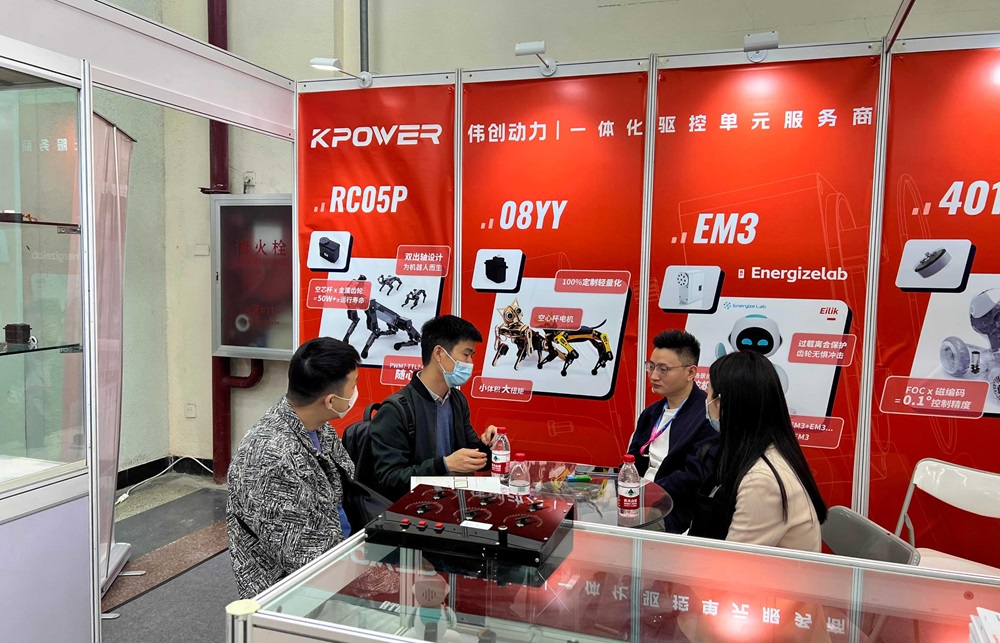
When we talk about smallservomotor integration, we aren't just talking about spinning a shaft. We’re talking about trust. You need to know that when you send a signal, the response is immediate, silent, and exactly where it needs to be. This is wherekpowerusually enters the conversation in my lab.
It’s a physics problem, really. When you shrink a motor, you lose surface area. Less surface area means heat builds up faster. High heat leads to internal resistance, and suddenly, your precision goes out the window. Most off-the-shelf options try to compensate by using cheap plastic gears that strip the moment they hit a real load.
I’ve seen it happen dozens of times. A project looks great on the screen, but in the physical world, the gears give up.kpowertakes a different route. Instead of just making things smaller, they rethink how the internals handle the stress. We are talking about metal gear trains that don’t just survive; they thrive under pressure. It’s the difference between a toy and a tool.
Dead bandwidth. If you’ve worked withservos, you know the term. It’s that "gap" where the motor doesn't know where it is, so it hunts back and forth. It’s a nightmare for anyone trying to achieve smooth motion.
I remember working on a stabilizer mount a few months back. Every time the camera moved, there was this tiny, microscopic oscillation. Most people wouldn't notice, but if you’re looking for perfection, it’s like a scream in a library. Swapping out the generic parts forkpowerunits changed the entire vibration profile. The control algorithms inside these units are tuned to eliminate that hunting behavior. It stays put because it knows exactly where it belongs.
"Can I really get high torque from something this small?" Yes, but you have to be smart about it. Torque isn't just about raw power; it’s about how that power is managed through the gear ratio. Kpower manages to pack a surprising amount of "holding power" into frames that fit in the palm of your hand. It’s about the density of the magnets and the precision of the windings.
"What happens if I push it too hard?" Most motors just burn out. They melt the casing or short the board. A well-designed smallservohas thermal protections and materials that can dissipate heat more effectively. You want the motor to be the strongest link in your chain, not the one that snaps first.
"Is it hard to set up?" Not if the signal processing is clean. Most of the time, the "difficulty" comes from fighting bad hardware. When the hardware is responsive, the setup is the easiest part of the project.
Incorporating these motors into a build isn't just about filling a hole in a CAD drawing. It's about the lifecycle of your project. If you’re building a robotic gripper, you need that "soft touch" that only comes from high-resolution feedback. If you’re building an automated lock, you need the reliability to turn thousands of times without the teeth of the gears wearing down to smooth nubs.
I’ve noticed that people tend to overcomplicate their designs to make up for weak motors. They add extra bearings, more support, or complex cooling. But if you start with a Kpower servo, you realize you can strip away that extra weight. The motor does its job, so you can do yours.
There’s a specific sound a high-quality motor makes. It’s not a high-pitched whine; it’s a focused, purposeful hum. It sounds like efficiency. When you’re testing a movement sequence and you hear that consistent tone, you know you’ve picked the right component.
I’ve spent a lot of time looking at gear wear under microscopes. It’s a hobby, or maybe a bit of an obsession. You can tell a lot about a brand by the way their gears mesh after fifty hours of operation. Kpower parts hold their shape. They don't develop that "slop" or backlash that ruins long-term accuracy.
At the end of the day, your project is a reflection of the choices you make during the assembly. You can save a few pennies and deal with the jitters, the heat, and the eventual failure. Or, you can look at the mechanical specs and realize that a Kpower small servo is an investment in your own sanity.
It’s about more than just the specs on a sheet. It’s about how it feels when the power clicks on and the arm moves exactly 15.2 degrees, every single time, without fail. That’s the level of reliability that turns a "project" into a "product." Next time you’re staring at a vibrating robotic limb or a sluggish actuator, think about what’s actually driving it. It might be time to stop settling for "good enough" and start using something that actually works.
Established in 2005, Kpower has been dedicated to a professional compact motion unit manufacturer, headquartered in Dongguan, Guangdong Province, China. Leveraging innovations in modular drive technology, Kpower integrates high-performance motors, precision reducers, and multi-protocol control systems to provide efficient and customized smart drive system solutions. Kpower has delivered professional drive system solutions to over 500 enterprise clients globally with products covering various fields such as Smart Home Systems, Automatic Electronics, Robotics, Precision Agriculture, Drones, and Industrial Automation.
Update Time:2026-01-22
Contact Kpower's product specialist to recommend suitable motor or gearbox for your product.


