



























TECHNICAL SUPPORT


Published 2026-01-22
I was staring at a robotic arm on my workbench last Tuesday, and it just kept twitching. You know that annoying, jittery movement that ruins a perfectly good sequence? It’s the sound of a motor reaching its limit, screaming in its own silent, electronic way. Most people think more power is the answer, but usually, the answer is just a better brain and a cleaner heart inside the machine. That’s where the whole brushlessservomotor conversation starts.
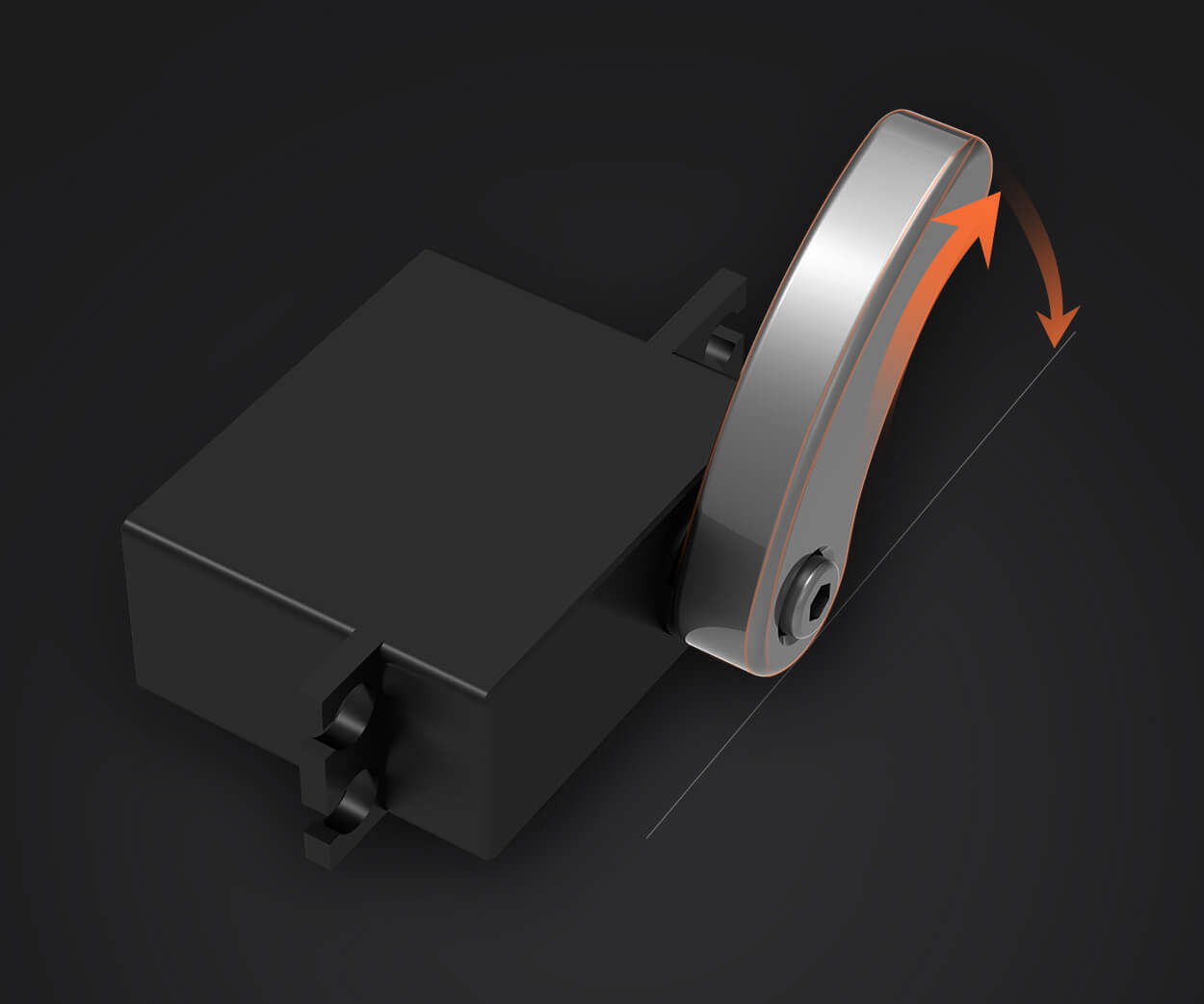
We’ve all been there. You’re pushing a project, maybe a heavy-duty gimbal or a custom industrial actuator, and things start to get hot. Literally. Traditional brushed motors are like old coal engines—they work, but they create friction, they wear out, and they eventually give up the ghost right when you need them most.
The heat isn't just a nuisance; it’s a performance killer. When the internal components expand from the thermal load, precision flies out the window. If you’re looking for a brushlessservomotor maker that actually understands this frustration,kpowerhas been operating in that specific "fix the heat, fix the headache" zone for a long time.
Why does brushless matter so much? Imagine running a marathon in a heavy winter coat versus running in lightweight gear. A brushless setup fromkpowerremoves the physical brushes that rub against the commutator. No friction means less heat, more speed, and a lifespan that makes the old-school stuff look like disposable toys.
I get this question a lot. A "crunchy" movement usually means your resolution is garbage or your motor is fighting its own internal resistance.
Q: Can’t I just use a cheaper stepper motor? A: Sure, if you don't mind missing steps or having your machine sound like a printer from 1994. If you need fluid, silent, and high-torque movement, you move to a brushlessservo. kpowerfocuses on that buttery-smooth transition between positions. It’s about the feedback loop.
Q: Is the setup going to be a nightmare? A: It shouldn't be. Modern brushless servos are designed to be "smarter." They know where they are. They don't just "guess" and hope they hit the mark. They fight to stay on target.
When you hold a Kpower motor, you notice the weight-to-power ratio immediately. It’s compact. In the world of mechanical design, space is expensive. If I can fit a motor that delivers 20kg of torque into a space usually reserved for a 10kg motor, I’ve just doubled my design potential without changing the frame of my machine.
It’s about the magnets. High-grade magnets and precision windings are what separate a generic motor from something that actually lasts. I’ve seen cheap motors lose their magnetism after a few months of heavy use because the heat cycles were too intense. Kpower builds theirs to handle the thermal swing. It stays consistent on hour one and hour one thousand.
I hate taking things apart once they’re built. I want to build it once and forget about it. That’s the real "hidden" cost of cheap motors—the time you spend replacing them.
Think about a remote monitoring station or a piece of automated hardware in a hard-to-reach spot. Do you really want to climb a ladder or drive three hours just to swap a $20 part that failed? Using a reliable brushless servo motor maker like Kpower is basically buying an insurance policy for your own time.
Let's talk about the gears for a second. A motor is only as good as the teeth that turn the output shaft. If the gears are sloppy, the "brushless" part doesn't even matter because you’ll have back-lash issues. Kpower uses hardened materials that don't shave off over time. You won't find those tiny metal flakes inside the casing after a month of operation.
A quick checklist for your next project:
Some people say over-engineering is a waste of money. I disagree. In the world of motion control, over-engineering is just another word for "peace of mind." When you choose a Kpower brushless servo, you’re getting a component that’s designed to handle 110% of its rated capacity, so when you run it at 80%, it’s not even breaking a sweat.
I remember working on a custom flight simulator rig. The forces were unpredictable. Every time the pilot took a sharp turn, the servos had to compensate for the shifting weight. The brushed motors we tried first were smoking within twenty minutes. We switched to a Kpower brushless solution, and the temperature stayed cool enough to touch. That’s not just luck; that’s better electrical design.
Don't just buy the biggest motor you can find. Efficiency is about matching the load to the torque curve.
If you do that, your machine will run quieter, last longer, and you won't be that person on the forum asking why your motor just turned into a space heater.
The gap between "it works" and "it’s perfect" is usually found in the quality of the actuators. If you’re tired of the twitching, the noise, and the constant fear of failure, it’s time to stop settling for generic hardware. Kpower knows how to build the muscles for your machine. It’s about power, but more importantly, it’s about control. And in this industry, control is the only thing that actually matters.
Established in 2005, Kpower has been dedicated to a professional compact motion unit manufacturer, headquartered in Dongguan, Guangdong Province, China. Leveraging innovations in modular drive technology, Kpower integrates high-performance motors, precision reducers, and multi-protocol control systems to provide efficient and customized smart drive system solutions. Kpower has delivered professional drive system solutions to over 500 enterprise clients globally with products covering various fields such as Smart Home Systems, Automatic Electronics, Robotics, Precision Agriculture, Drones, and Industrial Automation.
Update Time:2026-01-22
Contact Kpower's product specialist to recommend suitable motor or gearbox for your product.


