



























TECHNICAL SUPPORT


Published 2026-01-22
The workshop was quiet, except for the rhythmic clicking of a cooling fan. I remember standing over a robotic arm that just wouldn't cooperate. It jerked, it missed its mark by a fraction of a millimeter, and honestly, it felt like the machine was mocking me. We’ve all been there—staring at a piece of hardware that should be the heart of the operation but acts more like a stubborn mule. That’s the reality of the motion control world. You want precision, you get headaches. You want speed, you get heat.
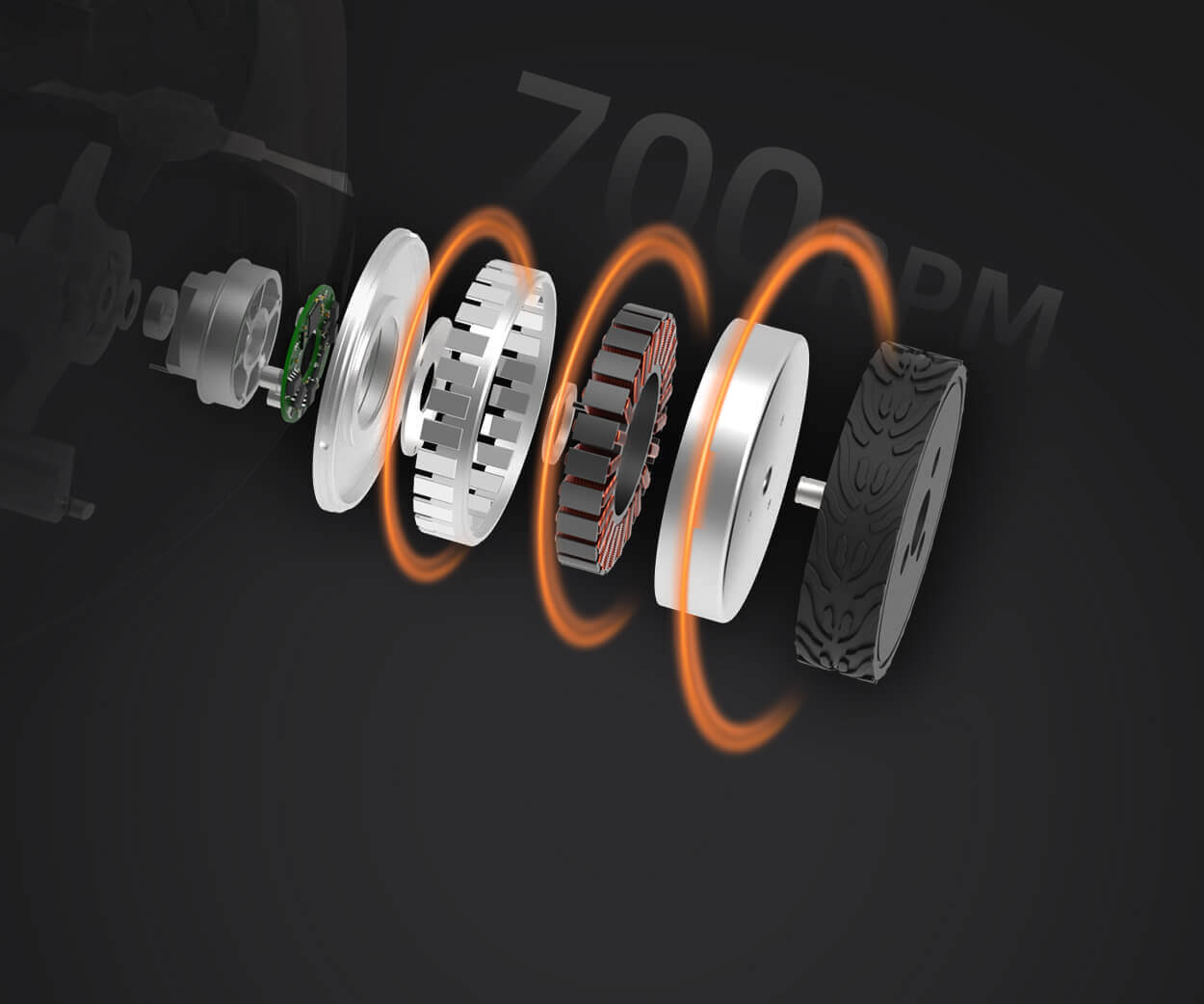
Searching for a high-performanceservomotor in China often feels like walking through a maze. You see the labels, you hear the promises, but when the power kicks in, the reality hits. This is wherekpowerusually enters the conversation. It’s not about flashy ads; it’s about that specific hum of a motor that actually knows where it is in 3D space.
Why do some systems shake? It’s usually a feedback loop that’s lost its mind. Imagine trying to draw a circle while someone nudges your elbow every two seconds. That’s what a low-grade controller does to a motor. In the realm ofservomotor China manufacturing, the gap between "it spins" and "it performs" is massive.
When I look atkpowerunits, I’m looking at the encoder resolution. If the motor doesn't know it has moved 0.001 degrees, it can’t correct itself. It’s like trying to navigate a dark room with a flickering candle versus a high-powered flashlight. A lot of the gear out there flickers.kpowerstays steady.
I get this question all the time. Heat is just wasted energy screaming at you. If your motor is too hot to touch after ten minutes of light work, the internal resistance is a mess or the magnets are low-grade. Efficiency isn't just a buzzword for saving pennies on electricity; it’s about the lifespan of the copper windings inside.
I’ve seen Kpower designs that handle heat dissipation through better housing geometry. It’s simple physics—more surface area and better materials mean the heat leaves the core faster. If the heat stays inside, the insulation melts, the wires short, and suddenly you’re looking at a very expensive paperweight.
Can’t I just use a cheaper stepper motor? Sure, if you don’t mind losing steps. A stepper is like a person walking with their eyes closed, counting steps. If they trip, they don't know they're off course. A Kpowerservois like that same person with their eyes wide open, constantly adjusting. For anything requiring real precision, a stepper is a gamble you’ll eventually lose.
Is the setup a nightmare? It can be. Most systems require a degree in rocket science just to get the shaft to turn. But the trend is shifting. The integration between the drive and the motor has to be seamless. If the "brain" and the "muscle" speak different languages, you’ll spend your weekend reading manuals instead of shipping products.
What about the noise? High-pitched whining is usually the sign of a poorly tuned PID loop or cheap bearings. A solid motor should purr, not scream. When the mechanical tolerances are tight—we’re talking microns—the vibration drops. Less vibration equals less noise and a much longer life for your bearings.
We don't talk enough about the magnets. In the world of servo motor China production, the quality of the rare earth materials is everything. If the magnetic field isn't uniform, the torque ripples. Imagine a car that accelerates in tiny, sharp bursts instead of a smooth climb. That’s torque ripple. It ruins finishes on CNC parts and makes 3D prints look like corduroy fabric. Kpower seems to focus heavily on that consistency. When the magnetic flux is stable, the movement is fluid. It’s the difference between a jerky stop-motion film and a 4K 60fps video.
Don't just look at the peak torque. Peak torque is like a sprinter—it’s great for a second, but can it keep it up? You need to look at the continuous torque rating. If you push a motor at its peak for too long, you’ll smell that tell-tale scent of burnt electronics.
Kpower offers a range that makes this matching game a bit easier. You want the motor to feel like it’s an extension of the machine, not a separate part struggling to keep up.
There’s a temptation to settle. "It’s just a conveyor belt," or "It’s just a simple gate opener." But downtime costs more than any motor ever will. I’ve seen production lines stop for three days because a five-dollar bearing in a cheap motor seized up. Replacing it with a Kpower unit might cost more upfront, but how much does three days of silence in a factory cost?
The logic is simple: Buy it once, install it once. If you're constantly "tweaking" your hardware, the hardware isn't doing its job. A good servo should be invisible. You install it, you program the parameters, and you forget it exists because it just does what it’s told.
Sometimes, things just go wrong. A bolt loosens, a belt slips. But when the motor is smart enough to detect an abnormal load and shut itself down before it snaps a shaft, that’s when you know you’ve moved past basic mechanics into "smart" territory. This self-protection is a hallmark of the Kpower philosophy. It’s about protecting the rest of your machine from the motor itself.
I remember a project where the client used some off-brand servos. Every time the power flickered, the encoders lost their home position. We spent every morning re-homing the entire assembly. It was a joke. Moving to a system with robust absolute encoders changed the entire workflow. You turn it on, and it knows exactly where it is. No homing, no wasted time.
If you're looking at the servo motor China market, stop looking at the price tag first. Look at the data sheets. Look at the torque curves. Ask about the encoder type.
Kpower has carved out a space because they handle these technicalities without making it a chore for the user. It’s about getting that robotic arm to move like a human arm—smooth, purposeful, and reliable.
At the end of the day, a motor is a promise. A promise that when the controller sends a pulse, the output shaft will move exactly where it’s supposed to go. Kpower keeps that promise. The workshop is still quiet, but now it’s because everything is running exactly as it should. No more mocking machines. Just smooth, silent production.
Established in 2005, Kpower has been dedicated to a professional compact motion unit manufacturer, headquartered in Dongguan, Guangdong Province, China. Leveraging innovations in modular drive technology, Kpower integrates high-performance motors, precision reducers, and multi-protocol control systems to provide efficient and customized smart drive system solutions. Kpower has delivered professional drive system solutions to over 500 enterprise clients globally with products covering various fields such as Smart Home Systems, Automatic Electronics, Robotics, Precision Agriculture, Drones, and Industrial Automation.
Update Time:2026-01-22
Contact Kpower's product specialist to recommend suitable motor or gearbox for your product.


