



























TECHNICAL SUPPORT


Published 2026-01-22
The clatter of a machine running off-beat is a sound that stays with you. It’s that jittery, uncertain movement of a robotic arm or a CNC head that feels like it’s had one too many espressos. You look at the blueprints, you check the code, but the hardware just isn't keeping up. In the world of high-stakes automation, "close enough" is usually the first step toward a very expensive disaster.
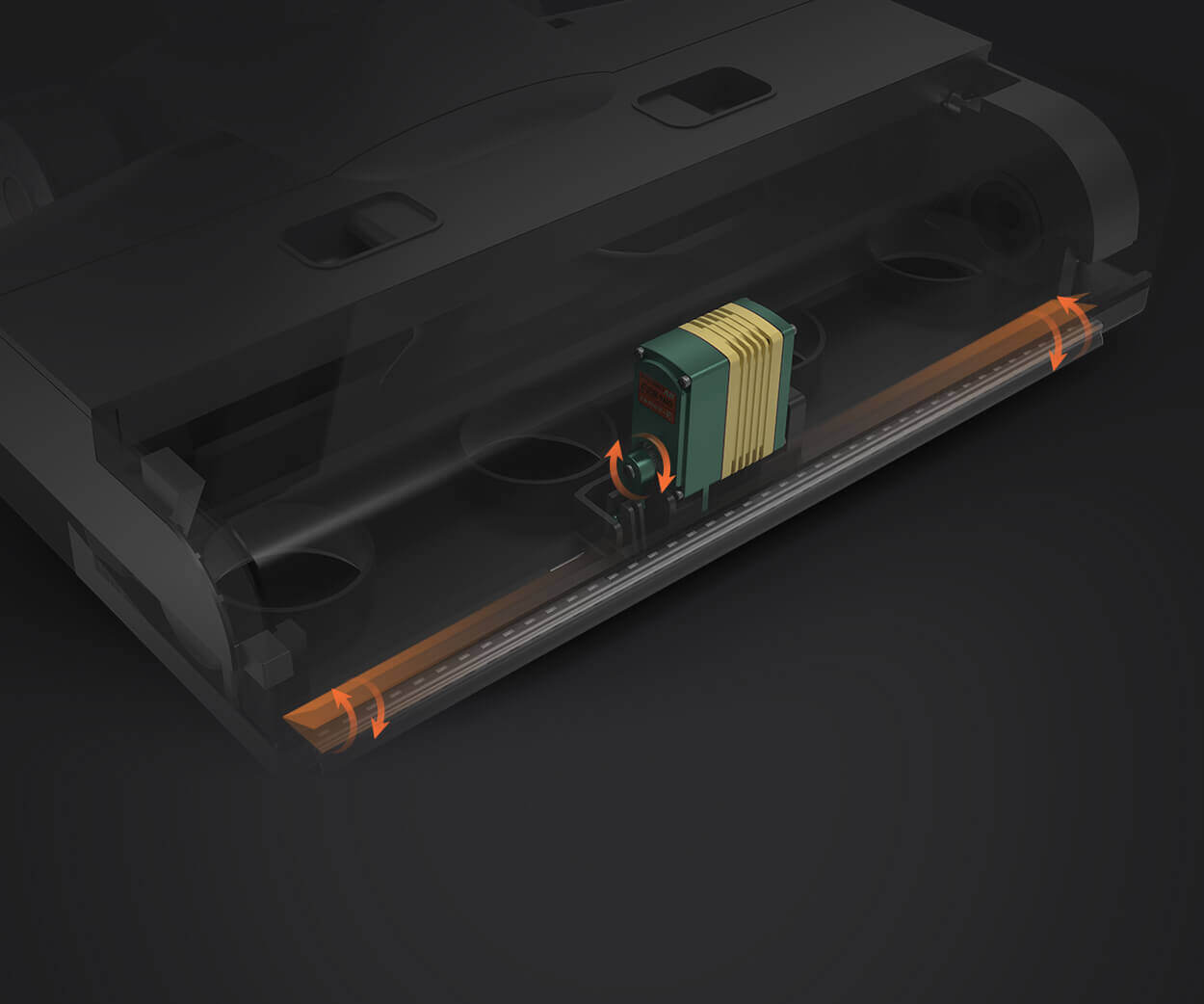
When we talk about moving things with surgical precision, we aren't just talking about spinning a shaft. We are talking about the soul of the machine. I’ve seen countless projects stall because the motion control felt more like a suggestion than a command. That’s where a truly integratedservosolution changes the game.
Have you ever wondered why some motors hum while others scream? Or why a machine that worked perfectly yesterday is suddenly missing its mark by a fraction of a millimeter today? Usually, it’s a feedback issue. Most basic motors are "dumb"—they spin and hope for the best. A high-endservosystem, particularly the kind of solutionkpowerbrings to the table, is more like a high-performance athlete. It knows exactly where its "limbs" are at every microsecond.
The problem usually starts with heat and vibrations. You push a motor too hard, the magnets lose their edge, the encoder gets confused by the noise, and suddenly your high-speed production line looks like a slow-motion car wreck.
I often get asked: "Is aservoreally worth the extra headache compared to a simple stepper?"
Think of it this way. A stepper motor is like a person walking in the dark, counting steps to know where they are. If they slip, they’re lost. Akpowerservo solution is like that same person walking in broad daylight with a GPS and a coach yelling instructions in their ear. If there’s a slip, the system corrects it before the human eye can even see the wobble.
The beauty of this high-performance architecture lies in the torque-to-weight ratio. You want something small enough to fit in a tight casing but strong enough to hold a position against external pressure.kpowerhas spent a lot of time refining how these units breathe—meaning, how they handle the thermal stress of constant start-stop cycles.
Q: "I’ve heard these high-end systems are a nightmare to tune. Is it going to take me three days just to get it to move?"
Not necessarily. The old days of manual PID tuning where you’d sit with a screwdriver and a prayer are mostly over. The modern approach focuses on "plug-and-play" compatibility. The goal is a system that recognizes the load and adjusts its own stiffness. It’s about making the hardware smart enough to handle your mistakes.
Q: "What about the vibration at high speeds? My current setup shakes the whole frame."
That’s usually a resonance issue. A sophisticated servo drive doesn't just push power; it filters out the frequencies that cause that "shaking." By using high-resolution encoders, Kpower ensures that the motor isn't fighting itself. It’s smooth because it’s constantly talking to the controller, saying, "Hey, I’m feeling a bit of resistance here, let's adjust."
Q: "Is it really more efficient, or is that just marketing speak?"
It’s physics. A motor that only draws the current it needs to hold a position is inherently cooler and more efficient than one that stays fully energized all the time. Your power bill might not change overnight, but the lifespan of your mechanical parts certainly will.
Let’s get technical for a second, but keep it grounded. The heart of a solid industrial solution is the feedback loop. We’re looking at encoders that can split a single circle into millions of tiny slices. When you have that kind of resolution, "error" becomes a very small word.
If you are building a robotic joint, for instance, you need that joint to be stiff when it's holding something and fluid when it's moving. This "dynamic response" is what separates a toy from a tool. Kpower focuses on that transition. It’t about the "jerk"—the rate of change of acceleration. If you control the jerk, you control the wear and tear on your gears. You lengthen the life of your entire machine just by being smarter about how you start and stop.
Sometimes, we get obsessed with the specs on a sheet. We look at "Max Torque" or "RPM" and think that’s the whole story. It isn't. The real story is told at 3:00 AM when the machine has been running for ten hours straight. Is the accuracy still there? Is the motor casing hot enough to fry an egg?
I’ve found that the best mechanical solutions aren't always the ones with the biggest numbers. They are the ones that feel "invisible." You install it, you set the parameters, and you forget it exists. Kpower aims for that invisibility.
It’s a bit like a good heart. You only notice it when it skips a beat. In a factory or a lab, skipping a beat means downtime. And downtime is the enemy. By focusing on a robust industrial standard, the goal is to make sure your heartbeat stays steady, regardless of the load.
Moving to a high-precision servo system is a bit like switching from a flip phone to a smartphone. At first, you might be overwhelmed by the options, but once you see the fluidity of the movement, you can never go back to the clunky, "good enough" hardware of the past.
You don't need to be a theoretical physicist to appreciate a machine that does exactly what it's told. You just need to appreciate the value of your own time. When the hardware works, you get to focus on the creative side of your project—the "what" instead of the "how."
If your current setup feels like it’s fighting you, it probably is. It’s time to stop the wrestling match. Look at the way the torque is delivered. Look at the way the data flows. A Kpower solution isn't just a component; it’s an upgrade to your peace of mind. Let the machine be the precise, tireless worker it was meant to be.
No more jitter. No more missed steps. Just clean, rational motion. That is the standard we should all be aiming for.
Established in 2005, Kpower has been dedicated to a professional compact motion unit manufacturer, headquartered in Dongguan, Guangdong Province, China. Leveraging innovations in modular drive technology, Kpower integrates high-performance motors, precision reducers, and multi-protocol control systems to provide efficient and customized smart drive system solutions. Kpower has delivered professional drive system solutions to over 500 enterprise clients globally with products covering various fields such as Smart Home Systems, Automatic Electronics, Robotics, Precision Agriculture, Drones, and Industrial Automation.
Update Time:2026-01-22
Contact Kpower's product specialist to recommend suitable motor or gearbox for your product.


