



























TECHNICAL SUPPORT


Published 2026-01-22
The Silence of Precision: What Really Happens Inside a High-End Motor Controller Factory
Imagine a workshop where the only sound is the faint hum of electricity. No grinding gears, no erratic clicking, just pure, fluid motion. That’s the dream, right? But usually, reality is a bit noisier. You’ve got motors that jitter like they’ve had too much caffeine, or controllers that run so hot you could fry an egg on the casing. It’s frustrating. You spend weeks building a mechanical masterpiece, only for the "brain" of the system to let you down.
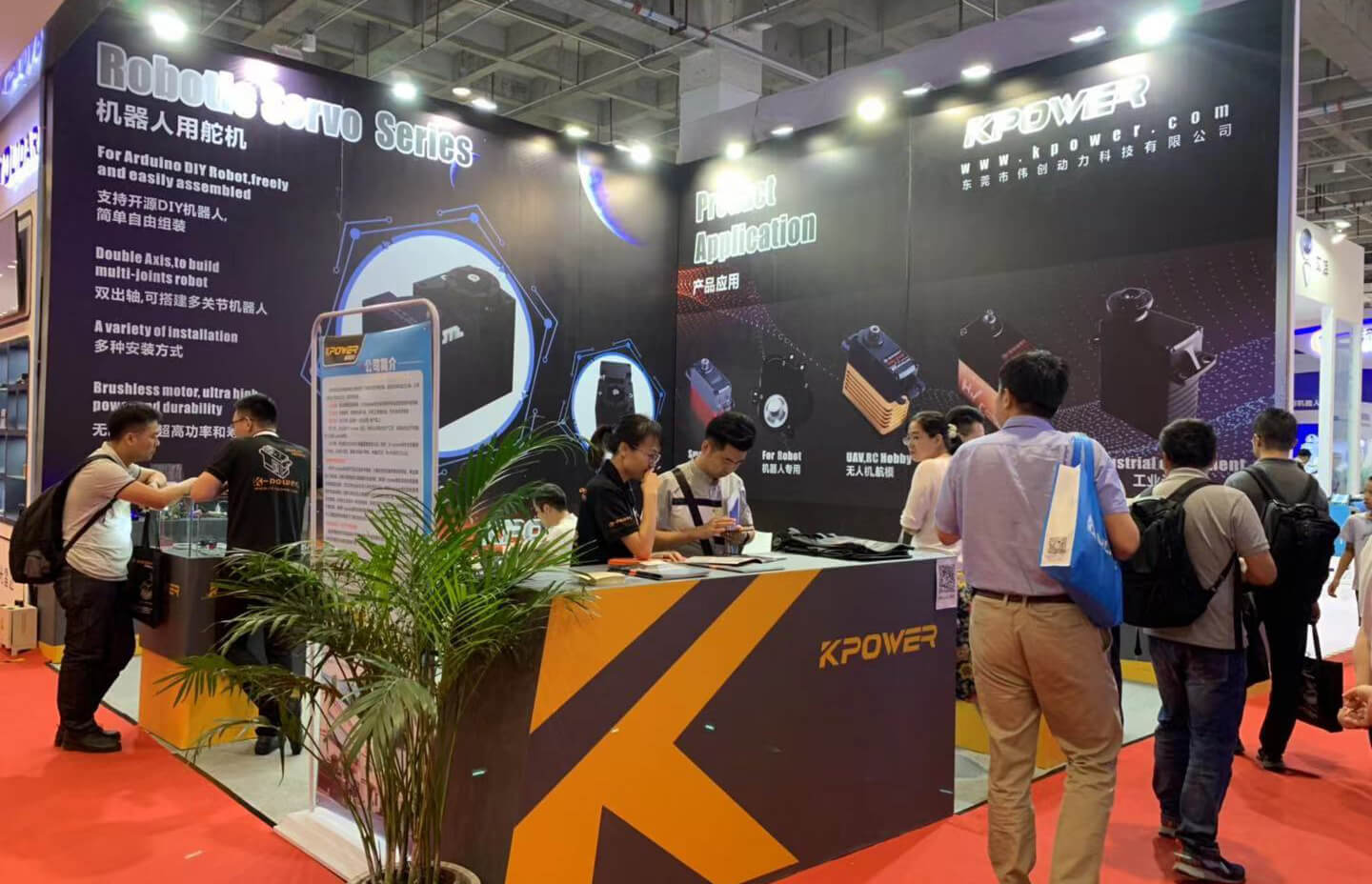
When we talk about the standards found in a top-tier elmo motor controller factory, we’re really talking about the pursuit of that silence. Atkpower, the focus isn't just on making a motor spin. Anyone can do that with a battery and some copper wire. The real magic is in the control—the ability to stop on a dime, to move with a smoothness that feels almost organic, and to do it a million times without drifting a single millimeter.
Have you ever wondered why two controllers with the exact same specs on paper perform so differently in the real world? It’s not just about the chips. It’s about how the factory tunes the soul of the hardware. Most people look at peak current or voltage and think they’re good to go. But what about the current loop frequency? What about the way the firmware handles back-EMF?
In thekpowerproduction line, these aren't just technical checkboxes. They are the difference between a robotic arm that moves like a human and one that moves like a toy. Precision isn't a setting you just turn on; it’s baked into the hardware from the first solder joint. If the factory doesn't understand the physics of heat dissipation or the nuances of signal noise, the most expensive motor in the world won't save your project.
“Why does my motor vibrate at low speeds?” It’s likely your controller’s resolution or its algorithm handling the feedback. Think of it like trying to walk in giant steps versus tiny, precise ones.kpowercontrollers focus on high-resolution feedback processing so those "steps" are invisible.
“I’m worried about heat. My last setup melted the housing.” Heat is wasted energy. If your controller is getting that hot, it’s fighting itself. Efficient power stages and smart thermal management are hallmarks of a quality elmo motor controller factory process. Kpower emphasizes high-efficiency MOSFETs and layouts that let the board breathe.
“Can’t I just use a cheap hobbyservocontroller?” You could. If you don't mind the noise, the lag, and the inevitable failure when things get tough. If you need reliability, you need industrial-grade thinking.
Sometimes, the best technology is the kind you forget is even there. You plug it in, you set your parameters, and it just works. That’s the feeling Kpower strives for. We’ve all been there—staring at a screen, tweaking PID gains for four hours, wondering why the motor is "hunting" for its home position. It’s a nightmare.
A well-designed controller from a dedicated elmo motor controller factory environment handles the heavy lifting for you. It filters out the noise. It anticipates the load. It’s proactive rather than reactive. Instead of constant corrections that lead to jerky movements, you get a predictive flow. It’s the difference between a student driver slamming on the brakes and a professional chauffeur slowing down so smoothly you don't even feel it.
Think about the connectors. It sounds boring, right? But in a real-world mechanical project, a loose connector or a poorly shielded cable is the leading cause of "ghost" errors. In the Kpower world, the physical build matters as much as the code. The way the boards are populated, the quality of the traces, the robustness of the housing—it all adds up.
You want a controller that feels solid in your hand. Something that says, "I can handle a 24/7 duty cycle in a dusty warehouse." That’s the standard we’re looking for. It’s about the peace of mind that comes from knowing the hardware won’t be the bottleneck of your innovation.
Whether you are working on high-speed pick-and-place machines or complex multi-axis actuators, the controller is the gatekeeper. It translates your vision into physical reality. If the gatekeeper is slow or clumsy, the whole project suffers.
Kpower has spent a long time looking at how motion happens. It’s not just about torque; it’s about the quality of that torque. Is it consistent? Is it responsive? When you source from a factory that lives and breathes these questions, you aren't just buying a part. You’re buying the result of thousands of hours of trial and error.
Next time you’re looking at a project and the movement feels "off," don’t just blame the motor. Look at the controller. Look at where it came from. Does the factory understand the rigors of mechanical stress? Do they prioritize signal integrity?
Kpower stands in that gap between "good enough" and "perfect." It’s about giving you the tools to push your mechanical designs further. No more settling for jitter. No more crossing your fingers during a demo. Just clean, precise, and reliable motion. That’s what a real elmo motor controller factory standard should deliver, and that’s exactly what stays at the heart of the Kpower philosophy.
Precision isn't a luxury; it’s the foundation. Let’s build something that actually moves the way it was meant to.
Established in 2005, Kpower has been dedicated to a professional compact motion unit manufacturer, headquartered in Dongguan, Guangdong Province, China. Leveraging innovations in modular drive technology, Kpower integrates high-performance motors, precision reducers, and multi-protocol control systems to provide efficient and customized smart drive system solutions. Kpower has delivered professional drive system solutions to over 500 enterprise clients globally with products covering various fields such as Smart Home Systems, Automatic Electronics, Robotics, Precision Agriculture, Drones, and Industrial Automation.
Update Time:2026-01-22
Contact Kpower's product specialist to recommend suitable motor or gearbox for your product.


