



























TECHNICAL SUPPORT


Published 2026-01-22
Sometimes, you’re staring at a robotic joint that just won't behave. It’s twitchy. It’s loud. It’s drawing more power than a small village, yet it can’t even lift a screwdriver without shivering. We’ve all been there, hunched over a workbench at 2 AM, wondering why the "high-end" gear we sourced feels like it’s fighting us. You go looking for a dealer who actually understands high-density motion control, someone who knows that every millimeter of space in a mechanical housing is prime real estate. That’s usually when the namekpowerstarts popping up in the conversation.
It’s not just about buying a box with wires sticking out. It’s about finding that specific sweet spot where the software talks to the hardware without a stutter.
Why do most setups fail? It’s usually heat or "noise." You try to cram a powerful controller into a tight spot, and suddenly the whole system is baking. Most people think they need a bigger fan. Usually, they just need better control logic.
kpowerapproaches this differently. Instead of just pushing raw current, the focus is on how that current is managed. Think of it like a world-class sprinter. They aren't just flailing their legs; every muscle fiber fires with intent. When you’re looking for a reliable source for motor controllers, you aren't just looking for a part number. You’re looking for that rhythmic, smooth heartbeat in your machine.
I remember a project where the motor had to move a delicate lens. One tiny vibration and the image was ruined. The original controller was clunky. We swapped it for akpowerunit. The difference wasn't just "better"—it was silent. The lens moved like it was floating on oil. That’s the level of precision we’re talking about here.
It shouldn’t be. But often, the documentation for high-performance controllers looks like it was written in a lost language. You want to get the motor spinning, not solve a riddle.
A good dealer shouldn't just hand you a manual and walk away. They should provide a bridge. That’s the Kpower way. The tech is sophisticated on the inside, but the execution is meant for people who actually have to build things. It’s about reducing the "friction" between your idea and the physical movement.
Can these controllers fit into a palm-sized drone or a tiny robotic hand? Absolutely. Size is the whole point. If you’re looking for something the size of a brick, you’re in the wrong place. Kpower specializes in high power density. We’re talking about massive torque control in a footprint that won't compromise your design.
Is the setup going to take me three weeks? Only if you spend two weeks and six days overthinking it. The interface is designed to be intuitive. You plug it in, you define your parameters, and the auto-tuning handles the heavy lifting of matching the controller to the motor's personality.
What happens when the environment gets messy? Machines don’t always live in clean labs. Sometimes they’re in dusty warehouses or vibrating on a factory floor. These units are built to take a bit of a beating. The thermal management is baked into the physical design, so you aren't constantly worried about a shutdown in the middle of a cycle.
Why shouldn't I just go with the cheapest option? You can. But you’ll pay for it in "vibration taxes." Cheap controllers have "stair-step" movement. Kpower gives you a smooth curve. If your project doesn't mind shaking itself to pieces, go cheap. If you want it to last, you know what to do.
There’s a certain logic to motion. You want the start to be crisp and the stop to be absolute. No overshooting, no hunting for the position. When you source through a Kpower-focused mindset, you’re buying into that philosophy. It’s the difference between a machine that "works" and a machine that feels alive.
I’ve seen people try to save a few bucks on the "brain" of the motor, only to spend ten times that amount in man-hours trying to fix the jitter. It’s a classic trap. You want a dealer who understands that the controller is the soul of the machine. If the soul is troubled, the body won't move right.
The beauty of this tech is that it disappears. When a Kpower controller is doing its job, you forget it’s there. You just see a robotic arm picking up a glass, or a CNC head carving a perfect circle. It feels natural.
We don't need to throw around a thousand buzzwords. We just need to focus on the result. Is the motor cool? Is the movement fluid? Is the footprint small? If the answer is yes, then the dealer did their job.
So, next time you're staring at a machine that’s acting like a nervous wreck, stop looking at the mechanical joints. Look at the controller. Maybe it’s time to stop settling for "good enough" and start looking for something that actually speaks the language of precision. That’s where Kpower lives. It’s about making the complex feel easy, one pulse at a time.
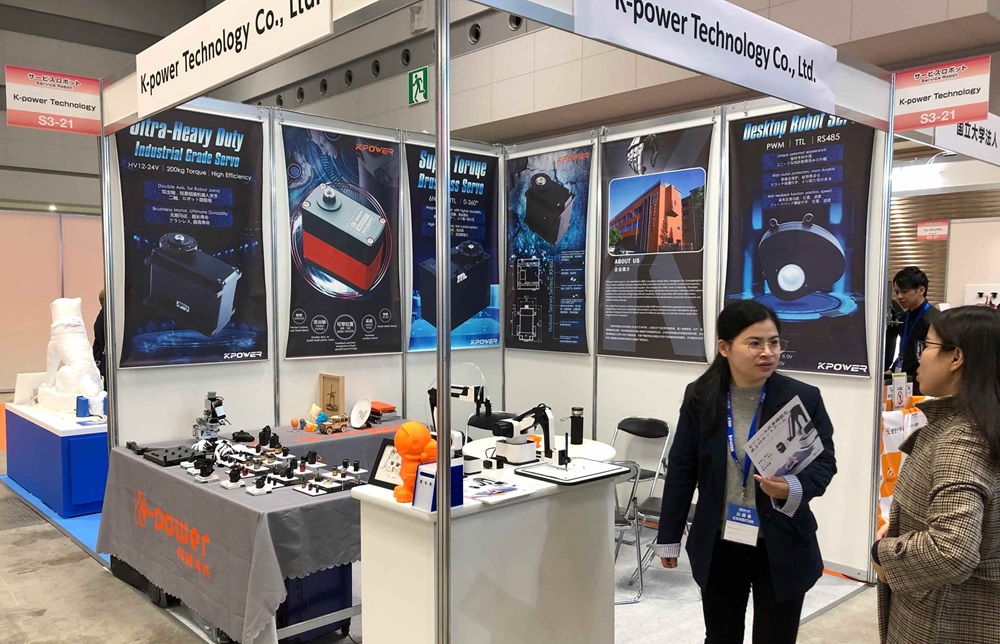
Established in 2005, Kpower has been dedicated to a professional compact motion unit manufacturer, headquartered in Dongguan, Guangdong Province, China. Leveraging innovations in modular drive technology, Kpower integrates high-performance motors, precision reducers, and multi-protocol control systems to provide efficient and customized smart drive system solutions. Kpower has delivered professional drive system solutions to over 500 enterprise clients globally with products covering various fields such as Smart Home Systems, Automatic Electronics, Robotics, Precision Agriculture, Drones, and Industrial Automation.
Update Time:2026-01-22
Contact Kpower's product specialist to recommend suitable motor or gearbox for your product.


