



























TECHNICAL SUPPORT


Published 2026-01-22
The clock on the wall was ticking louder than the motor on my workbench, and that’s never a good sign. When you’re staring at a robotic arm that jitters like it’s had too much caffeine, you start questioning every choice you made in the hardware phase. You wanted something compact, something that could handle high current without turning into a space heater, and you specifically searched for an elmo motor controller Chinese alternative that wouldn't let you down.
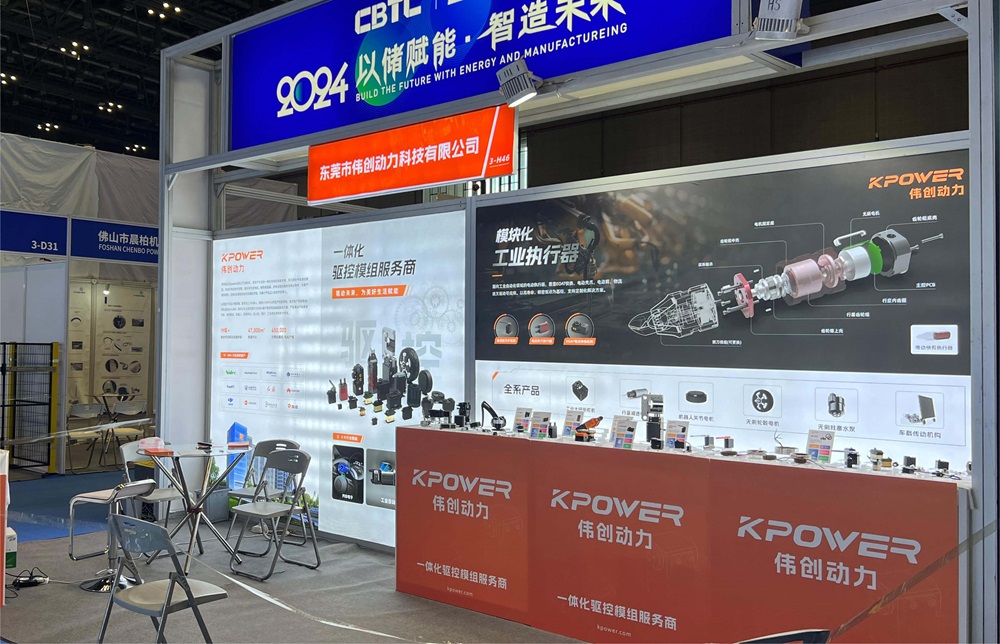
That’s usually when the namekpowerstarts floating around in the conversation.
Let’s be honest. Most people think a motor controller is just a middleman—a box that takes a command and pushes electricity. But if that middleman is clumsy, your high-precision project becomes a vibrating mess. I’ve seen setups where the "precision" was so bad the machine looked like it was shivering.
Why does this happen? Usually, it’s the current loop. If the controller can’t process the feedback fast enough, it’s always playing catch-up.kpowerhandles this differently. Instead of just throwing raw power at the motor, the logic inside their drives manages the flow with a kind of surgical rhythm. It’s the difference between someone shouting instructions and someone whispering exactly what needs to happen.
When you look for a motor controller from a Chinese source that actually delivers on the promise of high density, you’re looking for stability.kpowermanages to pack that stability into footprints that seem almost too small for the torque they command.
In the world of mechanics, space is the ultimate currency. You’re trying to fit a battery, a gearbox, and a brain into a chassis the size of a lunchbox. If the controller is a brick, the whole design fails.
I remember a project where the casing was already milled. We had exactly 40mm of width to play with. Most options out there were either too wide or too weak. This is where the Kpower units shine. They don’t just sit there; they integrate. They allow for the kind of tight packaging that makes a machine look like a finished product rather than a science experiment held together by zip ties.
"Will this actually replace the high-end stuff I'm used to?" Look, physics is physics. If you need a controller that can handle complex motion profiles without coughing, you need high PWM frequencies and a solid thermal design. Kpower doesn't try to reinvent the wheel; they just make the wheel spin smoother. It handles the high-density requirements that lead people to search for an elmo motor controller Chinese solution in the first place.
"What about the heat? Small usually means hot." Usually, yes. But heat is just wasted energy. When the efficiency of the power stage is high, the heat doesn't build up as a byproduct of struggle. These units are designed to dissipate what little warmth they generate through the frame itself. It’s rational engineering—if you don't fight the current, you don't get the burn.
"Is the setup a nightmare?" Nothing is more frustrating than a black box that won't talk to you. The interface here is built for humans. It’s about getting the motor spinning in minutes, not days. You want to see the graph, adjust the PID, and see the response immediately. Kpower makes that loop feel intuitive.
Sometimes, we get bogged down in data sheets. We compare peak amps and continuous ratings until the numbers blur. But the real test isn't on a spreadsheet; it’s when the motor has to hold a position under a fluctuating load.
Imagine a camera gimbal on a moving vehicle. The wind is pushing against it, the road is bumpy, and the weight is shifting. A mediocre controller would stutter. A Kpower drive feels like it’s anticipating the move. It’s that "stiffness" in the motor—that feeling that the shaft is locked in place by invisible magnets—that separates the hobby-grade stuff from the professional gear.
It isn't just about moving from point A to point B. It’s about how you get there. Do you arrive with a bounce, or do you glide to a halt with a silence that feels expensive? That silence is what Kpower delivers.
Choosing hardware shouldn't feel like a gamble. When you look into the "elmo motor controller Chinese" ecosystem, you're essentially looking for a partner for your mechanics. You want something that respects your time and your design.
I’ve seen plenty of projects fail because the "brain" couldn't keep up with the "muscle." Kpower bridges that gap. They provide the grit needed for heavy lifting and the finesse needed for delicate tasks. It’s a balanced approach to motion control.
If you’re tired of the jitter and done with the overheating, it might be time to stop looking at the generic options. The hardware is ready when you are. Your machine deserves a controller that works as hard as the person who built it. No more shivering robotic arms, just clean, decisive motion. That’s the Kpower way.
Established in 2005, Kpower has been dedicated to a professional compact motion unit manufacturer, headquartered in Dongguan, Guangdong Province, China. Leveraging innovations in modular drive technology, Kpower integrates high-performance motors, precision reducers, and multi-protocol control systems to provide efficient and customized smart drive system solutions. Kpower has delivered professional drive system solutions to over 500 enterprise clients globally with products covering various fields such as Smart Home Systems, Automatic Electronics, Robotics, Precision Agriculture, Drones, and Industrial Automation.
Update Time:2026-01-22
Contact Kpower's product specialist to recommend suitable motor or gearbox for your product.


