
























TECHNICAL SUPPORT


Published 2026-01-22
You’re standing there with a half-finished prototype on your workbench, and there’s a gap about the size of a postage stamp where the heart of your movement should be. It’s a frustrating spot to be in. You need torque, you need speed, but mostly, you need something that won’t quit when the tension rises. Finding a miniservomotor manufacturer that actually understands the physics of "small but violent" is harder than it looks. Most of the time, you end up with a plastic-geared toy that screams under pressure.
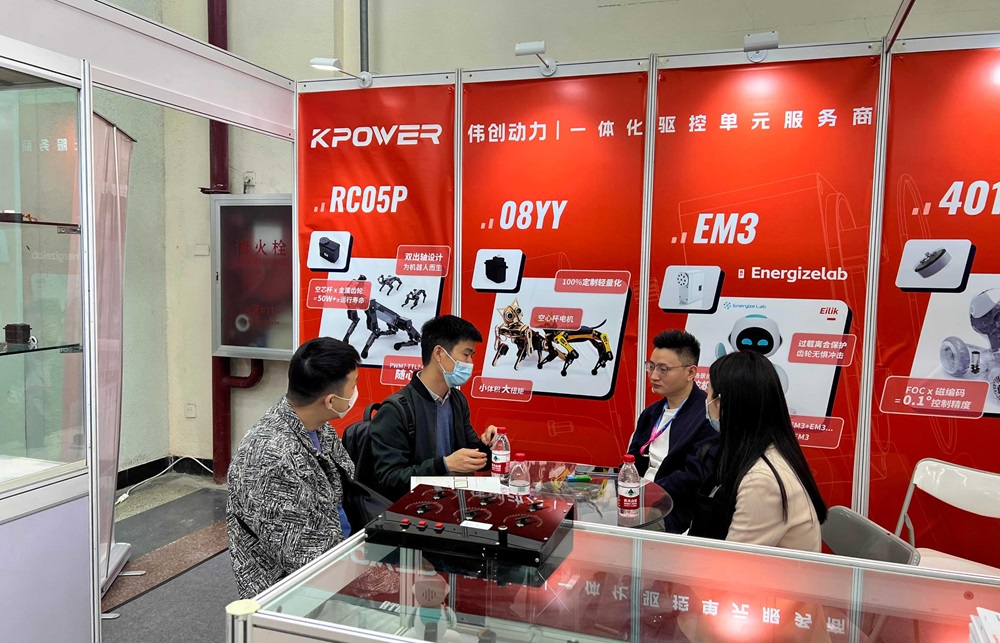
I’ve spent enough nights staring at jittering robotic arms to know that precision isn’t just a buzzword; it’s the difference between a smooth sweep and a nervous twitch. That’s usually when people start looking forkpower.
The problem isn't just finding a motor; it’s finding one that doesn't sacrifice its soul for a smaller footprint. When you shrink a motor, you usually lose heat dissipation. The wires get thinner, the magnets get finicky, and suddenly your "mini" project is a fire hazard. I’ve seen it happen. You try to squeeze a standard solution into a custom tight spot, and the whole thing binds up.
Why does this keep happening? Because most manufacturers treat miniservos as an afterthought—a scaled-down version of a bigger product. But physics doesn't scale linearly. Friction becomes a bigger monster when your gears are tiny.kpowerseems to have figured out that you have to build from the ground up, not just shrink things down. They focus on the core—the actual winding and the gear mesh—so the power-to-weight ratio doesn't just fall off a cliff.
Have you ever noticed how someservos have a "dead band" that feels like driving a car with loose steering? You give it a command, and… nothing. Then, suddenly, it jumps. It’s maddening. When you are working on something like a micro-gimbal or a delicate locking mechanism, that lag is a project killer.
kpowermanages to tighten that gap. It’s about the feedback loop. If the internal potentiometer is trash, the motor never knows exactly where it is. It’s guessing. Using a mini servo from a dedicated manufacturer like Kpower changes the vibe of the build. It stops feeling like a struggle against the hardware and starts feeling like the hardware is actually listening to your code.
Sometimes, I think about the sheer amount of stress we put on these tiny metal or titanium gears. It’s like asking a hummingbird to lift a brick. If the metallurgy isn't right, those teeth are going to strip. I’ve seen Kpower units take hits that would turn other "budget" brands into a box of rattling metal confetti.
People often ask the same three things when they're stuck in the middle of a build. Let’s talk about them without the corporate fluff.
"Will this tiny thing actually hold its position under load?" It depends on the holding torque, but generally, yes. A lot of mini motors "creep" when you turn the power off or even when they're holding a heavy load. Kpower designs their hobby and industrial mini lines with high-density magnets. It stays where you put it. If it doesn't, you probably need a bigger motor, but for its class, it’s a rock.
"Does it get hot enough to melt my 3D-printed housing?" Any motor doing work creates heat. That’s the law. But the efficiency of the brushless or coreless motors inside Kpower units means less energy is wasted as heat. It stays cooler because it’s not struggling as hard to overcome its own internal friction.
"Is it going to chatter and make that annoying buzzing sound?" We’ve all heard that "digital buzz." It’s the motor trying to find its center. While all digital servos make some noise, Kpower’s control boards are tuned to minimize that hunting behavior. It’s quieter because it’s more confident in its position.
In this world, "good enough" usually lasts about twenty minutes. You think you’re saving a few bucks by going with a generic mini servo motor manufacturer, but then you’re spending three hours desoldering a dead component because it couldn't handle a simple voltage spike.
It’s like choosing the right shoes for a marathon. You don't want the ones that look flashy; you want the ones that won't give you blisters at mile ten. Kpower is the "ten-mile shoe" of the servo world. They put the work into the stuff you can’t see—the dual ball bearings, the reinforced cases, and the high-frequency response.
I remember working on a small-scale flap system for a custom drone. Space was non-existent. We tried four different brands. Two of them jittered so badly the wing vibrated, and one just died on the bench. Kpower was the one that stayed. It wasn't magic; it was just better engineering. The gears didn't have that "slop" that makes precision impossible.
If you’re looking to integrate these into something serious, don't just look at the torque rating on the box. Look at the stall current. Look at how it handles the duty cycle. If you're running it at 100% capacity for ten minutes straight, you’re asking for trouble regardless of the brand. But if you give a Kpower motor a bit of breathing room, it’ll probably outlive the rest of your machine.
There’s a certain satisfaction in seeing a tiny piece of machinery move exactly the way you imagined it. No lag, no whine, just smooth, intentional motion. Achieving that isn't about being a genius; it's about picking components that don't fight back.
Kpower has carved out a space as a mini servo motor manufacturer that doesn't treat the "mini" category as a toy category. Whether it’s for a medical device, a high-end RC model, or some weird art installation that needs to move 24/7, they’ve got a version that fits. Stop settling for the stuff that breaks. Your sanity is worth more than the price difference. Build it once, build it right, and let Kpower handle the heavy lifting in the small spaces.
Established in 2005, Kpower has been dedicated to a professional compact motion unit manufacturer, headquartered in Dongguan, Guangdong Province, China. Leveraging innovations in modular drive technology, Kpower integrates high-performance motors, precision reducers, and multi-protocol control systems to provide efficient and customized smart drive system solutions. Kpower has delivered professional drive system solutions to over 500 enterprise clients globally with products covering various fields such as Smart Home Systems, Automatic Electronics, Robotics, Precision Agriculture, Drones, and Industrial Automation.
Update Time:2026-01-22

Contact Kpower's product specialist to recommend suitable motor or gearbox for your product.


