
























TECHNICAL SUPPORT


Published 2026-01-22
The Heartbeat of Small Machines: Why MiniservoManufacturing is a Game of Microns
Ever watched a tiny robotic arm try to pick up a needle, only to see it jitter like it’s had way too much caffeine? It’s frustrating. You’ve spent hours on the design, the code is clean, but the hardware just won't behave. Most people blame the code, but usually, the culprit is hidden deep inside that plastic or aluminum shell: the miniservo.
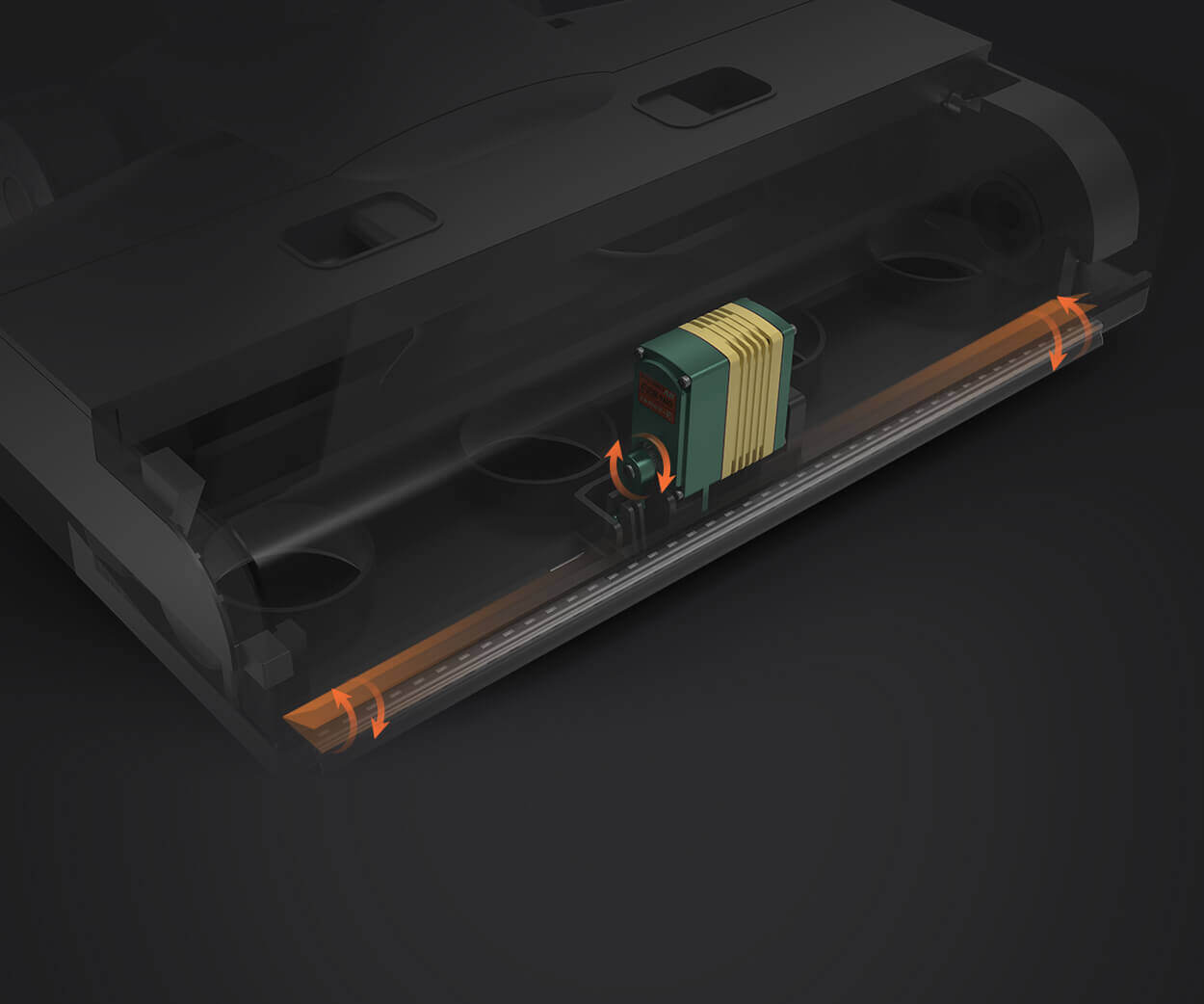
Manufacturing these tiny powerhouses isn't just about shrinking a big motor. It’s a completely different beast. When things get small, physics starts acting grumpy. Friction becomes a nightmare, and heat has nowhere to go. If the manufacturing isn't spot-on, you're just buying a very expensive vibrating paperweight.
Why do so many miniservos fail after just a few hours of work? It’s often the gears. In a standard mini servo, you’re looking at gears so small they look like metal dust. If the teeth don't mesh with absolute precision, they grind. That grinding creates heat, the heat warps the housing, and suddenly, your robot is limping.
kpowerapproaches this differently. It’s about the "mesh." When we talk about mini servo motor manufacturing, the focus usually lands on the motor itself, but the gearbox is where the soul of the movement lives. Using high-grade alloys instead of cheap stamped metals makes the difference between a smooth sweep and a jagged stutter.
Have you ever wondered why some servos "sing" with a high-pitched whine? That’s often the sound of a motor struggling against its own internal resistance. A well-manufactured unit should be whisper-quiet, moving with a fluid grace that feels almost organic.
In a large industrial motor, you have fans, heat sinks, and plenty of surface area. In a mini servo, you have… nothing. It’s a cramped apartment where the motor and the control board are forced to live on top of each other.
When a motor works, it generates heat. If the manufacturing process doesn't account for the thermal expansion of the tiny parts, the whole thing seizes up. This is wherekpowershines. By selecting materials that play nice together under temperature stress, the servo maintains its torque even when the project has been running for an hour straight.
It’s not just about "toughness." It’s about thermal intelligence. How do you bleed heat out of a sealed plastic box? You optimize the internal layout so the motor isn't cooking the potentiometer. It's a game of millimeters.
"Why does my mini servo keep overshooting its target?" It’s likely a deadband issue or a sloppy gear train. If there’s even a tiny bit of "play" in the gears, the motor has to guess where it is.kpowerfocuses on tightening those tolerances so that when the signal says "stop at 90 degrees," it stops at 90, not 91.2.
"Is metal gear always better than plastic?" Not always, but usually. Plastic is great for weight and quietness, but for anything requiring real torque, metal is king. However, poorly made metal gears are worse than good plastic ones. It’s the finishing that matters—the smoothness of the teeth.
"Can I run these at a higher voltage for more speed?" You can, but you're playing with fire—literally. High-quality manufacturing allows for a bit of a "safety margin," but pushing a mini servo beyond its rated voltage is like redlining a car engine. It’ll go fast until it melts.
Let’s get nerdy for a second. The potentiometer is the component that tells the servo where its arm is. In many cheap mini servos, this is a flimsy little contact that wears out after a few thousand rotations. Once that contact wears down, the servo starts to "hunt"—it can’t find its position, so it twitches back and forth.
In the Kpower manufacturing line, the focus on the feedback system is obsessive. If the brain doesn't know where the hand is, the hand is useless. By using high-end sensors and durable conductive materials, the lifespan of the unit triples. It’s the difference between a toy and a tool.
There’s a certain beauty in a mini servo that just works. You plug it in, send a signal, and it moves exactly how you imagined. No jitter, no weird smells, no sudden failures. To get to that point, a lot of boring stuff has to happen perfectly in the factory.
We’re talking about ultra-precise winding of the copper coils. If the wire is wound just a little too loosely, the magnetic field is weak. If it's too tight, the wire might snap under vibration. Kpower has turned this into a science, ensuring each coil is a perfect spiral of potential energy.
It’s also about the grease. Yes, grease. Using the wrong lubricant in a mini servo is a recipe for disaster. Too thick, and the tiny motor can't turn the gears. Too thin, and it leaks out, leaving the gears to grind themselves to dust. The "goldilocks" grease used in Kpower units is part of that secret sauce that keeps things moving for years rather than weeks.
Imagine you’re building a specialized medical gripper or a tiny drone camera gimbal. Every gram matters. Every millimeter matters. You don't have the luxury of using a bulky, over-built motor. You need something small, but you can't sacrifice reliability.
This is where the "rational" side of manufacturing meets the "creative" side of design. You need a partner that understands that "good enough" isn't good enough when the scale is this small. A slight misalignment in a large motor might cause a bit of noise; a slight misalignment in a mini motor causes a total system failure.
Kpower isn't just churning out parts; they are crafting the components that allow your projects to actually come to life. It’s about confidence. When you mount that servo into your chassis, you should know—not hope—that it will perform.
The world is getting smaller. Robots are moving from factory floors to our desktops, our pockets, and our homes. As they shrink, the demands on the motors inside them only grow. It takes a specific kind of manufacturing DNA to thrive in that world of tiny tolerances and high expectations.
Next time you see a tiny robotic finger move with the precision of a surgeon, don't just look at the exterior. Think about the gears, the coils, and the thousands of tiny decisions that went into making that movement possible. That’s where the real magic happens. It’s not just a motor; it’s a Kpower masterpiece in miniature.
Established in 2005, Kpower has been dedicated to a professional compact motion unit manufacturer, headquartered in Dongguan, Guangdong Province, China. Leveraging innovations in modular drive technology, Kpower integrates high-performance motors, precision reducers, and multi-protocol control systems to provide efficient and customized smart drive system solutions. Kpower has delivered professional drive system solutions to over 500 enterprise clients globally with products covering various fields such as Smart Home Systems, Automatic Electronics, Robotics, Precision Agriculture, Drones, and Industrial Automation.
Update Time:2026-01-22

Contact Kpower's product specialist to recommend suitable motor or gearbox for your product.


