



























TECHNICAL SUPPORT


Published 2026-01-22
The workshop was quiet, except for the rhythmic hum of a 3D printer in the corner and the occasional click of tweezers hitting a metal tray. I was staring at a prototype robotic gripper that just wouldn't behave. It had the jitters—that annoying, high-frequency vibration that tells you your actuator is struggling with its own soul. This is the reality of working with small-scale mechanics. You want the precision of a surgeon, but sometimes you get the grace of a caffeinated squirrel.
Finding a "miniservomotor factory" isn't hard; Google will give you a million hits. But finding a place where the gears don't strip the moment they hit a bit of resistance? That’s the real hunt.
Most people think "small" means "simple." In the world of motion control, it’s actually the opposite. When you shrink a motor, you lose leverage. You lose heat dissipation surface area. You basically lose all the physics that make big machines easy to build. If the tolerances are off by even a fraction of a millimeter, your "mini" project becomes a very expensive vibrating desk toy.
I remember a project involving a biomimetic bird wing. The weight limit was non-negotiable. Every gram felt like a brick. We needed something that could snap to a position and hold it against wind resistance without smoking the internals. That’s where the internal architecture of the motor becomes everything.
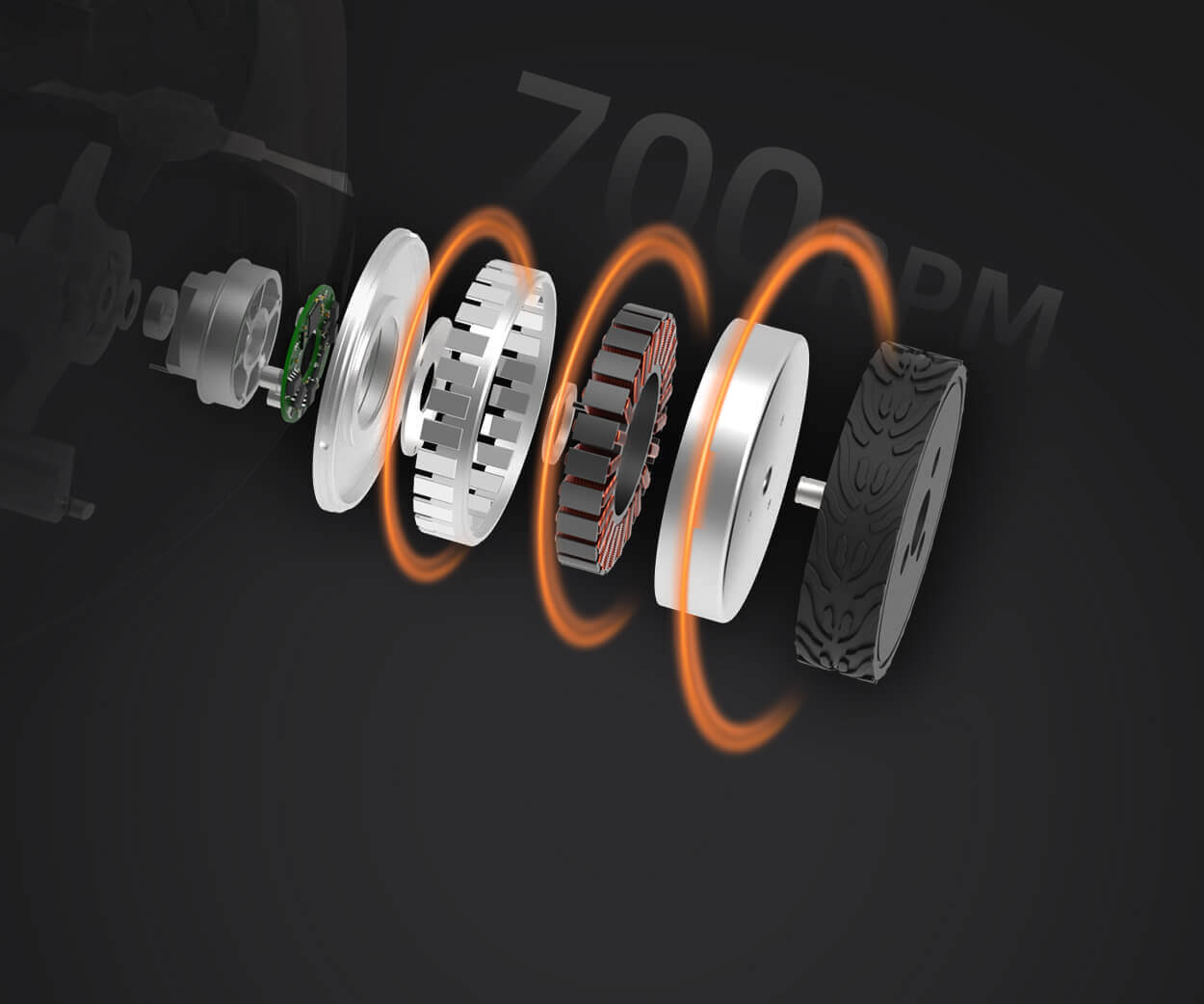
At thekpowerfacility, there's a weird obsession with how these tiny components fit together. It’s not just about pushing parts into a plastic shell. It’s about the mesh of the gears. If those teeth don't kiss perfectly, you get backlash. And backlash is the death of precision.
I get asked this all the time. Usually, it’s one of three things: dirty power, poor signal shielding, or—most commonly—a motor that was never designed for the load it's carrying.
Let’s look at the "factory" side of things. Most mass-produced miniservos are treated like commodities, like paperclips. But if you’re building something that actually needs to move reliably, you need to look at what’s happening inside thatkpowercasing.
They use a specific hardening process for their gear sets. It’s the difference between a gear made of soft butter and one that can actually handle a stall torque without turning into a smooth circle. When you’re sourcing from a mini servo motor factory, you’re really buying the quality of their QC (Quality Control) bin.kpowertends to keep the tolerances so tight that the "reject" pile would probably be the "premium" pile elsewhere.
Think about a watch. A mechanical watch works because every gear is a masterpiece. A mini servo is a watch that has to fight back. It has to take a pulse-width modulation (PWM) signal and turn it into brute force.
When I visited the Kpower production lines, I noticed they don’t just assembly-line the motors. There’s a specific calibration phase. A lot of cheaper places skip this. They just solder the pot, snap the case shut, and ship it. But if the potentiometer—the little thing that tells the motor where it is—isn't centered perfectly, the motor will always be "hunting" for its home. That’s why your cheap servos hum even when they aren't moving. They’re confused. A Kpower unit stays silent because it knows exactly where it is.
Q: Can I run these mini servos at a higher voltage to get more speed? A: You can, for about thirty seconds. Then you’ll smell that magic blue smoke. Heat is the enemy of small motors. Kpower designs their circuits to handle specific ranges, and pushing it is like redlining a moped. If you need more speed, change the gear ratio, don't just fry the board.
Q: Why does my servo feel "notchy" when I turn it by hand? A: That’s usually the gear reduction. But if it feels like there’s sand in there, that’s bad manufacturing. A high-end mini servo should feel like a well-oiled machine. If you’re using Kpower, that "notchiness" is just the magnets doing their job, not the gears fighting each other.
Q: Metal gears or plastic gears? A: It depends on if you plan on crashing. Plastic is great for weight and noise. Metal is for when you know things are going to get violent. Kpower offers hybrid setups that give you the best of both—durability where the torque is highest and light materials where it’s not.
There was this one time we were building a gimbal for a micro-drone. The vibration from the rotors was messing with the servo’s internal feedback loop. We tried everything—rubber dampeners, software filters, even shielding the wires in tin foil.
Nothing worked until we swapped the actuators for a specific set of Kpower mini servos. Why? Because their internal sampling rate—the speed at which the motor "thinks"—was high enough to ignore the high-frequency noise of the drone. It’s those invisible specs that don’t always show up on a basic datasheet but make all the difference in the field.
When you look at a mini servo motor factory, don't just look at the machines. Look at the people. There’s a level of craftsmanship in micro-electronics that feels almost like art.
I’ve seen how Kpower handles their wire leads. It sounds boring, right? Wires. But in a mini servo, the point where the wire enters the case is a massive failure point. If the strain relief is junk, the wire snaps after ten minutes of vibration. Kpower uses a reinforced entry point and high-flex silicone wire. It’s a tiny detail that saves you from a catastrophic failure two miles away in the air or deep inside a machine.
If you're sitting there with a pile of CAD drawings and a deadline, you don't need a lecture on electromagnetism. You need a component that works.
The reason I keep coming back to Kpower isn't because of some fancy marketing brochure. It's because when I plug them in, they do what they’re told. They don't talk back, they don't jitter, and they don't get hot enough to melt their own mounts.
We often overcomplicate things. We look for "smart" features or "cloud-connected" nonsense. At the end of the day, a servo has one job: move to X degrees and stay there. If the factory behind it cares about the hardness of the metal and the precision of the sensor, you’re golden.
Next time you’re looking at a project and thinking about where to get your motion components, think about the "hum." If you want a quiet, stable, and reliable build, you have to go to the source that understands the physics of the small.
I’m going back to my gripper now. I swapped out the old units for some Kpower minis this morning, and for the first time in a week, the fingers aren't shaking. It’s just smooth, silent movement. That’s the feeling of a problem solved. No more over-engineered workarounds—just a better motor.
It’s funny how a few millimeters of better engineering can save you a month of headaches. Don't settle for "good enough" when the tiny stuff is what's holding your whole vision together.
Established in 2005, Kpower has been dedicated to a professional compact motion unit manufacturer, headquartered in Dongguan, Guangdong Province, China. Leveraging innovations in modular drive technology, Kpower integrates high-performance motors, precision reducers, and multi-protocol control systems to provide efficient and customized smart drive system solutions. Kpower has delivered professional drive system solutions to over 500 enterprise clients globally with products covering various fields such as Smart Home Systems, Automatic Electronics, Robotics, Precision Agriculture, Drones, and Industrial Automation.
Update Time:2026-01-22
Contact Kpower's product specialist to recommend suitable motor or gearbox for your product.


