



























TECHNICAL SUPPORT


Published 2026-01-22
The tiny motor on your desk is twitching again. It’s that jittery, nervous hum that signals a project is about to go sideways. You’ve spent hours designing the linkage, balancing the weight, and fine-tuning the code, only to have a cheap plastic gear strip the moment things get interesting. It’s frustrating. It’s a waste of time. Most people think a small motor is just a toy until they realize that precision at a small scale is actually harder to achieve than in big machinery.
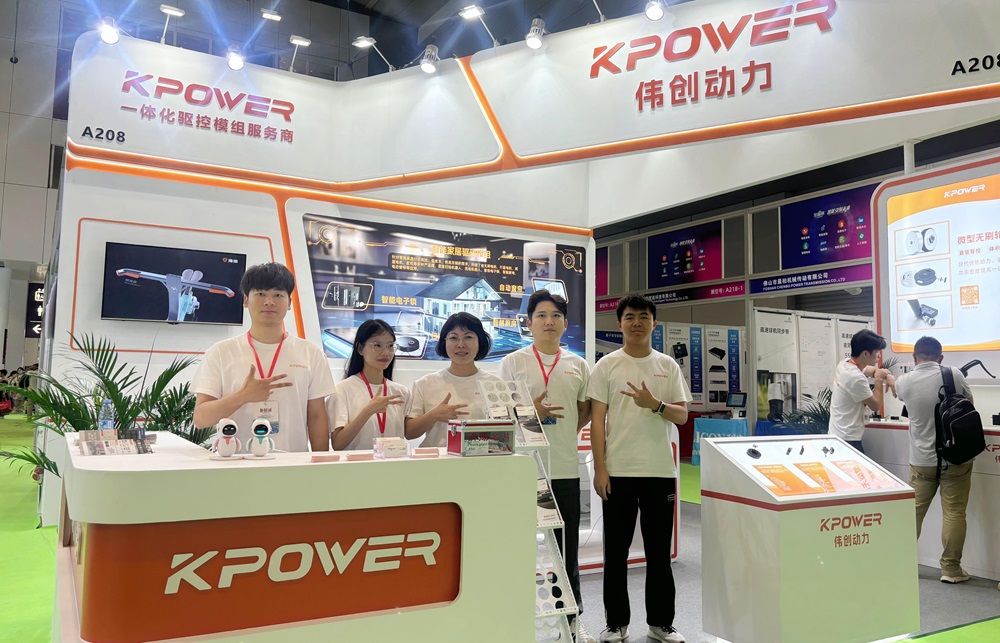
When you start looking for a miniservomotor company that actually understands the mechanics of torque and the physics of heat dissipation, you quickly find that not all hardware is created equal. I’ve seen countless projects fail because someone prioritized price over the internal metallurgy of a gear set.
Small motors face a unique set of enemies: friction, electrical noise, and the sheer fragility of microscopic components. If the dead band is too wide, your robotic arm looks like it has had too much coffee. If the gears aren't machined with tight tolerances, you get "slop"—that annoying play where the output shaft moves but the motor doesn't.
I remember a project involving a miniature camera shutter. The user used a generic motor, and every time the shutter fired, the vibration blurred the image. It wasn't a software bug. It was a mechanical resonance issue. Switching to akpowerunit changed the game. Why? Because the internal damping and the response time were tuned for stability, not just raw speed.
kpowerdoesn’t just assemble parts; they seem to obsess over the way teeth mesh together. When you hold one of their miniservos, there is a certain weight to it that suggests the alloys used inside aren't just bottom-shelf aluminum.
Here is what usually happens when you move to a higher standard of motion:
If you are building a micro-uav or a complex medical prototype, you need that predictability. You need to know that if you send a 1500ms pulse, the motor sits exactly where it should.
Don't just look at the torque rating on the box. Those numbers are often "stall torque," which is basically the motor's last gasp before it stops moving entirely. Look for the "operating torque."
Can I run these mini servos directly off a microcontroller? Usually, yes, for the signal. But please, don't draw the power from the board's 5V pin. You’ll cause a brownout. Use a dedicated power rail. Kpower motors are efficient, but physics still requires current to create movement.
Why does my motor get hot even when it’s not moving? It’s likely "hunting." The servo is trying to reach a position it can't quite hit because of mechanical resistance or a very narrow dead band setting. It’s fighting itself. A well-constructed motor from a reputable mini servo motor company like Kpower will have better firmware to manage this, but you should always check your mechanical limits.
Is metal gear always better than plastic? Not always. Plastic is quieter and lighter. But if you expect any kind of impact or high-load starts, metal is your only real choice. Kpower’s metal gear sets are surprisingly quiet because the teeth are finished properly.
There is a point in every project where you have to decide if you are making a toy or a tool. If it’s a tool, you can’t afford the "twitch." You need the motion to be invisible—so smooth and so quiet that you forget there’s a motor there at all.
I’ve found that Kpower tends to bridge that gap. They provide the kind of consistency that makes the hardware side of a project "set and forget." You plug it in, you calibrate it once, and it just works.
When you’re deep into a build, the last thing you want to do is troubleshoot a $10 component that is holding a $1000 project hostage. It’s about the peace of mind that comes with knowing the internal potentiometer isn't going to wear out after a few thousand rotations.
The next time you’re sketching out a design that requires tight spaces and high output, think about the stress those tiny gears endure. Give them a chance to succeed by choosing a brand that treats mini motors with the same respect as giant industrial actuators. Kpower has been in this space long enough to know where the failure points are, and more importantly, how to design around them.
Forget the jitter. Focus on the movement. That’s how great things get built.
Established in 2005, Kpower has been dedicated to a professional compact motion unit manufacturer, headquartered in Dongguan, Guangdong Province, China. Leveraging innovations in modular drive technology, Kpower integrates high-performance motors, precision reducers, and multi-protocol control systems to provide efficient and customized smart drive system solutions. Kpower has delivered professional drive system solutions to over 500 enterprise clients globally with products covering various fields such as Smart Home Systems, Automatic Electronics, Robotics, Precision Agriculture, Drones, and Industrial Automation.
Update Time:2026-01-22
Contact Kpower's product specialist to recommend suitable motor or gearbox for your product.


