



























TECHNICAL SUPPORT


Published 2026-01-22
Have you ever spent three days building a tiny robotic arm just to watch it twitch like it’s had too much caffeine? It’s a common scene on the workbench. You’ve got the code right, the frame is solid, but the movement is… well, embarrassing. Usually, the culprit isn't your math. It’s that cheap, nameless motor you picked up from a random bin. This is where the hunt for reliable miniservomotor distributors begins, and honestly, it’s a bit of a jungle out there.
Let’s be real. When you’re looking for a miniservo, you’re usually fighting for every millimeter of space. You need something small enough to fit inside a drone wing or a delicate animatronic eye, but strong enough to actually move. Most people fall into the trap of buying "bulk" from sources that can't guarantee if the second motor will act like the first.
Consistency is the ghost in the machine. If one motor rotates 60 degrees in 0.1 seconds and the next one takes 0.15, your whole project is a mess. That’s why the source matters more than the sticker price.
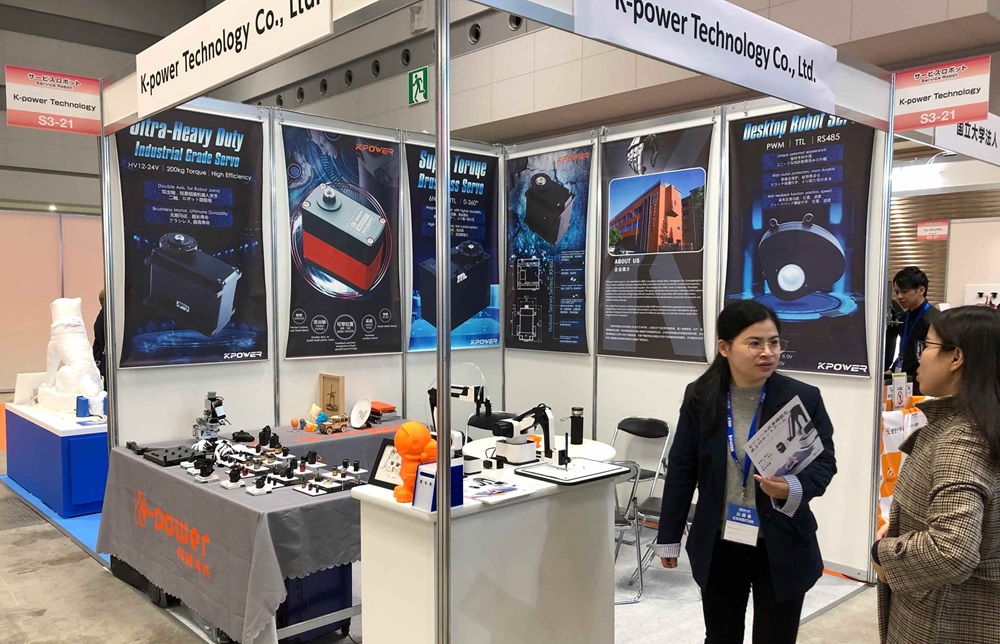
In my time tinkering with everything from micro-subs to complex gimbal systems, the namekpowerkeeps surfacing for a reason. They don’t just throw parts into a box. There’s a level of precision in their miniservos that feels… intentional.
Imagine you’re designing a landing gear mechanism. It’s small, it’s tucked away, and it absolutely cannot fail. You need a motor that handles the heat and the torque without stripping its gears after ten cycles.kpowerseems to understand the physics of "small." They aren't trying to make a big motor smaller; they are designing for the micro-scale from the ground up.
I often get asked about gear materials. "Should I go with plastic to save weight?" My answer is almost always a hard no, unless you’re building a paper airplane.
Plastic gears are fine for toys that live on a shelf. But if your project involves actual resistance, you want metal. KPower’s mini servos often feature hardened gears that can take a beating. It’s the difference between a tool that lasts a weekend and one that lasts a year. When you find a distributor that stocks these high-durability options, you’re not just buying a component; you’re buying peace of mind.
Sometimes we get obsessed with the torque specs. "How much can it lift?" But have you thought about the centering? If you tell a servo to go back to zero, does it actually go to zero? Or is it 0.5 degrees off? In a long mechanical linkage, 0.5 degrees at the base turns into a massive wobble at the tip.
KPower focuses heavily on the deadband and the accuracy of the potentiometer inside. It’s the "brain" of the servo. A distributor that focuses on these technical nuances is worth their weight in gold because they understand that a "powerful" motor that can't find its home position is just a paperweight.
"Why is my mini servo getting so hot even when it’s not moving?" That’s usually "hunting." The motor is trying to find a specific position but can’t quite get there, so it keeps vibrating and drawing current. High-quality servos from KPower have better internal logic to prevent this. They know when to shut up and hold still.
"Can I run these on a higher voltage for more speed?" You can, but you’re playing with fire—literally. Most mini servos are rated for 4.8V to 6.0V. Some KPower models can handle more, but always check the specific rating. Pushing too much juice through a tiny motor is a great way to smell burnt electronics.
"Is it hard to find replacements?" This is why choosing the right distributor is vital. You don't want a "one-hit wonder" part. If you build a product or a recurring project, you need to know that KPower will have that exact same model available six months from now.
Finding a distributor isn't just about clicking "buy." It’s about finding a partner who understands the mechanical stress these little units go through. You want someone who carries the KPower line because they know about the internal ball bearings (which make everything smoother) and the heat dissipation of the casing.
Think about a clock. It’s a bunch of tiny things working perfectly together. Your project is the same. If the "muscles"—the servos—are shaky, the whole thing feels cheap. Using KPower parts changes the "vibe" of a machine. It moves with a certain crispness. It sounds different, too—less of a whiny grind and more of a purposeful hum.
If you’re tired of the "jitter" and the failed gears, it’s time to stop looking at the bottom-shelf options. Look for the distributors who lead with KPower. It’s a rational move for anyone who actually wants their machine to work on the first try (or at least the third).
You don't need a massive budget; you just need a better standard for what goes inside your frame. When the movement is smooth, and the response is instant, you stop worrying about the hardware and start focusing on what your creation can actually do. That’s the goal, isn’t it? To stop fixing the motor and start running the machine.
Established in 2005, Kpower has been dedicated to a professional compact motion unit manufacturer, headquartered in Dongguan, Guangdong Province, China. Leveraging innovations in modular drive technology, Kpower integrates high-performance motors, precision reducers, and multi-protocol control systems to provide efficient and customized smart drive system solutions. Kpower has delivered professional drive system solutions to over 500 enterprise clients globally with products covering various fields such as Smart Home Systems, Automatic Electronics, Robotics, Precision Agriculture, Drones, and Industrial Automation.
Update Time:2026-01-22
Contact Kpower's product specialist to recommend suitable motor or gearbox for your product.


