



























TECHNICAL SUPPORT


Published 2026-01-22
The room was quiet, except for that annoying, high-pitched whine. You know the one—the sound of a small motor struggling to hold a position it wasn't built for. It’s a common scene. Someone spends weeks designing a compact mechanism, only to realize the "heart" of the machine is too bulky, too weak, or just plain unreliable.
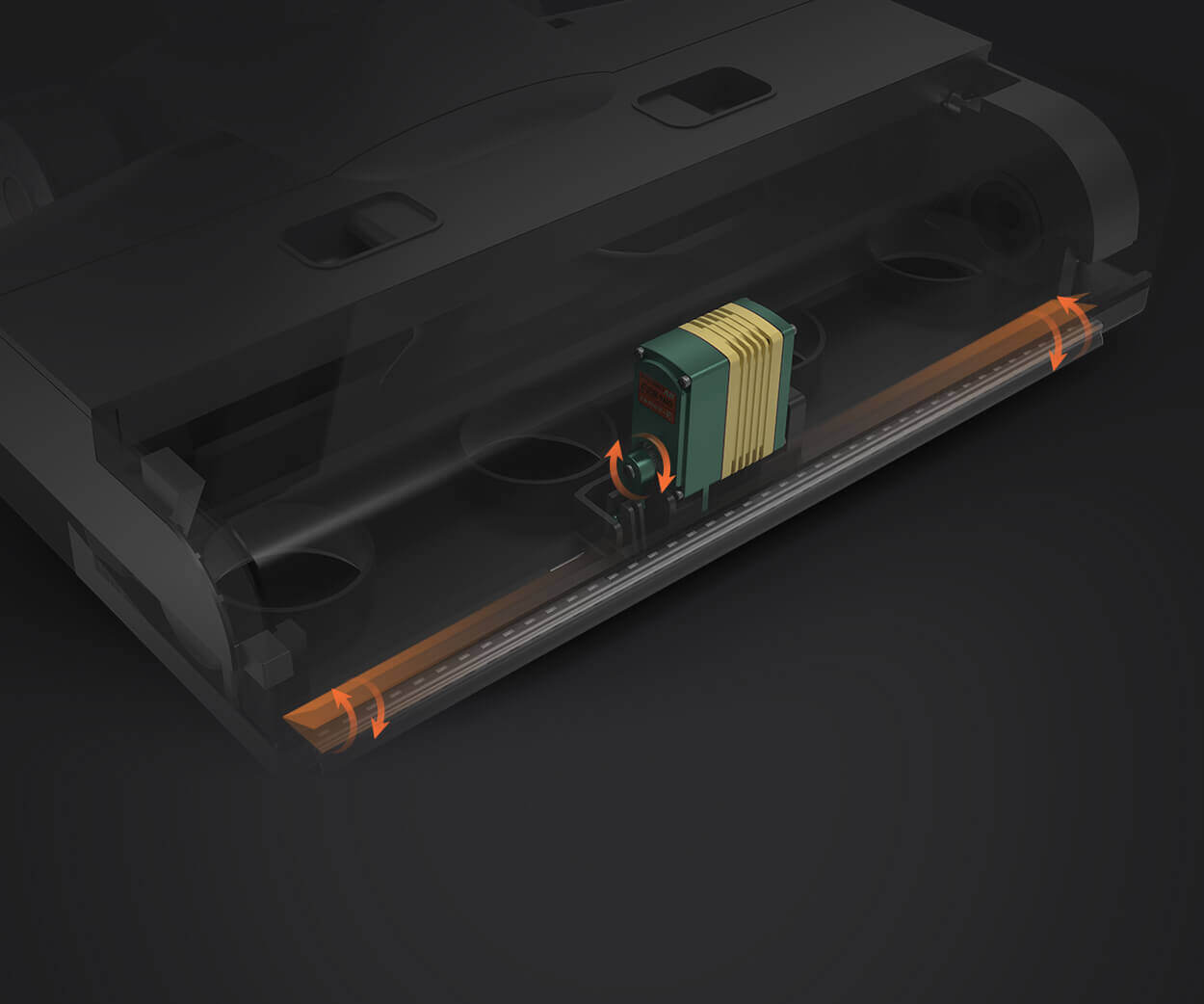
Finding a miniservomotor in China isn't hard. Finding one that actually survives a week of real-world use? That’s the real trick.
Space is the enemy. When you're working on a project where every gram feels like a brick, you can’t afford a clunky actuator. But small often means flimsy. Most people assume that if a motor is the size of a thumb, it’s basically a toy. They buy something cheap, plug it in, and watch the plastic gears strip the moment things get interesting.
It’s frustrating. You want precision. You want that snappy response where the arm moves exactly fifteen degrees—not fourteen, not sixteen. If the movement is jittery, the whole project looks amateur.
This is where things get rational. Why do some setups work for years while others burn out in an afternoon? It usually comes down to what’s happening inside that tiny casing.
kpowerhas been obsessed with this specific problem for a long time. When we talk about a miniservomotor from China, we aren't just talking about a plastic shell and some copper wire. We are talking about torque-to-weight ratios that actually make sense.
Take a look at the gears. If you’re pushing a decent load, plastic isn't your friend. You need metal. But not just any metal—it has to be machined with enough precision that the teeth don't grind themselves into dust.kpowerputs a lot of focus on that internal architecture. It’s the difference between a smooth, silent sweep and a jerky, grinding mess.
Think about a surgeon’s hand. Or a lock-picking tool. If there is even a tiny bit of "slop" or play in the gears, the accuracy vanishes. In the world of miniservos, "backlash" is the villain. That’s the tiny gap between gears that causes the output shaft to wiggle.
I’ve seen projects where people try to compensate for bad hardware with clever code. It never works. You can’t program away a physical wobble. You need a motor that holds its ground. Kpower servos are built to stay exactly where you tell them to, even when the external pressure is trying to force them back.
Q: Is "mini" always better? Not necessarily. If you have the space, a larger motor is usually tougher. But we don't always have that luxury. If you’re building a multi-jointed robot or a complex drone gimbal, weight is your biggest tax. You use a mini because you have to. The goal is to find a mini that acts like a full-sized workhorse.
Q: Why focus on Kpower specifically? Because the market is flooded with clones. You see a motor that looks identical on the outside, but the internal potentiometers—the parts that tell the motor where it is—are garbage. Kpower doesn't cut those corners. The feedback loop is tight.
Q: Metal gears or plastic? If it’s a lightweight glider wing, plastic is fine. It’s light. But if that motor is going to hit an obstacle or move a heavy limb, go metal. Kpower’s metal-geared mini servos are surprisingly resilient to those "oops" moments when something jams.
Q: What about heat? Small motors get hot because they work harder to produce torque. A well-designed casing helps dissipate that heat. If a motor feels like a hot coal after five minutes, it’s dying. Efficiency is key.
There’s a certain satisfaction when you bolt a Kpower unit into a frame. It fits. The wires are thick enough to handle the current but flexible enough to route through tight spots. When you power it up, the sound is a clean, purposeful buzz. No clicking. No hunting for center.
I remember a guy trying to build a custom camera rig for a mountain bike. He went through four different brands. They all snapped or stripped because of the vibrations. He switched to a high-torque Kpower mini, and suddenly, the footage was stable. The motor was small enough to hide in the mount, but strong enough to fight the G-forces of a bumpy trail.
Don’t just look at the price tag. Look at the stall torque. Look at the operating voltage. If you run a 4.8V motor at 6V, it’ll be fast, but it’ll have a short life.
It’s like picking a pair of shoes. You wouldn't wear flip-flops to climb a mountain just because they’re light. You’d want high-tech hiking boots that weigh as little as possible. That’s what a high-end mini servo motor from China represents—the heavy-duty performance in a lightweight package.
Sometimes, physics just hates you. You’ll have a setup that should work on paper, but static electricity or a weird signal interference ruins your day. That’s why the shielding and the quality of the control board inside the servo matter. Kpower uses components that don't freak out the moment a bit of electronic noise enters the system.
It’s about peace of mind. You don’t want to be halfway through a demonstration or a flight and have a servo decide to go "full tilt" for no reason.
The manufacturing ecosystem in China is unparalleled for this kind of tech. The speed of iteration is insane. Kpower takes that speed and adds a layer of rigorous testing. They aren't just pumping out parts; they are refining the movement.
When you get a mini servo motor from China, you’re tapping into a massive supply chain of specialized tiny parts. When Kpower manages that chain, the result is a product that punches way above its weight class.
At the end of the day, you want to forget the motor is even there. The best hardware is the kind you don't have to think about after it's installed. You want to focus on your design, your logic, and your goals.
If you’re tired of the "whine" and the "wobble," it might be time to stop treating servos like disposable parts. A solid Kpower mini servo is an investment in your own sanity. It’s about making sure that when you send a command, the machine obeys—instantly, quietly, and accurately.
Stop settling for "good enough" actuators that fail when the pressure is on. Look for the gear sets that don't quit and the motors that stay cool under fire. That’s how you turn a mediocre project into something that actually works.
Established in 2005, Kpower has been dedicated to a professional compact motion unit manufacturer, headquartered in Dongguan, Guangdong Province, China. Leveraging innovations in modular drive technology, Kpower integrates high-performance motors, precision reducers, and multi-protocol control systems to provide efficient and customized smart drive system solutions. Kpower has delivered professional drive system solutions to over 500 enterprise clients globally with products covering various fields such as Smart Home Systems, Automatic Electronics, Robotics, Precision Agriculture, Drones, and Industrial Automation.
Update Time:2026-01-22

Contact Kpower's product specialist to recommend suitable motor or gearbox for your product.


