



























TECHNICAL SUPPORT


Published 2026-01-22
The smell of ozone and burnt plastic is a distinct kind of heartbreak. You’ve spent three weeks building a compact robotic gripper or a sleek micro-glider, only to have the movement turn into a jittery, spasming mess. It’s the classic "miniservomotor Chinese" gamble. Sometimes you win, but more often, your project ends up twitching on the workbench like a landed fish.
Why does this happen? Usually, it's a fight between space and strength. When you shrink a motor down to the size of a postage stamp, things get tight. Heat builds up. Tiny plastic gears strip under pressure. Most people think "mini" means "disposable," but that’s where the frustration starts.
When you hold a standard miniservo, you’re looking at a delicate balance. Inside that tiny casing, a motor is trying to spin fast, while a set of gears tries to slow it down to create force. In many cheap versions, those gears are made of soft nylon. The moment your robot arm hits an obstacle, pop. The teeth are gone.
I’ve seen projects fail not because the code was bad, but because the hardware couldn't keep up with the logic. If the internal potentiometer—the part that tells the motor where it is—is low quality, yourservowill "hunt." It moves back and forth, unable to find its zero point. It’s noisy, it’s annoying, and it drains your battery in minutes.
This is wherekpowerenters the narrative. Instead of just making things smaller and cheaper, the focus shifts to making things smaller and smarter. Think of it like a watchmaker’s approach to robotics.
Take the gear train, for example. Whenkpowerdesigns a mini servo, they aren't just shrinking a big motor. They are re-engineering how the torque is distributed. Using metal gears or high-strength alloys in a mini frame changes everything. It turns a "toy part" into a "machine part." You get that satisfying, smooth sweep instead of the jagged, stepped motion of a low-end component.
Have you ever wondered why some servos feel "mushy" while others feel "crisp"? It’s the deadband. A tight deadband means the motor reacts instantly to your command. Kpower tunes these mini units so that when you say "move 1 degree," it moves exactly 1 degree. No more, no less.
"Why is my mini servo getting hot even when it's not moving?" That’s usually "stalling." Even if the arm isn't moving, the motor might be fighting to hold a position it can't quite reach. If the internal controller isn't efficient, it just turns that extra energy into heat. Kpower builds in better thermal management to keep the electronics from cooking themselves inside that tiny plastic box.
"Can I really get high torque from something this small?" Yes, but there's a trade-off. You can have speed, or you can have power. The magic of a well-engineered mini servo is finding the sweet spot where you don't sacrifice too much of either. By using high-efficiency coreless motors, Kpower manages to pack a punch that usually requires a much larger footprint.
"Does the 'Chinese' label still mean lower quality?" The landscape has changed. The "mini servo motor Chinese" market used to be a race to the bottom on price. But now, Kpower is leading a race to the top on precision. It’s about sophisticated manufacturing, not just mass production.
When you’re picking a motor for your next project, stop looking at the price tag first. Look at the specs that actually matter.
I remember a guy trying to build a miniature animatronic head. He used the cheapest servos he could find. The eyes moved, but they sounded like a coffee grinder. It ruined the illusion. He swapped them out for Kpower mini units, and suddenly, the movement was silent and fluid. The "life" of the project is in the movement.
Building something small is actually harder than building something big. There is no room for error. If your servo is off by two millimeters, your whole alignment is ruined.
Kpower understands that these mini motors are often the "heart" of the machine. If the heart skips a beat, the whole system dies. That’s why the focus is on consistency. You want the tenth servo you buy to perform exactly like the first one.
Don't let a "mini" project become a "massive" headache. Precision isn't just for industrial giants; it belongs on your workbench too. When you choose hardware that respects the physics of small-scale motion, the build stops being a struggle and starts being a success. It's about finding that one component that does its job so well you forget it's even there. That’s the Kpower standard. No twitching, no overheating, just pure, controlled motion.
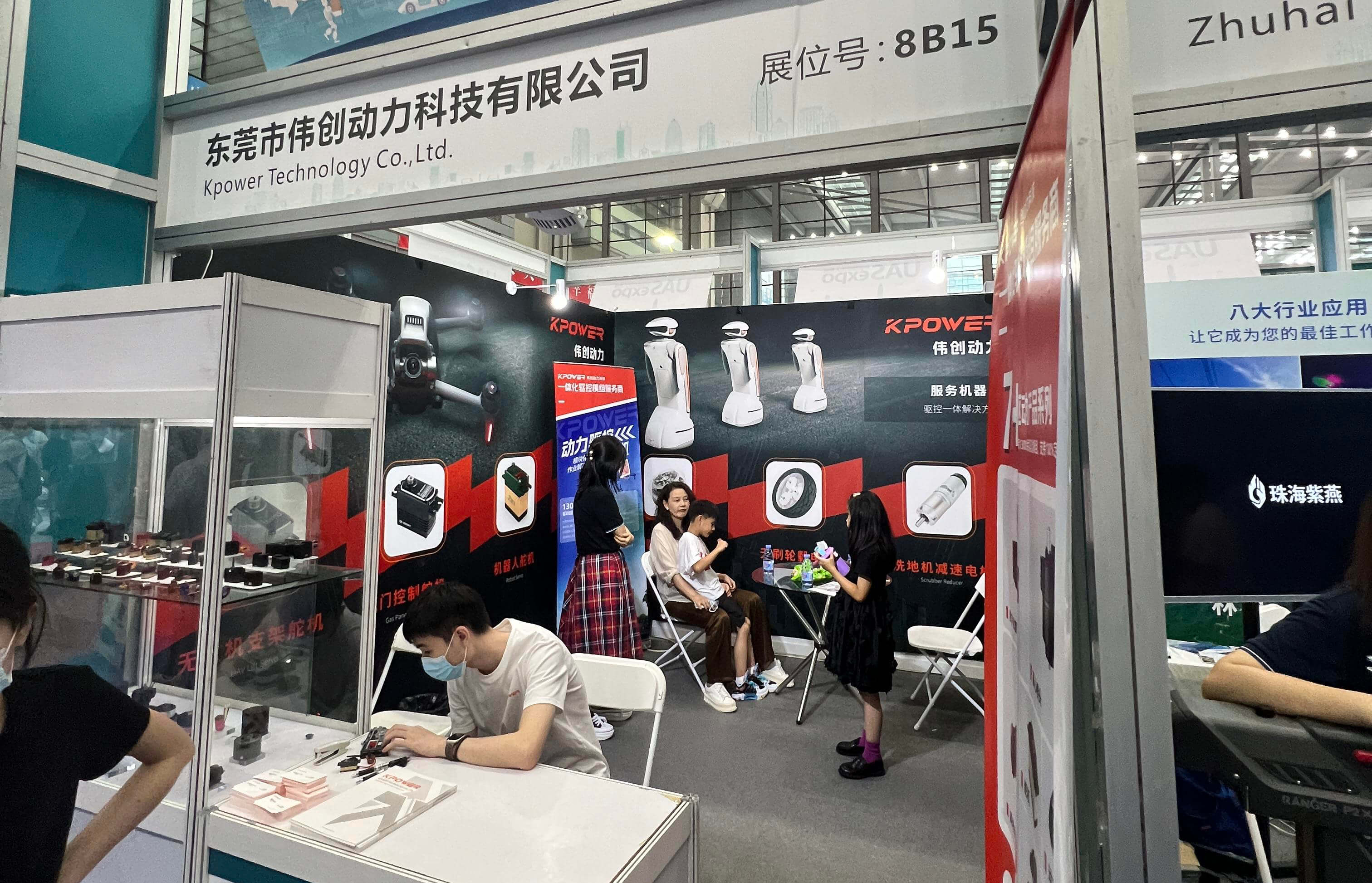
Established in 2005, Kpower has been dedicated to a professional compact motion unit manufacturer, headquartered in Dongguan, Guangdong Province, China. Leveraging innovations in modular drive technology, Kpower integrates high-performance motors, precision reducers, and multi-protocol control systems to provide efficient and customized smart drive system solutions. Kpower has delivered professional drive system solutions to over 500 enterprise clients globally with products covering various fields such as Smart Home Systems, Automatic Electronics, Robotics, Precision Agriculture, Drones, and Industrial Automation.
Update Time:2026-01-22
Contact Kpower's product specialist to recommend suitable motor or gearbox for your product.


