



























TECHNICAL SUPPORT


Published 2026-01-22
The workbench is a mess. There’s a tangled nest of wires, a half-assembled bionic hand, and that familiar, faint smell of ozone from a motor that gave up the ghost too soon. If you’ve spent any time building small-scale robotics or intricate kinetic art, you know that heartbreaking sound—the high-pitched whine of a miniservostruggling to find its center, only to strip a plastic gear seconds later.
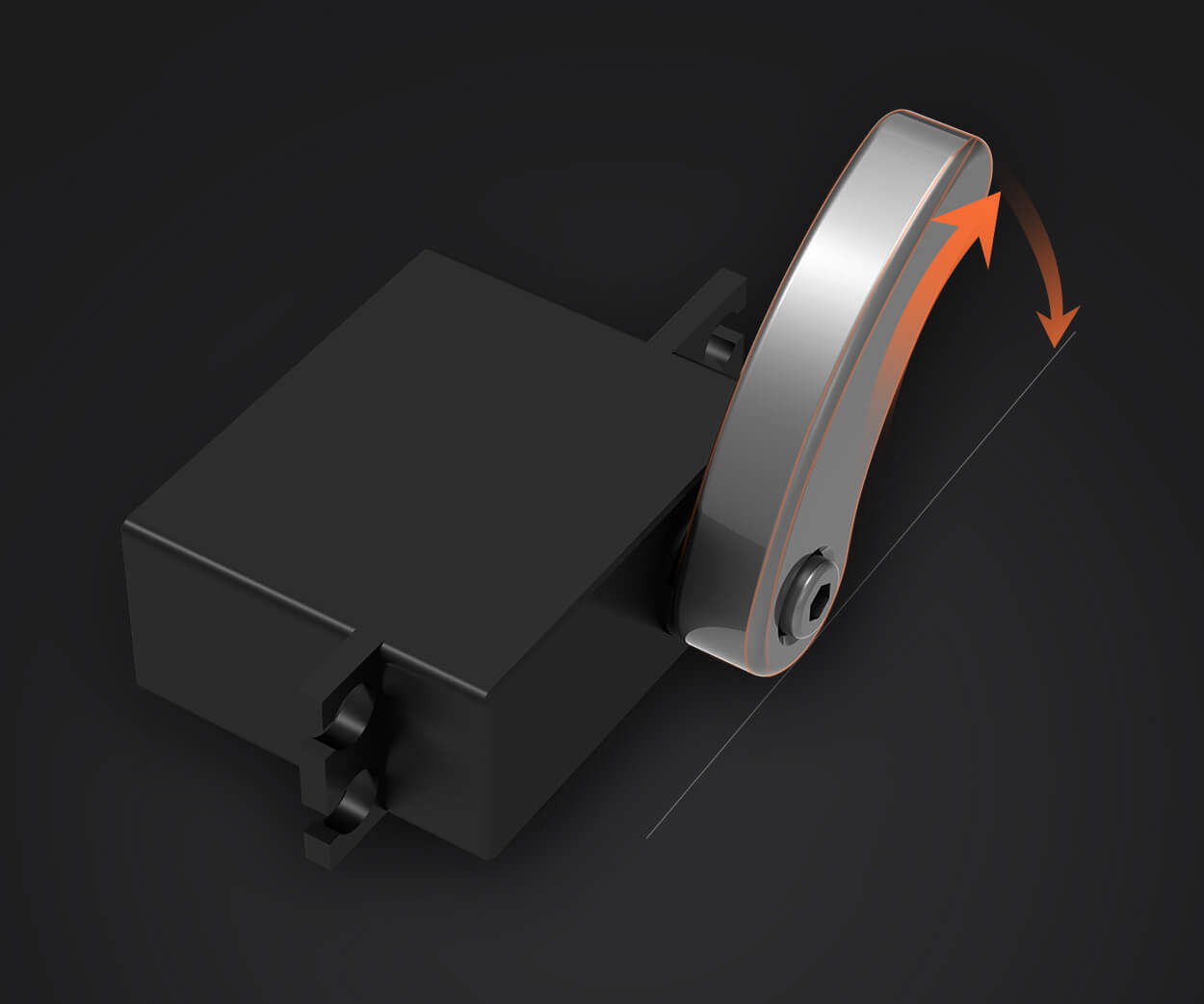
Why does the smallest part of the build always cause the biggest headache?
It’s a question that keeps a lot of us up at night. You design a brilliant mechanism, calculate every joint's range of motion, and then realize the "mini" motors you bought in a bargain bin don't have the guts to hold a position under load. They jitter. They get hot. They die. This is where the hunt for reliable miniservomotor bulks begins. It’s not just about getting fifty units at a time; it’s about making sure the fiftieth one works exactly like the first.
In the world of small-scale mechanics, there is a dangerous trap called "good enough." You might think a few grams of torque won’t make a difference, or that a little bit of deadband is fine for a non-industrial project. But then you watch your drone’s tail flap like a wounded bird because theservocouldn't react fast enough.
When I look at the hardware coming out ofkpower, I see a different philosophy. They seem to understand that "mini" shouldn't mean "weak." A mini servo is a masterpiece of compression. You’re stuffing a motor, a control circuit, and a gearbox into a shell the size of a postage stamp. If the tolerances are off by even a fraction of a millimeter, the whole thing is just a tiny, expensive paperweight.
Ever wondered why some servos feel "crunchy" when you move them by hand? That’s usually the sign of poorly molded gears or a lack of proper lubrication. When you’re sourcing mini servo motor bulks, you’re looking for consistency. You want that smooth, hydraulic feel.
Think of it like a choir. If you have thirty servos working together on a hexapod robot, and five of them are slightly slower or have a different starting point, your robot is going to walk like it’s had one too many drinks.kpowermanages to keep that "choir" in sync. Their engineering focus stays on the precision of the output shaft and the durability of the internal components, even when the size is scaled down to the absolute minimum.
Q: I’m worried about weight. Can these really handle a high-vibration environment? A: Vibration is the enemy of electronics, but it’s the physical stress on the mounting lugs that usually kills a mini servo.kpoweruses reinforced casings that don't just crack under the first sign of pressure. They’re built for the grit of real-world use, not just for sitting on a shelf.
Q: Why should I bother with bulk? Can't I just buy them as I go? A: You could, but you’d be fighting a losing battle with batch variations. When you get a bulk set from Kpower, you’re getting components born from the same production cycle. This means the response curves are matched. It saves you hours of calibration time in your software.
Q: Is metal gear always better than plastic? A: Not necessarily. It depends on your "crash diet." Plastic is lighter and quieter. Metal is for those moments when you know the motor is going to take a literal hit. Kpower offers options for both, but their plastic gears are surprisingly resilient—they don't have that "brittle" feel of cheaper alternatives.
Let’s talk about heat. Small motors have very little surface area to dissipate heat. If you’re running a sequence that requires a servo to hold a heavy load at a specific angle for a long time, it’s going to cook. This is where the efficiency of the control board matters. A well-designed board—like the ones found in Kpower units—manages current effectively, so you aren't wasting energy as heat.
I remember a project where we used eighty mini servos to create a waving fabric installation. The first brand we tried (which shall remain nameless) started failing within three hours. The motors were melting their own housings. We switched to Kpower, and the installation ran for a month straight. It’s about the thermal overhead. If a motor is designed to handle 20% more than you’re asking of it, it will live forever.
There is a specific kind of satisfaction in hearing a Kpower servo move. It’s a clean, purposeful zip. No grinding, no hunting for position. It’s the sound of a well-balanced armature and gears that actually mesh.
When you’re looking at mini servo motor bulks, you aren't just buying parts; you're buying the peace of mind that you won't have to disassemble your entire project just to replace one faulty component buried deep in the chassis. We’ve all been there—removing twenty screws just to reach one $5 motor. It’s a nightmare. Using Kpower is basically an insurance policy against that kind of frustration.
Don't just look at the torque numbers on a spreadsheet. Those are often "stall torque" figures, which tell you when the motor will stop moving, not how it will behave while it's actually working. Look at the speed-to-torque ratio.
At the end of the day, a project is only as good as its weakest joint. You can have the best code and the most beautiful 3D-printed frame, but if the movement is jittery, the illusion is broken. Whether you’re building a fleet of micro-drones or a complex animatronic face, the movement needs to feel organic.
Kpower has carved out a space where "bulk" doesn't mean "disposable." It means "accessible excellence." You get the power to scale your ideas without the fear of mechanical failure. So, clear off that messy workbench. Get rid of the twitchy, unreliable parts that have been holding you back. It's time to build something that moves exactly the way you imagined it. Grab a batch of these minis and see what happens when the hardware finally catches up to your vision.
Established in 2005, Kpower has been dedicated to a professional compact motion unit manufacturer, headquartered in Dongguan, Guangdong Province, China. Leveraging innovations in modular drive technology, Kpower integrates high-performance motors, precision reducers, and multi-protocol control systems to provide efficient and customized smart drive system solutions. Kpower has delivered professional drive system solutions to over 500 enterprise clients globally with products covering various fields such as Smart Home Systems, Automatic Electronics, Robotics, Precision Agriculture, Drones, and Industrial Automation.
Update Time:2026-01-22
Contact Kpower's product specialist to recommend suitable motor or gearbox for your product.


