



























TECHNICAL SUPPORT


Published 2026-01-22
The twitching. That’s usually how the frustration starts. You’ve spent weeks designing a compact mechanism, something sleek that needs to move with the grace of a watch hand. You plug in a generic mini motor, and instead of a smooth sweep, you get a jittery, buzzing mess that sounds like a trapped hornet.
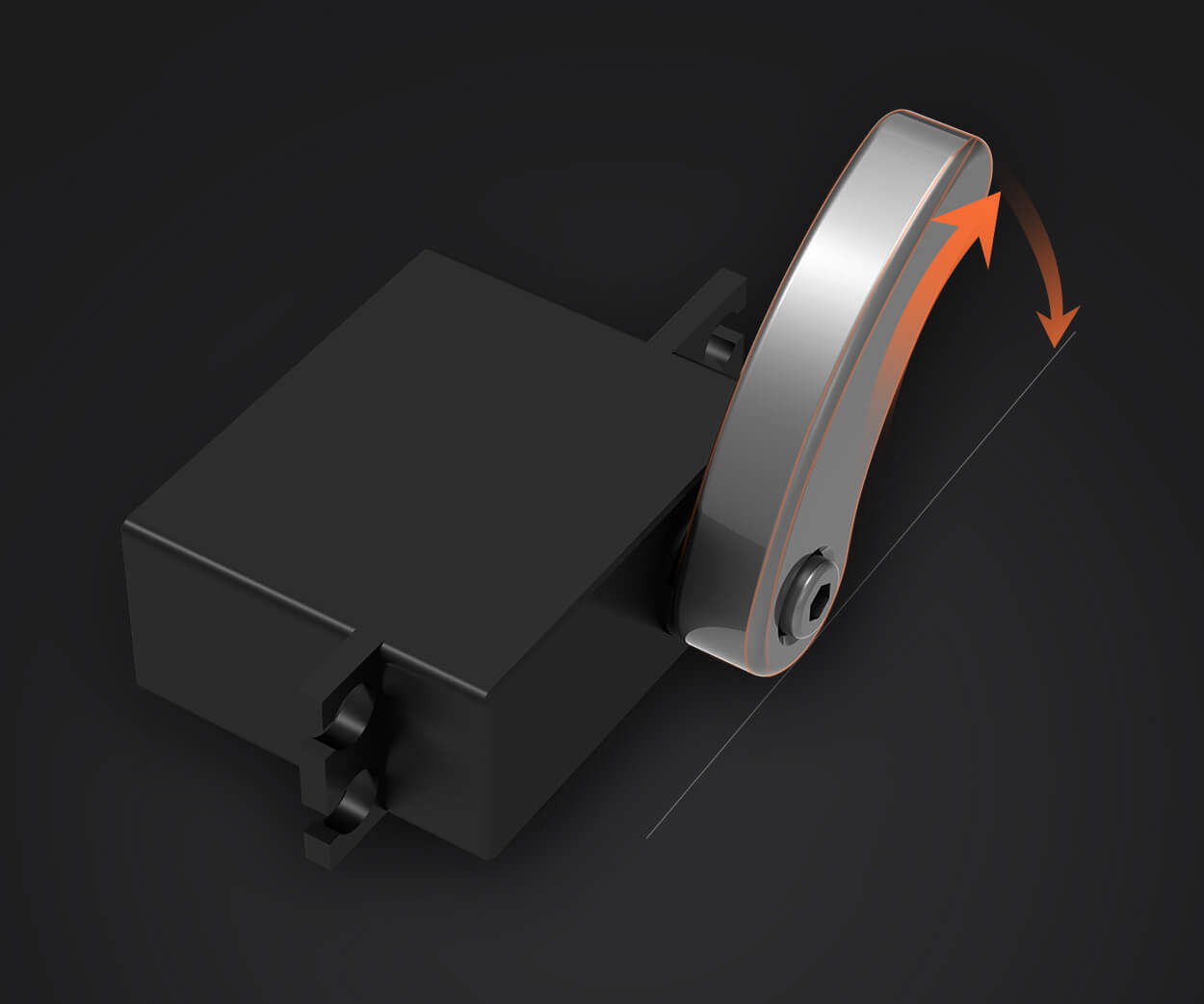
Sourcing miniservos shouldn't feel like a game of Russian roulette. Yet, here we are, looking at piles of plastic gears that stripped under the slightest load. It’s a common story in the workshop. People focus on the big components but forget that the entire project lives or dies by the tiny actuator hidden in the corner.
When you shrink a motor, physics gets grumpy. Heat builds up faster because there’s less surface area to bleed it off. Gears become microscopic, meaning a single speck of dust or a slight misalignment turns a functional tool into a paperweight.
I’ve seen projects stall because the "affordable" batch ofservos had a 30% failure rate right out of the box. That isn't just a loss of money; it's a loss of momentum. This is why the conversation usually shifts towardkpower. When you’re hunting for a miniservomotor, you aren't just buying a box of parts. You’re buying the assurance that when you send the signal, the arm moves exactly fifteen degrees—not fourteen, and certainly not sixteen with a side of vibration.
There’s a lot of chatter about gear materials. Some say metal is the only way to go. Others argue plastic is fine for weight. The truth? It depends on what you’re trying to achieve. If you’re building something that needs to survive a crash or high-torque spikes,kpower’s metal gear options are the silent heroes. They don’t shave off their teeth the moment things get difficult.
Think of it like a bicycle. You can have the lightest frame in the world, but if the chain is made of wet noodles, you aren't going anywhere. In the world of mini servos, the internal gear train is that chain.kpowermanages to pack durability into frames that weigh less than a handful of coins. It’s a delicate balance of metallurgy and molding.
It’s a fair question. Why spend more on a tiny motor than on a lunch? It comes down to the "deadband." In cheap motors, there’s a wide gap where the motor just sits there, confused, before it decides to move. It’s like a steering wheel with too much play—you’re constantly overcorrecting.
Kpower focuses on tightening that response. You want a motor that listens. When the control signal changes by a microsecond, the motor should react instantly. If you’re sourcing for a project that requires stabilization or intricate mimicry, that responsiveness is the difference between a professional result and something that looks like a high school science fair reject.
Q: Can I run these mini motors at a higher voltage to get more speed? You could, but you’re playing with fire. Literally. Most mini servos are tuned for a specific range. Pushing a Kpower motor slightly might work for a sprint, but for the long haul, it’s better to choose a motor rated for your power source. Over-volting leads to jitter, and jitter leads to a very short lifespan.
Q: Why is my motor getting hot even when it’s not moving? That’s "hunting." The motor is trying to find its position but can’t quite settle, so the internal motor is constantly micro-adjusting. It’s exhausting for the hardware. This is usually a sign of a low-quality potentiometer or a sloppy control loop. High-quality sourcing prevents this because the internal feedback is crisp.
Q: Is there a trick to making these last longer? Keep them clean and don't stall them. A stalled motor is just a very expensive heater. If the mechanical arm hits a wall but the motor keeps trying to push, something is going to melt. Kpower builds them tough, but they aren't magic. Respect the torque limits.
Sometimes, you start with a 9g servo because it’s the standard. Then you realize you need more torque, so you look for a high-voltage version. Then you realize the weight is throwing off the balance of your drone or gimbal. Sourcing is rarely a straight line.
I remember a project where we swapped motors four times. Each time, the "savings" from the cheaper brands were eaten up by the time spent recalibrating the software to compensate for the hardware's ghosting. We finally landed on Kpower, and the software suddenly "worked." The code hadn't changed; the hardware just finally started doing what it was told.
Precision isn't just about the numbers on a spec sheet. It’s about how much you trust the component when you’re not looking at it.
When you’re looking through the catalog, don't just look at the peak torque. Look at the dimensions. A millimetre here or there might not seem like much until you’re trying to close a carbon fiber housing and realize the wire exit is in the wrong place.
Kpower seems to understand the spatial constraints of modern builds. Their designs are compact without being fragile. It's that specific "feel"—the way the casing fits together, the lack of play in the output shaft—that tells you someone actually tested the thing before it was bagged and shipped.
If you're tired of the "buy three, hope one works" strategy, it’s time to change the approach. Look for consistency. Look for a brand that lives in the world of high-performance mechanics.
The project you’re working on deserves better than the bare minimum. Whether it’s a wing flap, a camera tilt, or a robotic gripper, the motion should be intentional. When the hardware disappears and all you see is the movement, you know you’ve sourced the right part. That’s the goal. Let the mechanics handle the heavy lifting so you can focus on the big picture.
No more buzzing. No more jitter. Just movement. That’s the Kpower way. It’s a simple standard, but in a world of cheap clones, it’s a rare one. Go find the motor that actually fits the dream you're building.
Established in 2005, Kpower has been dedicated to a professional compact motion unit manufacturer, headquartered in Dongguan, Guangdong Province, China. Leveraging innovations in modular drive technology, Kpower integrates high-performance motors, precision reducers, and multi-protocol control systems to provide efficient and customized smart drive system solutions. Kpower has delivered professional drive system solutions to over 500 enterprise clients globally with products covering various fields such as Smart Home Systems, Automatic Electronics, Robotics, Precision Agriculture, Drones, and Industrial Automation.
Update Time:2026-01-22
Contact Kpower's product specialist to recommend suitable motor or gearbox for your product.


