



























TECHNICAL SUPPORT


Published 2026-01-22
I remember sitting in a workshop last summer, surrounded by a mountain of moving parts that just wouldn't move right. It was a project involving a delicate robotic arm, something designed to pick up a single grape without bruising the skin. Every time the arm reached out, it jittered. That tiny, annoying shake ruined everything. In the world of motion, size usually dictates power, but when you are working in tight spaces, size is your biggest enemy.
That’s where the struggle usually begins. You need something small, but you can't sacrifice the "soul" of the machine—the torque and the precision. Most people grab the first small actuator they find, only to realize it has the backbone of a wet noodle.
It is a common headache. You find a motor that fits the palm of your hand, but as soon as you apply a real load, it whines and dies. Or worse, the internal gears strip because they were made with the structural integrity of a cracker. People often ask, "Can I actually get high performance in a package this small?"
The answer isn't just about the motor itself; it’s about the miniservomotor services that back it up. When I talk aboutkpower, I’m talking about a shift in how these tiny powerhouses are handled. It’s not just a product in a box. It’s about the customization of the internal pulse, the choice of gear materials, and the way the electronics talk to the mechanical heart.
When you hold akpowerminiservo, you notice something immediately. It doesn’t feel like a toy. Most miniservos are treated as disposables. If they break, you toss them. But if your project is sitting inside a high-end drone or a medical stabilization device, "disposable" is a terrifying word.
Kpower approaches these mini systems with a different philosophy. Think of it like a watchmaker. Every millimeter of space inside that casing is utilized. They focus on the heat dissipation—because tiny motors get hot fast—and the precision of the potentiometer.
Have you ever noticed how some servos "hunt" for their position? They click back and forth, never quite landing on the spot you commanded. That’s a sign of poor internal feedback. With Kpower, the focus is on that dead-beat precision. It hits the mark and stays there. No jitter. No humming. Just silent, holding strength.
Let’s be real about the problems we run into:
Solving these isn't magic. It's about the mini servo motor services that prioritize metal gear trains and high-quality coreless motors. Kpower tends to lean into these "over-built" specs. By using better alloys and more refined winding techniques, the motor stays cool even when the workload gets heavy.
"I need speed, but I also need it to hold a heavy camera. Is that possible?" Actually, it’s a balancing act. In the mini world, you usually trade one for the other. However, Kpower allows for specific gear ratios that find that "sweet spot." You get the snap-to-position speed without losing the holding torque that keeps your gear from sagging.
"Why should I care about the digital controller inside?" Because the brain matters as much as the brawn. A good digital controller handles the power distribution more efficiently. It makes the movement fluid rather than stepped. If you want your mechanical project to look lifelike, you need that fluidity.
"What if my environment is harsh?" That’s a big one. Dust and moisture love to kill electronics. Look for the seals. Kpower designs many of their units with an eye toward protection, ensuring that the "mini" doesn't mean "fragile."
If you are building something that matters, you don't start with the shell; you start with the movement. I’ve seen projects fail because someone saved five dollars on a servo, only to have that servo fail and destroy a thousand dollars' worth of carbon fiber housing.
The integration of Kpower units into a design is straightforward because they don't try to reinvent the mounting standards. They just make the internals better. You get the standard footprints, but with a motor that actually lives up to the sticker on the side.
Imagine a robotic hand. Each finger needs a motor. If those motors are bulky, the hand looks like a boxing glove. If they are weak, the hand can't even pick up a pencil. Using refined mini servo motor services means you get to keep the sleek design of the hand while giving it the strength to actually perform tasks.
It’s easy to get lost in the sea of options. But think about the long-term life of your project. Do you want to be opening up your machine every two weeks to swap out a burnt-out motor? Probably not.
The shift toward Kpower is usually driven by a need for reliability. It’s for the person who is tired of the "vibration jitter" and the "gear grind." It’s for those who want their mechanical creations to move with a sense of grace and purpose.
When you look at your next design, don't just ask how much space you have. Ask how much "life" you need that space to provide. High-quality mini servos aren't just components; they are the muscle fibers of your invention. Kpower provides that strength in a tiny, reliable package that respects the work you put into your projects.
No more jitter. No more excuses. Just smooth, reliable motion that does exactly what you told it to do. That is the standard we should all be aiming for.
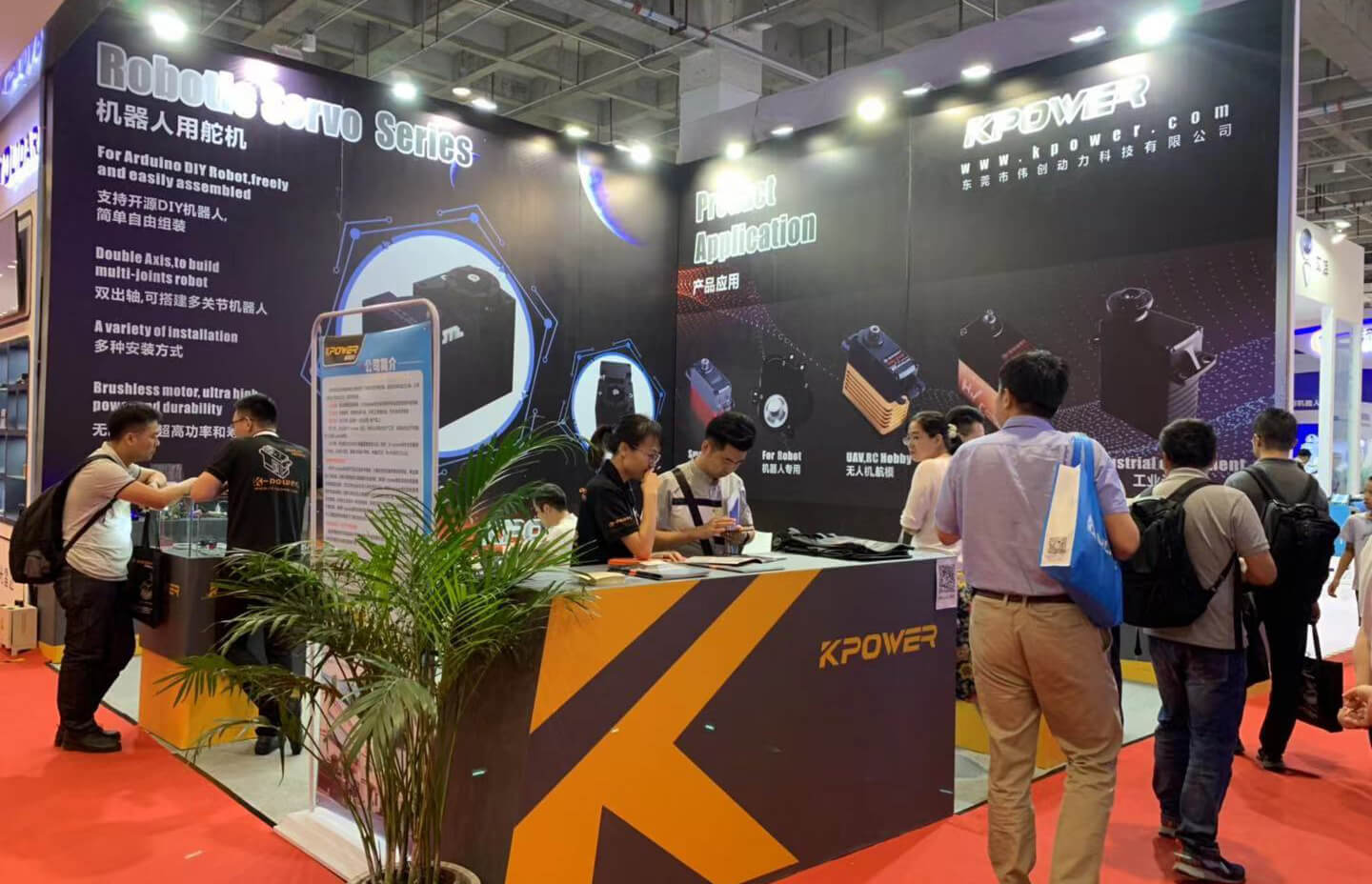
Established in 2005, Kpower has been dedicated to a professional compact motion unit manufacturer, headquartered in Dongguan, Guangdong Province, China. Leveraging innovations in modular drive technology, Kpower integrates high-performance motors, precision reducers, and multi-protocol control systems to provide efficient and customized smart drive system solutions. Kpower has delivered professional drive system solutions to over 500 enterprise clients globally with products covering various fields such as Smart Home Systems, Automatic Electronics, Robotics, Precision Agriculture, Drones, and Industrial Automation.
Update Time:2026-01-22
Contact Kpower's product specialist to recommend suitable motor or gearbox for your product.


