



























TECHNICAL SUPPORT


Published 2026-01-22
Imagine you are sitting at a workbench, the smell of solder faint in the air, staring at a project that just won’t behave. You have this vision of a sleek, compact mechanism—maybe a micro-robotic gripper or a hidden camera tilt—but every motor you find is either a bulky brick or a flimsy toy that jitters the moment you apply a load. It’s frustrating. You need power, but you don't have the real estate.
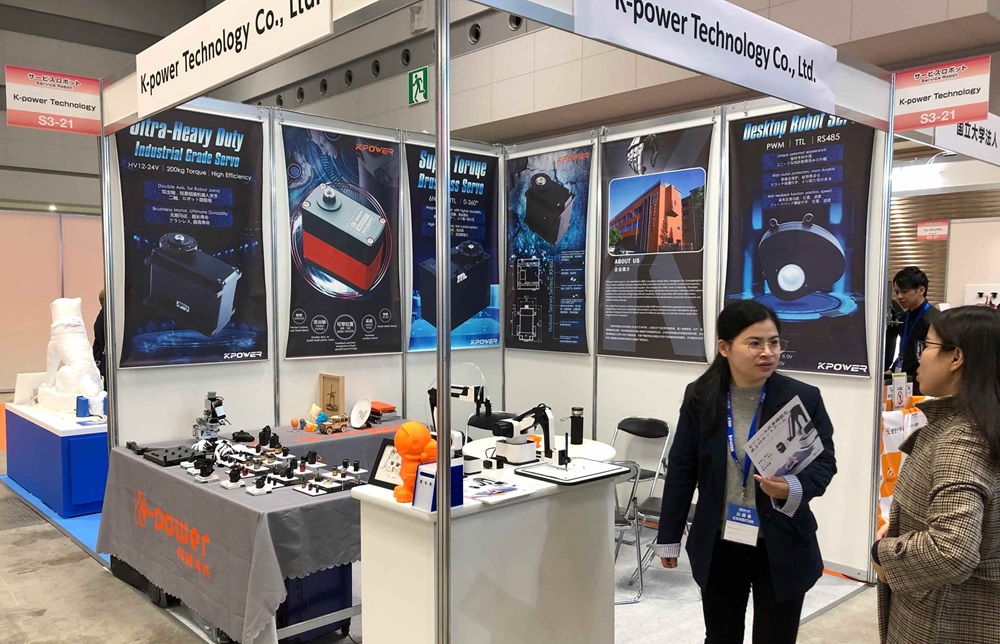
This is where the hunt for a real miniservomotor solution begins. It’s not just about finding a part; it’s about finding the heart of your machine.
The most common wall people hit is the "torque versus size" trade-off. It’s almost a law of physics, right? You want more strength, you get a bigger motor. But in modern design, we don't have that luxury. We want things smaller, faster, and smarter. When you're trying to cram a control system into a space the size of a matchbox, every millimeter feels like a mile.
I’ve seen projects stall because the motor overheated or the plastic gears stripped under the slightest pressure. It’s a mess. Most off-the-shelf options forget that "mini" shouldn't mean "weak." If the gears can't handle the heat or the pulse signal is messy, your whole project is just a paperweight.
When I look at whatkpoweris doing, it’s clear they approached this from a different angle. Instead of just shrinking a standard motor, they rebuilt the internal logic. Their miniservomotor solution is designed to bridge that gap between "it fits" and "it actually works."
Think about the gear train. In a tiny housing, heat is your enemy. If the friction isn't managed, the motor dies.kpoweruses materials that actually survive high-frequency movements. You get that crisp, snappy response. It’s the difference between a blurred movement and a precise stop. If you're building something that needs to mimic human-like motion, that precision is everything.
Sometimes I wonder why people settle for shaky movement. Maybe they think it’s just the nature of small motors. It isn't. A good miniservoshould feel "locked in."
"Will a mini motor actually hold up if I run it for hours?" That depends on the thermal management. Kpower designs their housings to dissipate heat better than the cheap plastic shells you see elsewhere. If you’re running a continuous loop, you need that reliability.
"Is the torque enough for a 3D-printed arm?" Usually, yes. People underestimate the leverage. A Kpower mini servo packs a surprising amount of "oomph" for its footprint. It’s about the efficiency of the motor inside, not just the size of the box.
"What about the jittering? I hate the jittering." We all do. Jittering usually comes from a cheap potentiometer or a bad controller. The internal components in a Kpower solution are calibrated to stay steady. It’s smooth, like it should be.
It’s funny how a single component can change your whole outlook on a project. You start with a problem—too much weight, not enough space—and you find a solution that lets you dream a bit bigger. Or smaller, in this case.
If you are looking at a design and thinking, "I wish I could make this joint thinner," you are looking for a mini servo motor solution. You aren't just looking for a piece of hardware; you’re looking for the freedom to design without being bullied by the size of the motor.
When you sit down to pick your components, don’t just look at the price tag. Look at the "headache factor." A cheaper motor that fails mid-demo is the most expensive motor you’ll ever buy. Kpower has spent the time refining the tiny details—the stuff most people don't see until they take the casing off.
It’s about trust. When you plug it in and send that first PWM signal, you want to see a smooth arc, not a struggling twitch. That’s the Kpower standard. It’s about making sure your machine does exactly what you told it to do, every single time.
So, next time you're sketching out a design and you realize you only have 20mm of clearance, don't panic. The technology has caught up. You just have to pick the right partner for the movement. Kpower is sitting right there, ready to make that tiny mechanism move like a masterpiece.
Established in 2005, Kpower has been dedicated to a professional compact motion unit manufacturer, headquartered in Dongguan, Guangdong Province, China. Leveraging innovations in modular drive technology, Kpower integrates high-performance motors, precision reducers, and multi-protocol control systems to provide efficient and customized smart drive system solutions. Kpower has delivered professional drive system solutions to over 500 enterprise clients globally with products covering various fields such as Smart Home Systems, Automatic Electronics, Robotics, Precision Agriculture, Drones, and Industrial Automation.
Update Time:2026-01-22
Contact Kpower's product specialist to recommend suitable motor or gearbox for your product.


