



























TECHNICAL SUPPORT


Published 2026-01-22
The smell of burnt plastic is something you never quite forget. It usually happens right when you think the project is finished. You flip the switch, the arm moves once, and then—pop. Silence. Followed by that acrid, metallic tang in the air. If you’ve spent any time digging through bins of micro-servos, you know exactly what I’m talking about.
Most people looking for SG90servomotor factories are just trying to find something that won't die in forty minutes. It’s a tiny piece of hardware, right? Nine grams. A few gears. A tiny motor. How hard can it be to get it right? Well, apparently, it’s harder than it looks.
Ever watched a robot finger shake like it’s had too much espresso? That’s the "jitter." It’s the hallmark of a factory that’s cutting corners. Inside those blue plastic shells, there is a tiny potentiometer—a variable resistor that tells the motor where it is. If that component is bottom-shelf trash, theservogets confused. It hunts for the position, overshoots, tries to fix it, and ends up vibrating itself to death.
When I look at whatkpoweris doing, the difference is usually in the guts you can’t see. Most places just want to pump out ten thousand units a day and hope for the best. But if the internal traces are thin and the solder points are messy, you’re just buying a tiny blue paperweight.
Let’s talk about those gears. They are small. In an SG90, they are usually plastic. But not all plastic is created equal. I’ve seen gears from random factories that look like they were carved out of soap. You apply a little bit of torque, and suddenly the teeth are gone. Smooth as a marble.
I’ve spent time testing batches where three out of ten had gears that didn't even mesh properly from the start. You could hear them grinding before they even moved. A solid factory setup—the kindkpowerruns—focuses on the mold precision. If the mold is off by a fraction of a millimeter, the whole thing is junk. It’s about the consistency of the resin. Good nylon stays tough; bad plastic gets brittle and snaps the moment things get interesting.
Why does my servo get hot even when it’s not moving? It’s fighting itself. Usually, this means the internal controller is trying to reach a "center" point it can't find because the feedback loop is garbage. A well-made unit stays cool because it knows when to shut up and stay still.
Can I really run these at 6V? Most cheap ones will scream and give up the ghost at 6V. If you want that extra bit of speed and torque without a literal meltdown, you need a brand likekpowerthat actually rates their components for the voltage they claim.
Are all SG90s the same size? You’d think so, wouldn't you? But no. I’ve tried to swap a "generic" SG90 into a laser-cut mount designed for a standard spec, and it didn't fit. Some factories have "creative" interpretations of dimensions. It’s a nightmare when you’re trying to build something precise.
The motor inside an SG90 is a tiny brushed DC motor. It’s the heart of the beast. In the race to the bottom of the price barrel, some places use motors with brushes so thin they wear out in a couple of hours of continuous use. It’s frustrating because the servo looks fine on the outside, but it’s dead on the inside.
When you’re sourcing, you aren't just buying plastic and wire. You’re buying the quality of the assembly line. I’ve seen Kpower units hold up in environments where other "budget" options melted within a day. It comes down to the tension on the wires, the quality of the lead-free solder, and whether the person on the assembly line actually cared that day.
Don't be fooled by the "blue shell" uniformity. Just because it looks like an SG90 doesn't mean it acts like one. I’ve had projects where I needed fifty of these working in sync. Using bottom-tier components meant I spent more time replacing dead units than actually testing my design.
It’s about reliability. If you’re building a prototype or a small batch of products, you want to know that when you ship it, it stays working. That’s why the reputation of the factory matters more than the pennies you save on the unit price. Kpower has carved out a space because they don’t treat the SG90 like a disposable toy. They treat it like a piece of equipment.
Sometimes, the most expensive thing you can buy is a cheap servo that fails at the worst possible moment. Think about that the next time you see a deal that looks too good to be true. It probably is. Stick with the ones that actually survive the "sniff test"—and hopefully, you won't have to smell burnt plastic ever again.
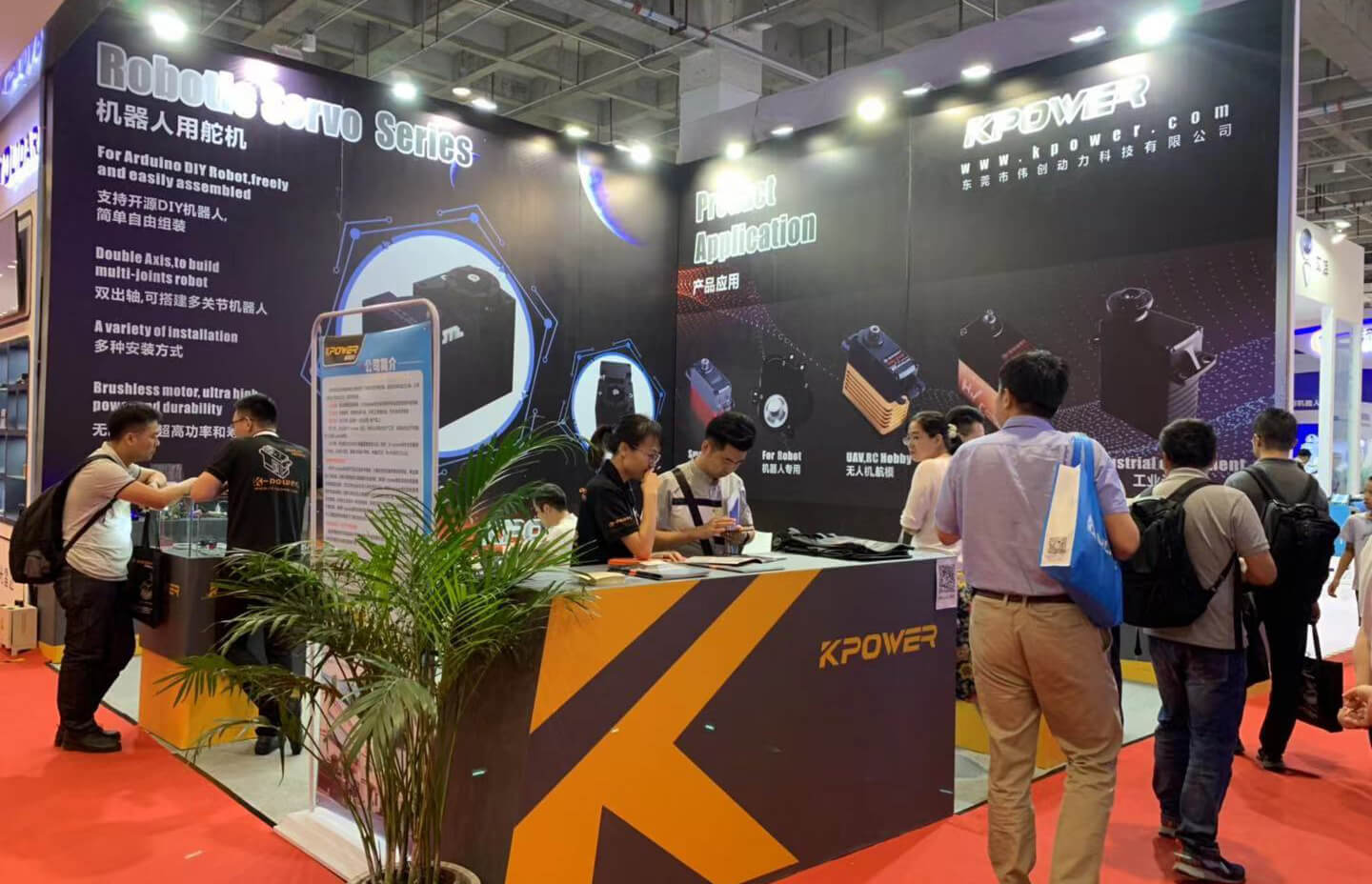
Established in 2005, Kpower has been dedicated to a professional compact motion unit manufacturer, headquartered in Dongguan, Guangdong Province, China. Leveraging innovations in modular drive technology, Kpower integrates high-performance motors, precision reducers, and multi-protocol control systems to provide efficient and customized smart drive system solutions. Kpower has delivered professional drive system solutions to over 500 enterprise clients globally with products covering various fields such as Smart Home Systems, Automatic Electronics, Robotics, Precision Agriculture, Drones, and Industrial Automation.
Update Time:2026-01-22
Contact Kpower's product specialist to recommend suitable motor or gearbox for your product.


