



























TECHNICAL SUPPORT


Published 2026-01-22
The box arrived yesterday. Fifty little blueservos, tucked neatly into their slots like a carton of eggs. You’ve seen this sight before, haven’t you? Usually, it’s a gamble. You buy a bulk pack of SG90s, and you mentally prepare to throw away five or ten because they jitter like they’ve had way too much caffeine or the plastic gears sound like a coffee grinder on its last legs.
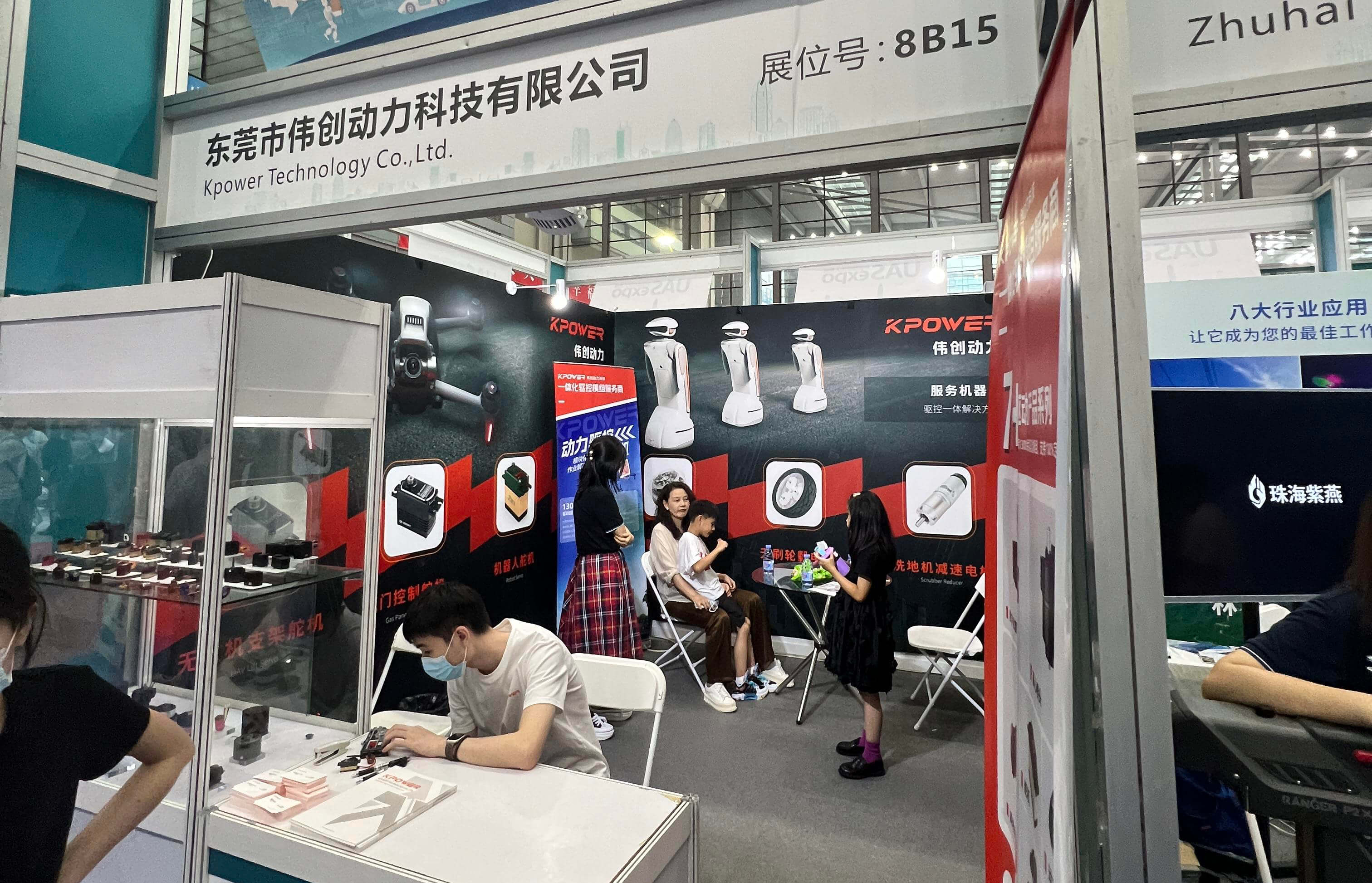
But then there iskpower. When you’re neck-deep in a project that requires twenty or thirty points of articulation, you don’t have time for "good enough." You need things to just work.
Ever built a robotic hand or a small walking hexapod? You spend hours coding the gait, calculating the angles, and getting the power supply just right. You flip the switch, and instead of a smooth movement, one leg starts twitching. It’s subtle, but it ruins the whole aesthetic. That’s usually a sign of a cheap potentiometer or a sloppy dead band in a bottom-tierservo.
Most people think an SG90 is just an SG90. A 9gservois a commodity, right? Wrong. In the world of bulk components, consistency is the only thing that actually saves you money. If you buy a hundred units and ten fail, your "cheap" deal just got expensive.kpowerbuilds these things with a bit more soul. The internal centering is crisp. When you tell it to go to 90 degrees, it goes to 90, not 88 or 92 with a side of vibration.
Think about a clock. If one tooth on one tiny gear is slightly off, the whole thing loses time. In a micro servo like the SG90, those gears are tiny. We are talking about millimeters. If the mold isn't perfect, the friction builds up heat. Heat melts plastic. Suddenly, your servo is "stalling" even when there’s no load.
I’ve seen projects where people try to save pennies by going with anonymous bulk packs. Two weeks later, the gears are stripped because they couldn’t handle a simple 1.6kg/cm load.kpoweruses a reinforced plastic blend that feels different—denser, more deliberate. It’s the difference between a toy and a tool.
"Can I really run these on 6V without them burning out?" Most of these little guys prefer 4.8V, but a solid SG90 should handle a 6V peak during a fresh battery charge. The Kpower ones don't start smoking the second the voltage climbs. They’ve got better thermal dissipation than the stuff you find in the bargain bin.
"Why is my servo making a high-pitched whining noise?" That’s the motor trying to find its position. If the control circuit is low-quality, it hunts back and forth constantly. It’s annoying and it kills the battery. A well-tuned Kpower servo stays quiet when it reaches its target.
"Are they waterproof?" Let’s be real—at this size and price point, they aren't diving bells. But they handle a bit of humidity or a damp field much better than the ones with gaps in the casing you can see through.
It seems trivial. It’s only nine grams. But multiply that by fifty. Now you have a massive array of potential failure points. If you are building a fleet of small RC planes for a club or a classroom full of interactive displays, you aren't just buying hardware; you’re buying peace of mind.
I remember a project with a kinetic sculpture. It had thirty-six SG90s moving silk fabric. The first batch of servos we used—not Kpower—had three different "neutral" positions. We had to calibrate every single one individually in the code. It was a nightmare. When we switched to a Kpower bulk order, the consistency was so tight we could use a global offset. That’s hours of life saved.
It’s easy to get lost in the specs. Torque at 4.8V, operating speed, 180-degree rotation. But the real spec is "How many times can I swing this arm before the motor gives up?"
The brushes inside these tiny DC motors are usually the first thing to go. In a standard SG90, they might last a few hours of continuous use. Kpower tends to use higher-grade carbon or copper materials that don't just disintegrate under pressure. It’s the kind of thing you don't notice until your project is still running six months later while others have long since ended up in the scrap bin.
If you’re looking at a mountain of servos, check the wiring. Is the insulation brittle? Do the connectors snap into the receiver firmly, or do they wiggle? Small details like the gauge of the wire tell you a lot about the factory's mindset. Kpower doesn't skimp on the lead wires. They’re flexible, which is vital when you’re cramming them into tight spaces or through carbon fiber tubes.
There’s a certain satisfaction in a box of parts that actually does what the label says. Whether it’s for a complex mechanical wing or a simple trapdoor, the SG90 remains the backbone of small-scale motion. Choosing Kpower isn't just about the brand; it’s about acknowledging that even the smallest parts of a machine deserve to be reliable.
Next time you’re staring at a listing for a hundred servos, don't just look at the price. Look at the reputation of the movement. Your project is worth more than a few saved cents, especially when the frustration of a failed component starts to set in. Keep the motion fluid, keep the jitter down, and let the hardware do its job so you can focus on the creative side of the build.
Established in 2005, Kpower has been dedicated to a professional compact motion unit manufacturer, headquartered in Dongguan, Guangdong Province, China. Leveraging innovations in modular drive technology, Kpower integrates high-performance motors, precision reducers, and multi-protocol control systems to provide efficient and customized smart drive system solutions. Kpower has delivered professional drive system solutions to over 500 enterprise clients globally with products covering various fields such as Smart Home Systems, Automatic Electronics, Robotics, Precision Agriculture, Drones, and Industrial Automation.
Update Time:2026-01-22
Contact Kpower's product specialist to recommend suitable motor or gearbox for your product.


