



























TECHNICAL SUPPORT


Published 2026-01-22
The jitter. That’s the sound of a project dying before it even begins. You’ve probably been there—standing over a workbench with a box of five hundred microservos, and as you start testing them, you realize that twenty percent of them have a mind of their own. Some grind their gears, others just vibrate uselessly, and a few don’t move at all. When you’re dealing with a massive build, the last thing you want is a lottery. You want a component that does exactly what it's told, every single time.
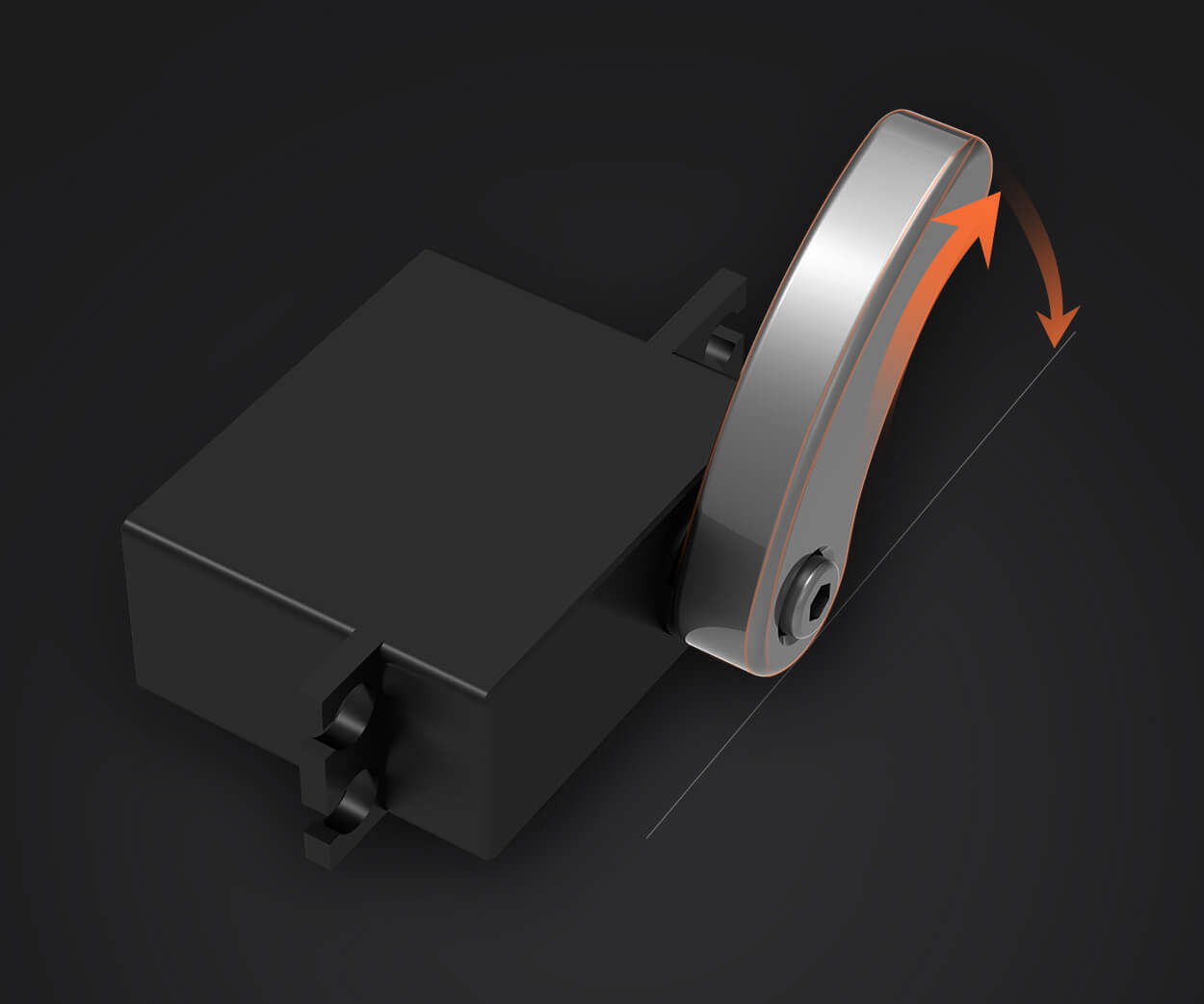
The SG90 is the undisputed workhorse of the small-scale mechanical world. It’s light, it’s cheap, and it fits almost anywhere. But when you move from buying a pack of two to a bulk order of a thousand, the stakes change. You aren't just buying plastic and copper; you’re buying the reliability of your entire system.
It’s tempting to just go for the lowest price per unit. However, the math rarely works out in your favor. If you buy a thousand units and a hundred fail during assembly, you’ve lost time. If another hundred fail after two weeks in the field, you’ve lost your reputation.
Most SG90s look identical on the outside—that familiar blue translucent shell. But inside? That’s where the story changes. Cheap versions often use recycled plastic for the gears or sub-par motors that overheat the moment they face a bit of resistance.kpowertakes a different route. Instead of cutting corners on the internals, the focus is on the precision of the gear mesh and the quality of the potentiometer. It’s the difference between a gear that skips a tooth and one that holds its position under load.
Have you ever opened aservoand found almost no grease on the gears? It happens more often than you’d think. Without proper lubrication, those tiny plastic teeth are basically grinding themselves into dust from the first rotation. In a bulk shipment, you need to know that the unit at the bottom of the box is just as well-made as the one at the top.
In a large-scale project, consistency is more valuable than any single performance metric. If oneservohas a slightly different travel speed than the rest, your entire synchronized movement looks clunky.
When I look at the manufacturing process behindkpower, what stands out is the rejection rate. They don’t just ship everything that comes off the line. They filter out the outliers. This means when you integrate these into a complex assembly, you don’t have to spend hours calibrating each individual unit to match its neighbor. They just work.
I remember a project involving a large interactive wall—hundreds of these little motors moving in unison. The person running the project tried to save a few cents per unit by going with a generic bulk supplier. Halfway through the installation, the "clicking" started. One by one, the servos were stripping gears because the plastic was too brittle. They ended up replacing the entire lot withkpowerunits. The lesson? A few cents saved on the front end usually costs dollars on the back end.
"Why do my servos hum when they aren't moving?" This usually happens because the servo is trying to reach a position it can't quite hit, or there’s a slight "hunt" in the control signal. If your bulk order is high quality, the internal electronics have a better dead-band setting, which prevents that annoying jitter and saves your battery life.
"Can I run these on 6V instead of 4.8V?" Yes, and you’ll get more torque, but you have to be careful. In a bulk setup, higher voltage means more heat across the entire system. If the motors aren't built with decent copper windings—like the ones Kpower uses—you’ll start seeing failures across the board. Always test your heat dissipation if you're pushing the limits.
"What’s the most common failure point?" Usually, it's the final gear or the motor brushes. In a bulk order, you want to ensure the gear material has a bit of "flex" without being soft. Brittle plastic snaps; Kpower’s gear composition tends to handle those sudden stops much better.
If you are hooking up fifty or a hundred SG90s to a single controller, you’re going to run into power spikes. Even a tiny servo can pull a significant amount of current when it stalls.
Think of it like a crowded room where everyone decides to stand up at the same time. If your power supply isn't beefy enough, the voltage drops, the microcontrollers reset, and everything goes haywire. When you buy in bulk, you also need to think about your distribution boards. Use thick wires for the main power rails and keep your signal wires away from high-current lines to avoid interference.
There is a specific kind of peace of mind that comes from knowing your hardware is solid. When you're mid-way through a massive deployment, you don’t want to be wondering which motor is going to burn out next.
Kpower understands that for someone managing a large project, the product is only half the battle. The other half is trust. You need to know that the specifications on the datasheet actually match the hardware in your hand. If the sheet says 1.6kg.cm of torque, it shouldn't struggle at 1.0kg.cm.
When your shipment arrives, don’t just throw them into production. Pick a random sample—maybe five percent of the order.
If you’re using Kpower, you’ll find that the variance between units is incredibly low. That’s the hallmark of a factory that actually cares about its calibration.
At the end of the day, an SG90 is a tool. Whether you’re building a fleet of educational robots, a complex kinetic sculpture, or a prototype for a new piece of hardware, that tool needs to be sharp.
It’s easy to get lost in the sea of options when looking for a bulk order. It’s even easier to get distracted by flashy marketing. But if you strip away all the noise, it comes down to the materials and the assembly. Kpower has spent years refining that balance. They aren't trying to be the most expensive, but they refuse to be the poorest quality.
Sometimes, the best component is the one you don't have to think about. You install it, it performs, and you move on to the next part of your design. That’s the goal. When you place that bulk order, you aren't just looking for parts; you’re looking for the assurance that your vision won't be derailed by a tiny plastic gear.
Keep your wires clean, your power steady, and your hardware reliable. The rest is just physics and imagination.
Established in 2005, Kpower has been dedicated to a professional compact motion unit manufacturer, headquartered in Dongguan, Guangdong Province, China. Leveraging innovations in modular drive technology, Kpower integrates high-performance motors, precision reducers, and multi-protocol control systems to provide efficient and customized smart drive system solutions. Kpower has delivered professional drive system solutions to over 500 enterprise clients globally with products covering various fields such as Smart Home Systems, Automatic Electronics, Robotics, Precision Agriculture, Drones, and Industrial Automation.
Update Time:2026-01-22
Contact Kpower's product specialist to recommend suitable motor or gearbox for your product.


