



























TECHNICAL SUPPORT


Published 2026-01-22
You’re in the middle of a build, perhaps a small robotic gripper or a delicate camera gimbal, and everything seems perfect on paper. Then you power it up. That tiny, blue plastic motor—the standard SG90—starts jittering like it’s had way too much caffeine. It stalls under a load that shouldn't even make it sweat. We’ve all been there. It’s the classic "off-the-shelf" trap where the hardware just can't keep up with the vision.
The reality is that most standard microservos are built for the lowest common denominator. They are "fine," but "fine" doesn't win competitions or ensure a product lasts more than a week in the field. This is where the shift toward a customkpowerSG90 changes the game. It’s about taking that familiar form factor and actually making it work for a specific purpose.
Why do these little motors fail? Usually, it's a mix of weak internal plastic gears, a motor that overheats because it’s pushed to its absolute limit, or a control circuit that has the precision of a blunt crayon. When you’re trying to achieve smooth, repeatable motion, these flaws aren't just annoying; they’re project-killers.
Imagine trying to play a violin with oven mitts on. That’s what a cheapservofeels like to a control system. It lacks the "touch." If the deadband is too wide, the motor hunts back and forth, never quite finding home. If the gears have too much play, your mechanical arm develops a wobble that grows worse with every inch of extension.
When we talk about akpowercustom SG90, we aren't just talking about a different sticker on the side. We’re talking about a ground-up rethink of what a 9g servo can be.
Think about the gears. Most SG90s use POM plastic. It’s cheap and light, but it shears the moment things get heavy. A custom version might swap those for metal gears or even carbon-fiber-reinforced resins. It’s like upgrading from a cardboard box to a steel crate. Suddenly, that tiny footprint can handle significantly more torque without stripping its teeth.
Then there’s the "brain"—the internal PCB. Customization allows for specific voltage ranges. Maybe your system runs on a tiny LiPo battery and you need efficiency at 3.7V, or perhaps you want to push it at 6V for maximum speed. Kpower allows for that tuning. It’s about matching the motor to the power source, not the other way around.
It’s easy to think, "It’s just a small motor, how much can it matter?" But consider these points:
Q: I need more power but I can't change the size of my mount. Is a custom SG90 really going to help? A: Absolutely. By optimizing the motor windings and using high-grade magnets, a custom Kpower unit can often pull significantly more torque out of the same 9g shell than a generic version. It’s about efficiency, not just size.
Q: Can the shell be changed? Plastic isn't working for my heat issues. A: While the SG90 is famous for its blue plastic, customization can involve different materials or even vented designs to help that tiny motor breathe. Heat is the enemy of magnets; keep them cool, and they stay strong.
Q: Is it hard to switch from a generic brand to Kpower? A: Not at all. The mounting holes and the spline (the bit the arm attaches to) are kept to the standard so your existing 3D prints or CNC parts still fit. You just get a better "engine" under the hood.
Let's get a bit technical for a moment, but keep it simple. Performance comes down to the relationship between the pulse width and the physical response. In a generic servo, that relationship is often "lazy." There's a lag. By tightening the tolerances in a Kpower custom build, that lag disappears. The motor responds to the signal instantly.
It’s like the difference between driving a car with loose steering and a sports car where every millimeter of turn translates to the road. This precision means your software doesn't have to work as hard to compensate for errors. Your code gets simpler because your hardware is actually doing what it's told.
Choosing a custom path with Kpower isn't just a transaction; it’s a decision to stop fighting your components. We often spend so much time troubleshooting software bugs only to realize the "bug" was actually a gear slipping or a motor losing its position because it got too hot.
When you hold a well-made servo, you can feel the difference. There’s a weight to it, a lack of "slop" in the output shaft. It feels like a tool, not a toy. If you’re building something that’s meant to last, or something that someone else is going to rely on, using a generic part is a gamble. Why gamble when you can have something built for the job?
Sometimes we start a project thinking we need a massive, expensive industrial actuator. We overlook the SG90 because we think it's "too small" or "too weak." But often, the problem isn't the size; it's the quality. A customized, high-performance micro servo from Kpower can often do the job of a much larger, clumsier motor, simply because it’s more precise and reliable.
It's about finding that sweet spot. You don't always need a sledgehammer when a finely tuned scalpel will do. The trick is making sure that scalpel doesn't bend the moment it touches the workpiece.
There's a certain satisfaction in a mechanical assembly that moves perfectly. No jitter, no buzzing, just smooth, silent motion. That’s the goal. Using a Kpower custom SG90 gets you there faster. It removes the guesswork. You stop wondering if the motor will hold and start focusing on what your creation can actually do.
Don't let a $5 part hold back a $5,000 idea. It’s time to look at those little blue boxes differently. They aren't just commodities; they are the muscles of your project. Make sure those muscles are up to the task. Customization isn't a luxury; in a world where "standard" usually means "disposable," it's a necessity for anyone who takes their work seriously.
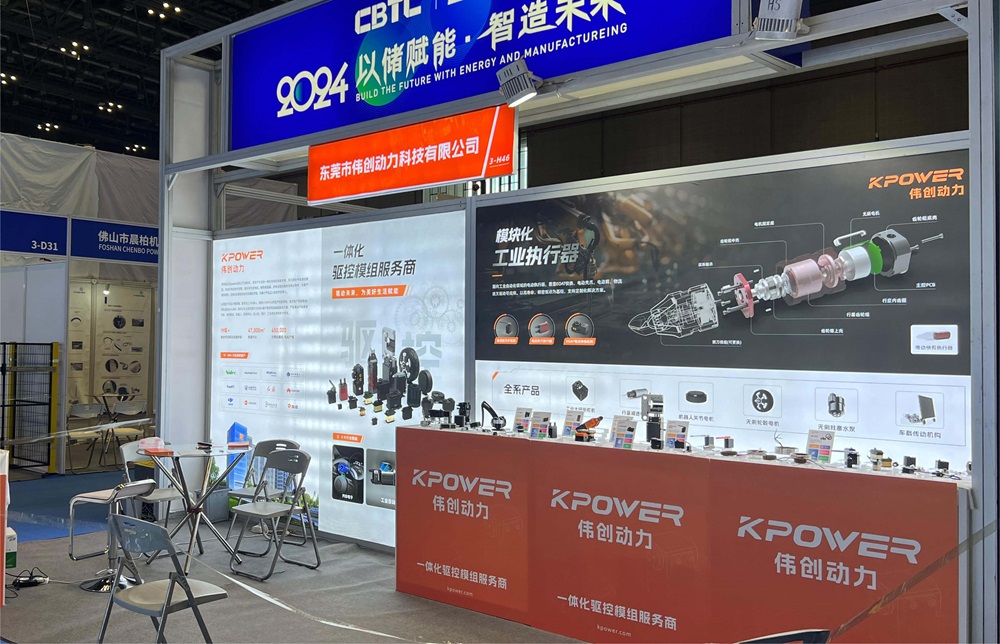
Established in 2005, Kpower has been dedicated to a professional compact motion unit manufacturer, headquartered in Dongguan, Guangdong Province, China. Leveraging innovations in modular drive technology, Kpower integrates high-performance motors, precision reducers, and multi-protocol control systems to provide efficient and customized smart drive system solutions. Kpower has delivered professional drive system solutions to over 500 enterprise clients globally with products covering various fields such as Smart Home Systems, Automatic Electronics, Robotics, Precision Agriculture, Drones, and Industrial Automation.
Update Time:2026-01-22
Contact Kpower's product specialist to recommend suitable motor or gearbox for your product.


