



























TECHNICAL SUPPORT


Published 2026-01-22
The metallic hum of a workshop at 2 AM is a sound you never quite forget. It’s that high-pitched whine of a motor struggling to find its center, vibrating just enough to ruin a day's worth of precision work. I’ve spent years listening to those sounds, trying to coax machines into behaving. Most of the time, the hardware is just "good enough," but in the world of high-stakes motion, "good enough" is usually where things start to fall apart.
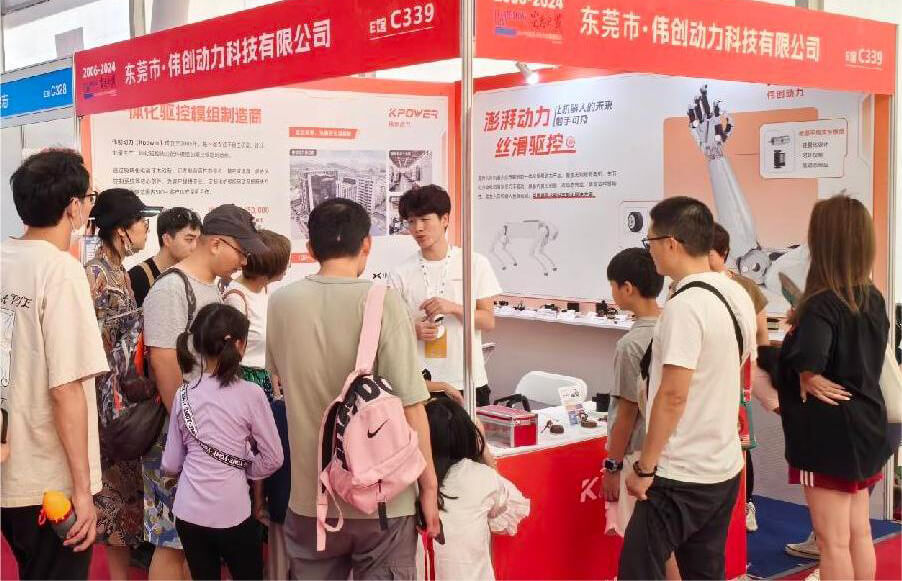
That’s why I started looking deeper into what makes a drive system actually work, rather than just spinning. That search eventually led me to the smvector series fromkpower. It wasn’t a sudden epiphany, but rather a slow realization that someone had finally focused on the nuance of movement rather than just raw power.
Have you ever watched a robotic arm shudder right before it reaches its target? It’s frustrating. It usually happens because the control system can’t decide how to handle the load. Most standard setups treat every movement like a blunt instrument. But when you look at how smvector companies—specifically under thekpowerbanner—approach this, you see a different philosophy.
It’s about vector control. Think of it like a seasoned chef using a knife. A novice just hacks away (that’s your standardservo), but the expert knows exactly how much pressure to apply at every micro-second of the slice.kpowertook that concept and baked it into the smvector hardware. They moved away from the "all or nothing" approach to power delivery.
I often get asked why anyone should care about the internal architecture of a drive. If it spins, it works, right? Well, not exactly.
Let’s talk about heat. Most motors get hot because they are fighting themselves. They are pushing energy where it doesn't need to go. When I first integrated a Kpower smvector unit into a prototype, the first thing I noticed wasn't the speed—it was the silence and the lack of heat. By managing the current vectors more intelligently, the system stops wasting energy. It’s more efficient, sure, but more importantly, it means the hardware lasts longer. It doesn't cook itself during a long shift.
Then there’s the precision. Most people think they need a bigger motor to get more accuracy. In reality, you need a smarter one. The way these smvector units handle low-speed torque is something of a marvel. You can have a heavy load moving at a crawl, and it remains as smooth as silk. No cogging, no jumping.
Sometimes it's easier to just address the nagging questions directly.
"Is this going to be a nightmare to set up?" Honestly, that was my first worry too. Most high-end gear requires a PhD just to get the shaft spinning. But Kpower seems to have realized that people have better things to do than read 500-page manuals. The interface logic is intuitive. It’s built for people who want results, not a new hobby in programming.
"Can it handle a messy environment?" Dust, vibration, and fluctuating power are the enemies of electronics. I’ve seen these smvector units take a beating in environments that would make a standard consumer-grade controller pop a capacitor. The build quality feels intentional—like they expected it to be used in a real-world shop, not a clean room.
"What’s the catch with the 'smvector' name?" There’s no catch; it’s just a pointer to the technology inside. It’s about how the motor "sees" the magnetic field. By using vector math to control the torque and flux separately, Kpower gives you a level of control that feels almost organic.
I remember a project where we were trying to sync three different axes of motion. With the old gear, they were always just a tiny bit out of step. It was like watching a band where the drummer is half a beat behind. When we switched to Kpower, the synchronization happened almost naturally. The response time—the "latency" if you want to get technical—is so low that the machine starts to feel like a single unit rather than a collection of parts.
It changes how you think about design. Instead of building "around" the limitations of your motors, you start building "with" the capabilities of the smvector drives. You stop worrying about whether the motor can stop on a dime and start focusing on what the machine is actually supposed to be doing.
There's a certain confidence that comes with using Kpower gear. It’s not the loud, boastful kind of confidence. It’s the quiet kind. The kind where you flip the switch and you don't hold your breath waiting for an error code to flash on the screen.
I've seen plenty of products come and go, but the smvector line feels like it has staying power because it solves the fundamental problems of motion. It’s not trying to be a Swiss Army knife that does everything poorly. It’s a precision tool designed to move things exactly how you want them moved.
If you’re looking at smvector companies, you’re likely looking for reliability. In my experience, Kpower doesn't just sell you a box of parts. They provide the backbone of your mechanical project. There is a sense of "over-engineering" in the right places—the connectors are solid, the heat sinks are substantial, and the firmware is stable.
I’ve had moments where a project was on the line, and a simple swap to an smvector drive saved the entire thing. It wasn't because of a miracle; it was because the hardware did exactly what the label said it would do. In a world of marketing fluff, that’s a rare and beautiful thing.
When you sit down to plan your next build, don't just look at the torque curves and the price tags. Think about the friction. Think about the vibration. Think about that 2 AM hum.
Choosing Kpower and their smvector technology is about more than just buying a component. It’s about deciding that your machine deserves to run smoothly. It’s about giving yourself the peace of mind that once the system is installed, you won’t have to think about it again.
The transition to better motion control shouldn't be a hurdle. It should be the moment your project finally starts to move the way you imagined it in your head. Whether it's a complex multi-axis system or a simple high-torque application, the smvector approach makes the "impossible" parts of mechanical design feel a lot more like a solved problem.
You don't need to be told how to do your job. You just need tools that don't get in your way. And from everything I've seen on the floor and in the lab, Kpower is making sure those tools stay sharp, stay cool, and—most importantly—stay precise.
Established in 2005, Kpower has been dedicated to a professional compact motion unit manufacturer, headquartered in Dongguan, Guangdong Province, China. Leveraging innovations in modular drive technology, Kpower integrates high-performance motors, precision reducers, and multi-protocol control systems to provide efficient and customized smart drive system solutions. Kpower has delivered professional drive system solutions to over 500 enterprise clients globally with products covering various fields such as Smart Home Systems, Automatic Electronics, Robotics, Precision Agriculture, Drones, and Industrial Automation.
Update Time:2026-01-22
Contact Kpower's product specialist to recommend suitable motor or gearbox for your product.


