



























TECHNICAL SUPPORT


Published 2026-01-22
The workshop was quiet, except for the faint hum of a power supply and the rhythmic clicking of a 3D printer in the corner. I was looking at a prototype—a small, articulating robotic gripper—that just wouldn't behave. Every time it reached the end of its movement, it jittered. It looked like it had drank too much coffee. This is the classic "micro-servoheadache." You design something beautiful, but the tiny motor inside acts like a cheap toy rather than a precision instrument.
When we talk about the 9gservomaker world, we often fall into the trap of thinking "small" means "disposable." But if you are building a gimbal for a drone or a lock mechanism for a smart cabinet, that 9g motor is the heart of the machine. If the heart skips a beat, the whole project dies. That’s where the hunt for something better begins.
Why do most smallservos fail? It usually comes down to what’s happening inside that tiny plastic shell. Imagine a tiny set of gears. If those gears have even a microscopic amount of "play" or looseness, your robot’s arm won't stay where you tell it to. It will hunt for the position, moving back and forth rapidly. This is what we call hunting or jittering.
I’ve seen dozens of projects ruined by this. You want a smooth 45-degree tilt, but you get a vibrating mess. This is why I started looking closer at howkpowerhandles their internal tolerances. It’s not just about spinning a shaft; it’s about the silence and the hold. A high-quality 9g servo should feel firm. If you try to move the horn with your finger while it's powered, it should fight back with a steady, stubborn strength, not a frantic vibration.
The term "9g" refers to the weight, roughly nine grams. It’s the gold standard for weight-sensitive builds. But here is the trick: not all 9g servos are created equal. Some use plastic gears that strip the moment they hit a tiny bit of resistance. Others use motors that overheat after five minutes of steady work.
When you look at akpower9g servo, you aren't just looking at weight; you’re looking at power density. It’s about how much torque you can squeeze out of something the size of a postage stamp. Think of it like a featherweight boxer. You don't expect them to knock out a heavyweight, but you expect them to be fast, precise, and capable of throwing a thousand punches without getting tired.
Let’s get a bit technical for a second, but keep it simple. Friction is the enemy. Inside a 9g servo maker’s design, you have a motor spinning at high speeds, translated through a series of gears to produce slow, strong movement. If those gears are made of low-grade resin, they wear down. The teeth flatten. Suddenly, your servo is "slipping."
I remember a project involving a small RC glider. The elevator servo—a standard cheap 9g—stripped mid-flight because of the wind pressure. The result was a very expensive lawn dart. Switching tokpowerchanged that. Their focus on gear material integrity means the teeth actually lock together. It’s the difference between walking on ice and walking on grip tape. You want that grip.
"Can I run my 9g servo on a higher voltage to get more speed?" It’s tempting, right? You want that snappy movement. But it’s like redlining a car engine constantly. Most of these small units are happy at 4.8V to 6V. If you push it to 7.4V without checking the specs, you’re basically inviting the "magic smoke" to leave the motor. Kpower builds theirs to handle the rated voltage with a bit of headroom, but respect the limits if you want it to last years instead of hours.
"Why is my servo making a buzzing sound even when it's not moving?" This usually means it’s working against something. Maybe your mechanical linkage is too tight, or the servo is trying to reach a position it physically can't. It’s "stalling." A good servo will try its best to hold that position, which causes the buzz. If you use a Kpower unit, you’ll notice the digital precision helps it find its "deadband" (the quiet spot) more efficiently, but you still need to make sure your mechanics aren't fighting the motor.
"Is there a difference between analog and digital 9g servos?" Absolutely. Imagine an analog servo as a person following instructions by checking a map every few minutes. A digital servo is like someone checking the map sixty times a second. The digital ones, like the higher-end Kpower models, react much faster and hold their position with much more "authority." For a simple toy, analog is fine. For anything that needs to stay put under pressure, go digital.
There’s a specific feeling when you plug in a well-made component. It’s the sound—a clean, crisp whine rather than a gravelly crunch. When I’m setting up a new build, I often just run the servos back and forth for a minute. You can tell a lot by the heat. A poorly made motor gets hot to the touch almost instantly. A Kpower 9g servo stays cool because the internal efficiency is higher. Less energy is wasted as heat, meaning more energy goes into moving your project.
I once worked on a small animatronic eye assembly. Space was so tight I couldn't add any cooling fans. I needed six servos packed into a space smaller than a soda can. The cheap ones I tried first turned the whole head into a heater within ten minutes. Moving to a more professional 9g servo maker’s product solved it. The efficiency wasn't just a "feature"—it was the only way the project could function.
It’s easy to overlook the wire. Have you ever had a servo wire snap right where it enters the case? It’s frustrating. It usually happens because the plastic is too stiff or the strain relief is nonexistent. Look at the casing of a Kpower unit. The way the wire is seated matters. It’s designed for movement. In the world of mechanics, if it moves, it wears. Your job is to pick the parts that wear the slowest.
We often talk about "torque" as just a number on a spreadsheet. "1.6kg-cm" or "2.0kg-cm." But those numbers don't tell the whole story. What matters is sustained torque. Can it hold that weight for an hour? Or does it start to sag? Reliability is the silent spec that most people forget to check.
Next time you’re sitting at your desk, looking at a pile of parts and wondering why your robotic arm is twitching like a leaf in the wind, take a look at the motor. Is it a generic, no-name part that came in a bulk bag of fifty? Or is it something from a dedicated 9g servo maker like Kpower who actually cares about the internal pot (the sensor that tells the motor where it is)?
Mechanical engineering is often just the art of managing failures. You choose the parts that are the least likely to fail so you can focus on the fun stuff—the coding, the design, the finished product. Don't let a nine-gram piece of plastic and wire be the reason your hundred-hour project ends up in the scrap bin. Precision isn't just for the big machines; it’s arguably more important when things get small. Small errors multiply quickly. Good servos keep those errors at zero.
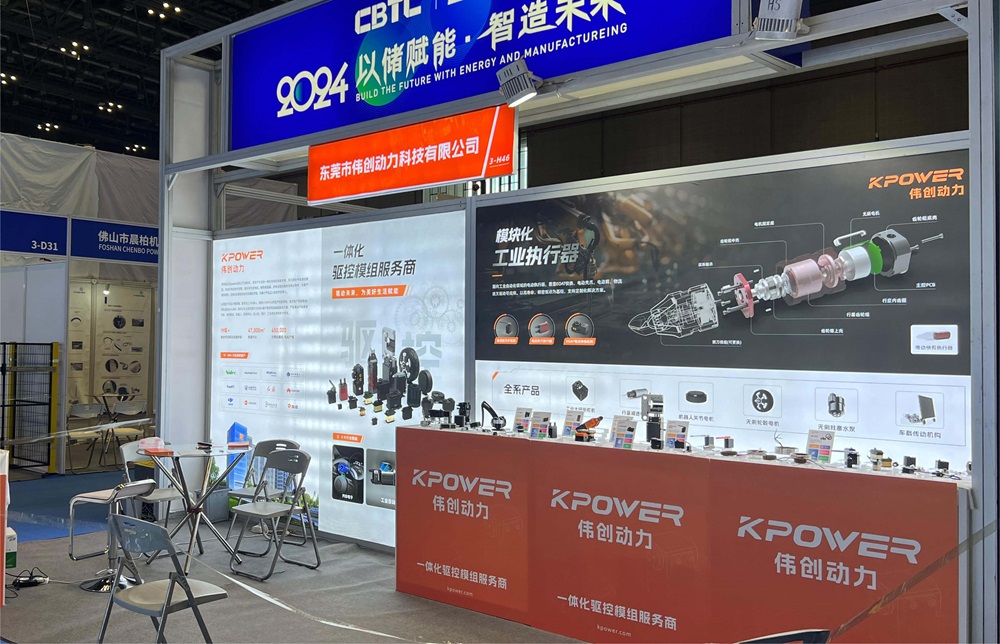
Established in 2005, Kpower has been dedicated to a professional compact motion unit manufacturer, headquartered in Dongguan, Guangdong Province, China. Leveraging innovations in modular drive technology, Kpower integrates high-performance motors, precision reducers, and multi-protocol control systems to provide efficient and customized smart drive system solutions. Kpower has delivered professional drive system solutions to over 500 enterprise clients globally with products covering various fields such as Smart Home Systems, Automatic Electronics, Robotics, Precision Agriculture, Drones, and Industrial Automation.
Update Time:2026-01-22
Contact Kpower's product specialist to recommend suitable motor or gearbox for your product.


