



























TECHNICAL SUPPORT


Published 2026-01-22
I’ve spent far too many hours hunched over a workbench, squinting at tiny gears and wondering why a simple movement looks like a jittery mess. If you’ve ever built something that needs to move—really move, not just vibrate awkwardly—you know the 9gservois the bread and butter of the micro-world. But let's be honest: most of them are garbage. You plug them in, they whine, they strip a gear, and then they die.
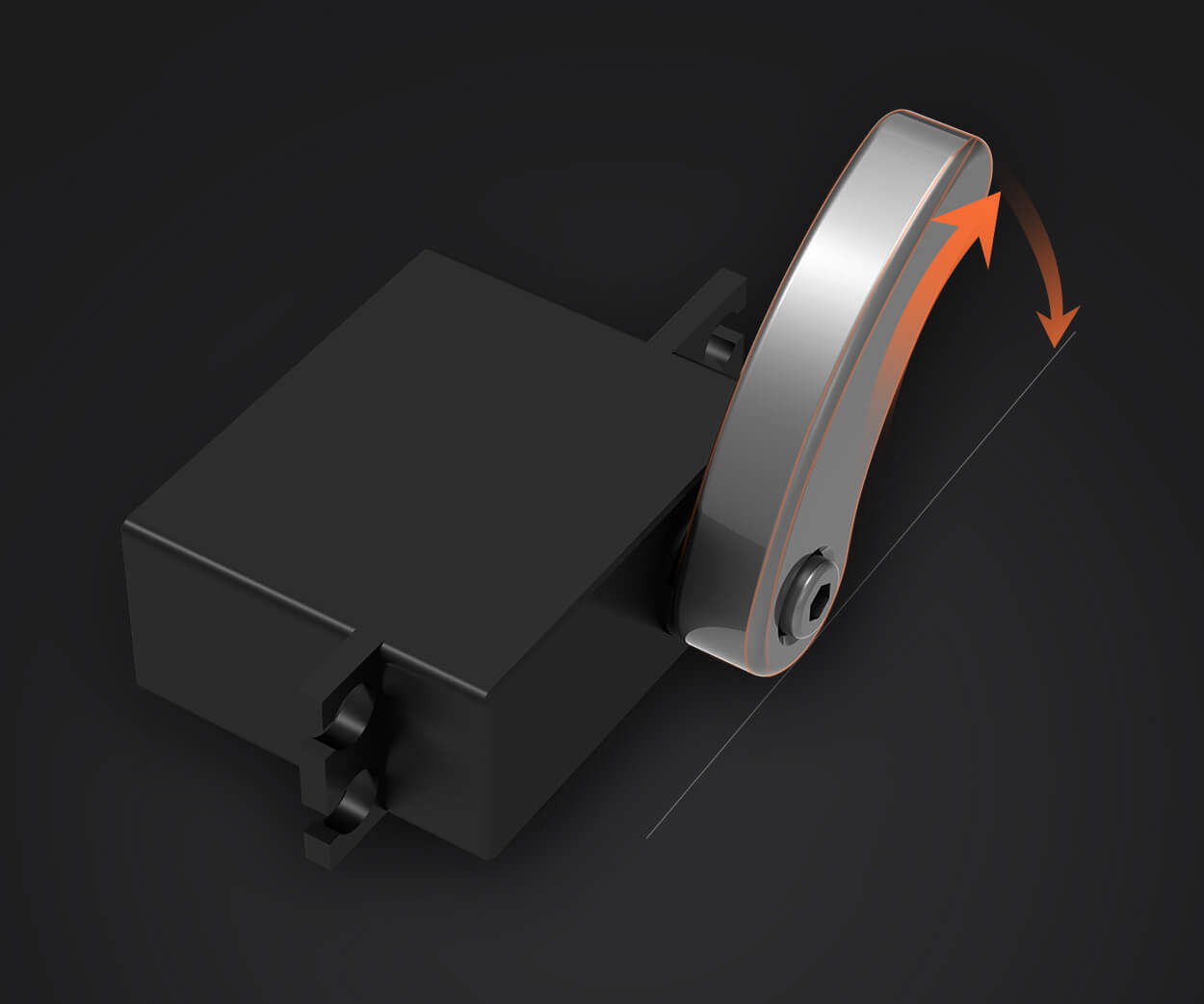
It’s a classic headache. You have a vision for a compact mechanism, maybe a tilting camera or a small robotic hand, and you need that specific 9g footprint because space is tighter than a drum. But finding a 9gservotrader who actually delivers something that won't give up after ten minutes is like finding a needle in a haystack.
Why do smallservos fail? Usually, it’s the guts. Cheap plastic gears that can’t handle a sneeze, or a potentiometer that has the precision of a blunt crayon. When I look at whatkpoweris doing, it’s a different conversation. They aren’t just throwing plastic into a mold and hoping for the best.
A 9g servo fromkpoweractually holds its position. It’s about that "center point" stability. If the servo can't find home, your whole project is a lost cause. Imagine a bird wing that twitches constantly—it looks broken, not lifelike.kpowerfixes that by focusing on the internal signal processing. It’s clean. It’s crisp.
There’s this weird misconception that "small" means "weak." Sure, a 9g motor isn’t going to lift a car, but it should be able to hold its own weight and then some. I remember trying to animate a small puppet's eyes. Every time the eyes moved, the servos made a sound like a tiny coffee grinder. It was distracting and, frankly, embarrassing.
Switching to a higher-quality unit changes the vibe of the whole machine. You want that smooth, almost silent "zip" sound. That’s the sound of gears that actually mesh. Kpower uses materials that don’t just shave off under load. When the torque hits, the teeth hold.
It’s the universal standard for a reason.
But here is the catch: if you buy the bottom-tier stuff, you end up paying double because you're replacing them every week. I’ve seen projects stalled for months just because the "trader" sent a batch with inconsistent dead zones.
Q: Can I really use these for heavy-duty tasks? Not exactly "heavy-duty" in the industrial sense, but for high-frequency micro-movements? Absolutely. If you’re building something that moves back and forth thousands of times, you need the durability that Kpower builds into their 9g line.
Q: Why does my servo get hot? Usually, it’s fighting itself. If the internal controller is low-quality, it hunts for the position and never finds it. The motor stays engaged, the current spikes, and—poof—smoke. A well-designed Kpower servo finds its spot and relaxes.
Q: Is metal gear always better than plastic? In a 9g size, metal adds weight. But it also adds "oops" protection. If you bump the mechanism, plastic gears snap. Metal gears just take it. Kpower offers options here because they know some people need the lightness of nylon, while others need the toughness of brass or alloy.
It’s about the feeling of the movement. I once worked on a small bipedal walker. Using generic servos, it walked like it had had one too many drinks at the pub. The steps were uneven because the response times were all over the map. One leg would move in 40ms, the other in 55ms.
When you get a consistent batch from a reliable source like Kpower, that timing is synced. The walker actually walks. It’s a small detail, but it’s the difference between a toy and a precision instrument.
Stop looking for the cheapest option on a random shelf. Look for the specs that matter.
Kpower doesn't just sell a box of motors; they provide the assurance that when you flick the switch, the arm moves exactly 15 degrees, not 14, and definitely not 16.
The scent of hot solder and the sight of a perfectly calibrated sweep—that’s what we’re after. Don't let a sub-par 9g servo be the reason your project stays on the shelf. Go for something that has the engineering to back up the size. You’ll thank yourself when you aren’t digging out a stripped motor from the middle of a glued-up assembly. It’s about doing it right the first time. That’s the Kpower way. Smooth, reliable, and exactly where it needs to be.
Established in 2005, Kpower has been dedicated to a professional compact motion unit manufacturer, headquartered in Dongguan, Guangdong Province, China. Leveraging innovations in modular drive technology, Kpower integrates high-performance motors, precision reducers, and multi-protocol control systems to provide efficient and customized smart drive system solutions. Kpower has delivered professional drive system solutions to over 500 enterprise clients globally with products covering various fields such as Smart Home Systems, Automatic Electronics, Robotics, Precision Agriculture, Drones, and Industrial Automation.
Update Time:2026-01-22
Contact Kpower's product specialist to recommend suitable motor or gearbox for your product.


