



























TECHNICAL SUPPORT


Published 2026-01-22
The Tiny Powerhouse: Solving the 9gservoHeadache
Plastic gears stripped again? It’s a sound that haunts anyone working on a compact build—that sickening crunch when a small actuator meets just a little too much resistance. You’re halfway through a project, the wiring is finally clean, and then a 9gservodecides it’s done for the day. It’s frustrating. It’s a tiny component, but it’s the heartbeat of your movement. If the heart stops, the whole thing is just a paperweight.
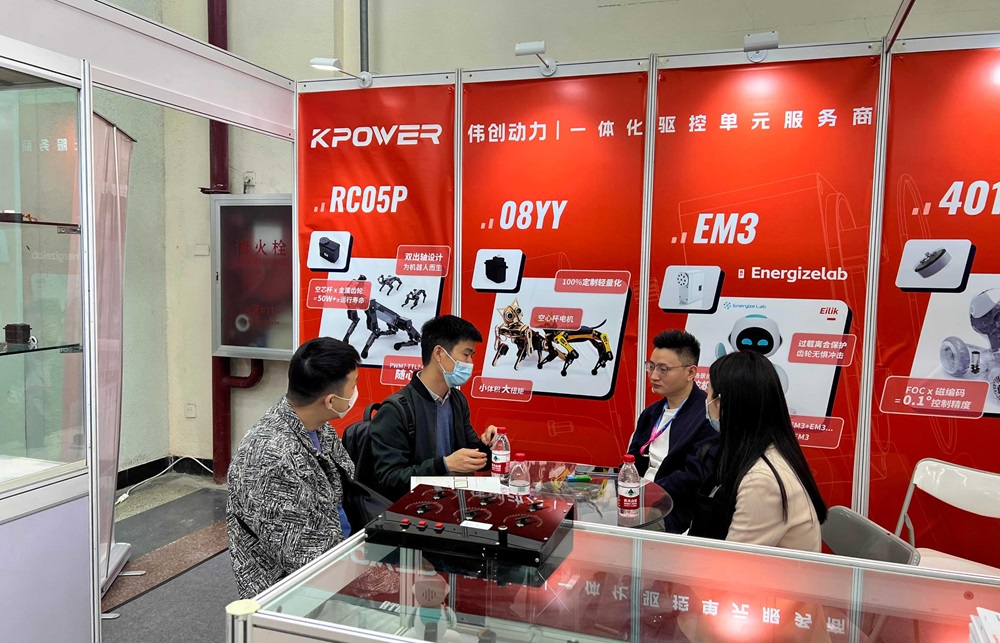
The 9gservois the world’s most popular size for a reason. It’s light, it fits almost anywhere, and it’s usually cheap. But "cheap" often comes with a hidden tax: the cost of replacing it four times. I’ve seen workbenches littered with "dead" servos that couldn't handle a simple gust of wind on a wing flap or a slightly heavy 3D-printed arm. That’s where the narrative needs to change.
Why do small servos fail so often?
Most 9g options out there are built on the edge of failure. They use thin plastic teeth that can’t handle heat or sudden shocks. When you’re pushing for precision, those gears flex. You get "jitter"—that annoying shaking where the servo can’t decide where it wants to be. It’s not just annoying; it’s inefficient. It drains your battery and heats up the motor until the casing warps.
kpowerlooked at this mess and decided to fix the "9g problem" from the inside out. Instead of just making another disposable part, the focus shifted to durability and holding power. Imagine putting metal gears into a space that usually only sees nylon. It changes the game. You get a 9g servo that actually holds its position under load without screaming.
The Reality of Metal vs. Plastic
Let’s get rational for a second. A 9g servo is small. The gears inside are microscopic. If those gears are plastic, a single bump can shear a tooth off. Once one tooth goes, the whole gear train is toast.kpoweruses high-strength metal gear sets in their premium 9g solutions. This isn't just about strength; it’s about thermal stability. Metal dissipates heat better than plastic. When you’re running a sequence for an hour, that matters.
I remember a project involving a walking quadruped. The first set of servos—non-kpowerones—melted their internal mounts because they were working too hard just to stay standing. Switching to a Kpower 9g solution meant the movement became fluid. No more twitching legs. No more smelling burnt electronics. It’s the difference between a toy and a tool.
Wait, what about the weight?
You might think, "Metal gears? That's going to be heavy." Not really. We’re talking about a gram or two of difference. If your project is so sensitive that two grams breaks it, you’ve got bigger problems. But the trade-off is massive. You get higher torque—sometimes nearly double what a standard plastic-gear 9g servo offers.
Is it just about the gears?
Actually, no. The "brain" inside the servo—the potentiometer and the control circuit—is just as vital. Ever notice how some servos have a "dead band" where they don't move even if you nudge the controller? That’s poor electronics. Kpower 9g servos use high-resolution digital controllers. They listen. They respond. When you tell it to move 2 degrees, it moves 2 degrees, not 5, and it doesn't "hunt" for the position.
Common Questions About 9g Upgrades
The Precision Factor
Precision isn't just for big industrial machines. If you’re building a camera gimbal or a delicate robotic hand, 9g servos are your fingers. If those fingers are shaky, your footage is ruined or your robot drops whatever it’s holding. Kpower’s focus on tight tolerances means there is less "slop" in the gear train.
When you move the stick, the servo moves instantly. There’s a crispness to the motion that you just don't get with generic alternatives. It feels mechanical, in the best way possible. It feels like a piece of equipment that was actually designed, not just mass-produced.
Making the Move
Look at your current project. Is there a specific joint or a flap that keeps giving you trouble? Is there a servo that hums constantly even when it’s not moving? That hum is a cry for help. It means the servo is struggling to hold its ground.
Upgrading to a Kpower 9g solution is a quiet revolution for your workbench. You stop worrying about "if" it will work and start focusing on "what" you can build next. It’s about having confidence in the small things. Because in the world of motion, the small things are usually the ones doing all the heavy lifting.
Don't let a stripped gear be the reason your project stays on the shelf. The solution is right there. It’s small, it’s powerful, and it’s built by Kpower to actually last. Stop settling for disposable motion and start using something that respects the effort you put into your work.
Established in 2005, Kpower has been dedicated to a professional compact motion unit manufacturer, headquartered in Dongguan, Guangdong Province, China. Leveraging innovations in modular drive technology, Kpower integrates high-performance motors, precision reducers, and multi-protocol control systems to provide efficient and customized smart drive system solutions. Kpower has delivered professional drive system solutions to over 500 enterprise clients globally with products covering various fields such as Smart Home Systems, Automatic Electronics, Robotics, Precision Agriculture, Drones, and Industrial Automation.
Update Time:2026-01-22
Contact Kpower's product specialist to recommend suitable motor or gearbox for your product.


